7 Types of Embroidery Techniques for Custom Apparel
For apparel buyers, the useful question is not simply whether a design can be embroidered. It is which embroidery construction best matches the garment, desired surface effect and bulk-production target.
This guide organizes our current embroidery developments into 7 major technique families and 30 individual effects, giving buyers a clearer way to compare visual character, applications and production considerations.
Article Overview
7 Embroidery Techniques at a Glance
Many commercial embroidery effects are hybrids, so classification can become confusing if every variation is treated as a separate process. For sourcing and development, it is more practical to group techniques by the main construction that creates the surface.
The categories below also avoid duplicate naming: for example, Hand-Beaded Chenille remains in the chenille group because chenille is its main structure, while Toothbrush & Bugle Bead is grouped with bead-based embellishment.
Flat and satin embroidery are the cleanest thread-based options in this guide. They keep the decoration relatively close to the garment surface and are useful when the design depends on clear outlines, lettering or controlled stitch definition.
3D embroidery increases the height and visual weight of a motif. Foam, thick thread or controlled layered stitching can be used to create a more pronounced surface, making this group especially useful for bold lettering and graphics.
Chenille embroidery is defined by a soft looped or cut-yarn surface. It creates more tactile volume than standard thread embroidery and works especially well for varsity, retro and oversized graphic directions.
Appliqué embroidery uses separate fabric pieces as part of the decoration instead of building the entire design with thread. The choice of appliqué material and edge finish has a major effect on the final look.
Cord and heavy-yarn techniques use thicker materials to create raised lines, outlines and textured graphics. They can look cleaner and more structured than chenille while still giving the surface a handcrafted character.
Beading and sequin techniques combine stitched construction with reflective or decorative components. They can range from subtle highlights to highly visible statement details, but attachment security and bulk consistency become especially important.
Cutwork embroidery creates decorative openings by removing selected areas of fabric and reinforcing the cut edges with stitching. It produces a lighter, more open surface than the raised techniques above and is often used when negative space is part of the design.
1. Flat & Satin Embroidery
Flat and satin embroidery are the cleanest thread-based options in this guide. They keep the decoration relatively close to the garment surface and are useful when the design depends on clear outlines, lettering or controlled stitch definition.
Flat Embroidery
Flat embroidery uses standard stitches to create a smooth, low-profile motif with clean detail. It is one of the most flexible choices for logos, lettering and graphic elements where the artwork needs to stay crisp without adding much bulk.
Best suited for: logos, small-to-medium lettering, line art and everyday branded details.
Production note: stitch density, small text size and fabric puckering on lighter materials.

flat-embroidery-custom-apparel
Raised Satin Embroidery
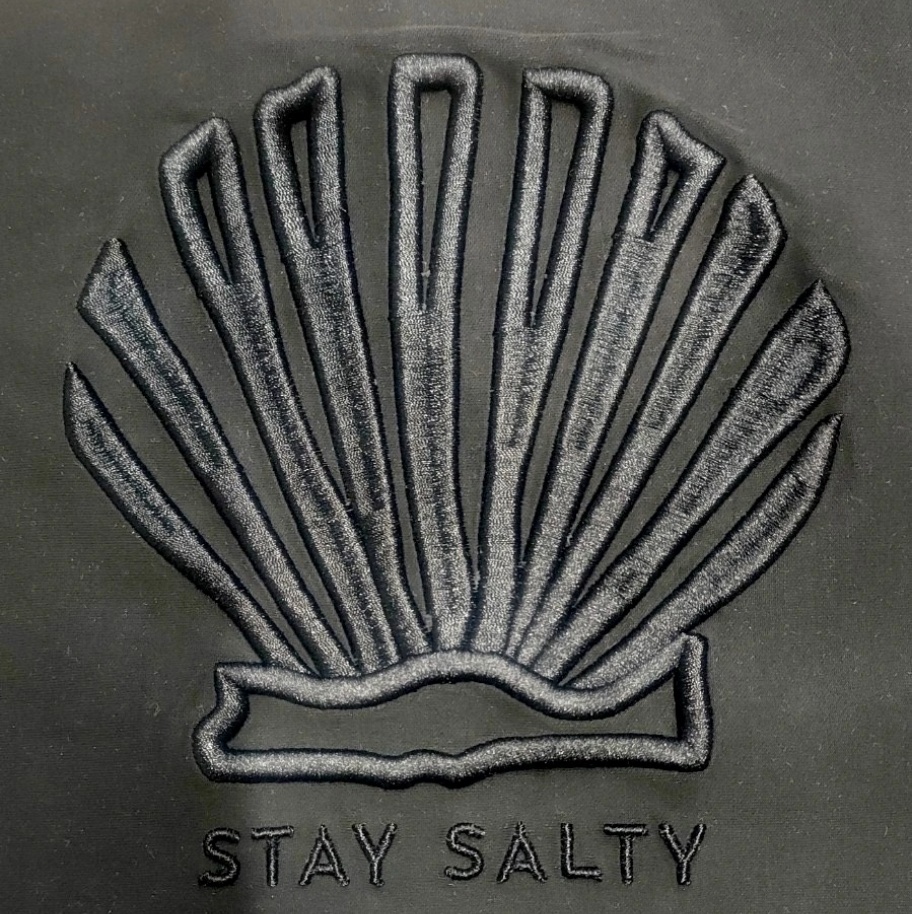
Raised satin embroidery uses dense satin stitches to build a smoother and slightly elevated surface. Compared with basic flat embroidery, it gives curves, letters and logo edges a fuller, more polished appearance.
Best suited for: premium logo lettering, curved motifs and clean statement details.
Production note: very narrow shapes, tight corners and excessive stitch density.
raised-satin-embroidery-custom-apparel
Sketch Embroidery
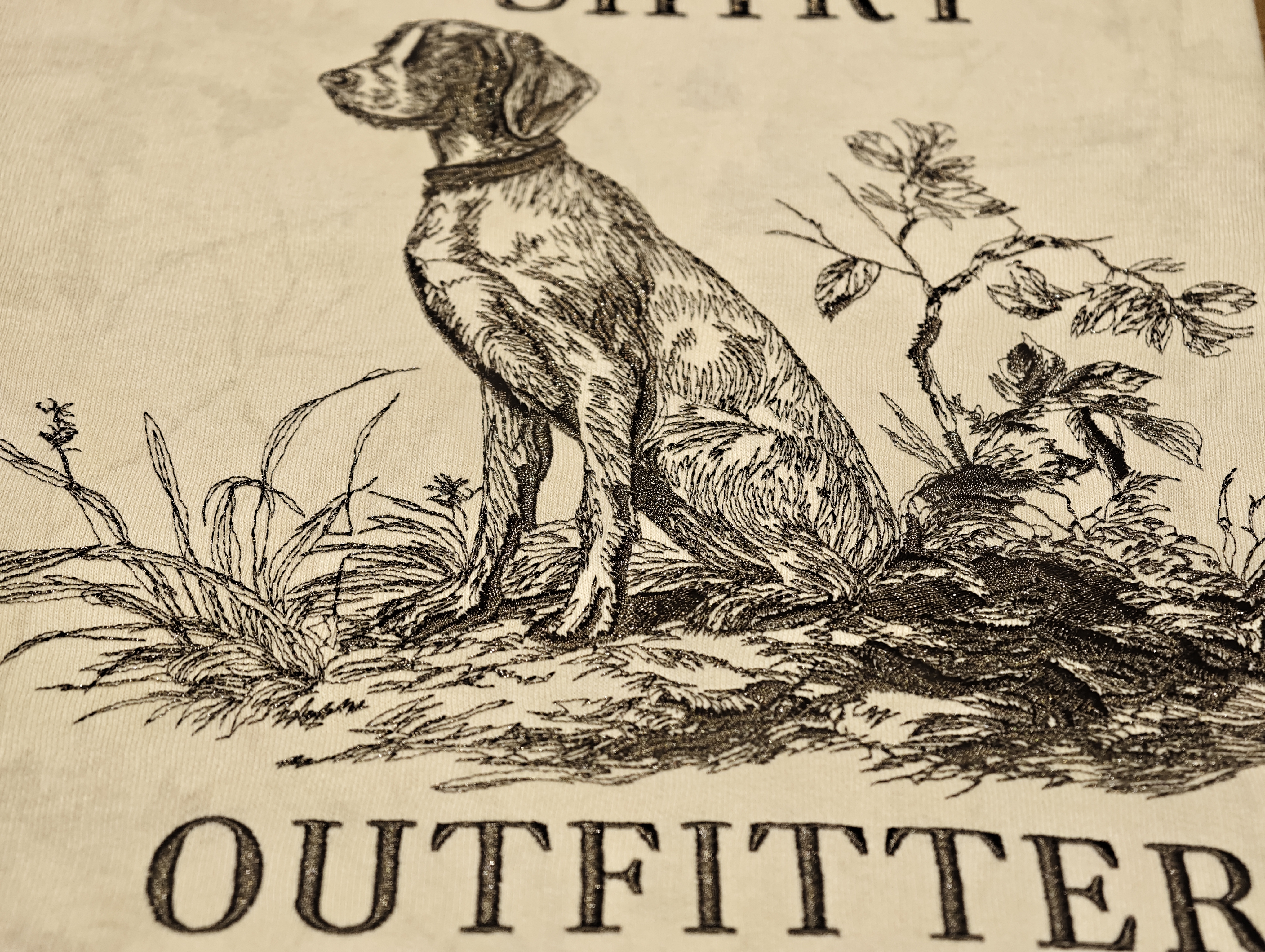
Sketch embroidery uses fine stitch lines to create an illustrated or hand-drawn effect rather than a fully filled graphic. The lighter stitch coverage can make the decoration feel more expressive and less rigid than conventional logo embroidery.
Best suited for: illustrative graphics, outline motifs and hand-drawn design directions.
Production note: line spacing, thread contrast and whether fine details remain readable on the selected fabric.
sketch-embroidery-custom-apparel
2. 3D & Foam Embroidery
3D embroidery increases the height and visual weight of a motif. Foam, thick thread or controlled layered stitching can be used to create a more pronounced surface, making this group especially useful for bold lettering and graphics.
3D Flat Thick Thread
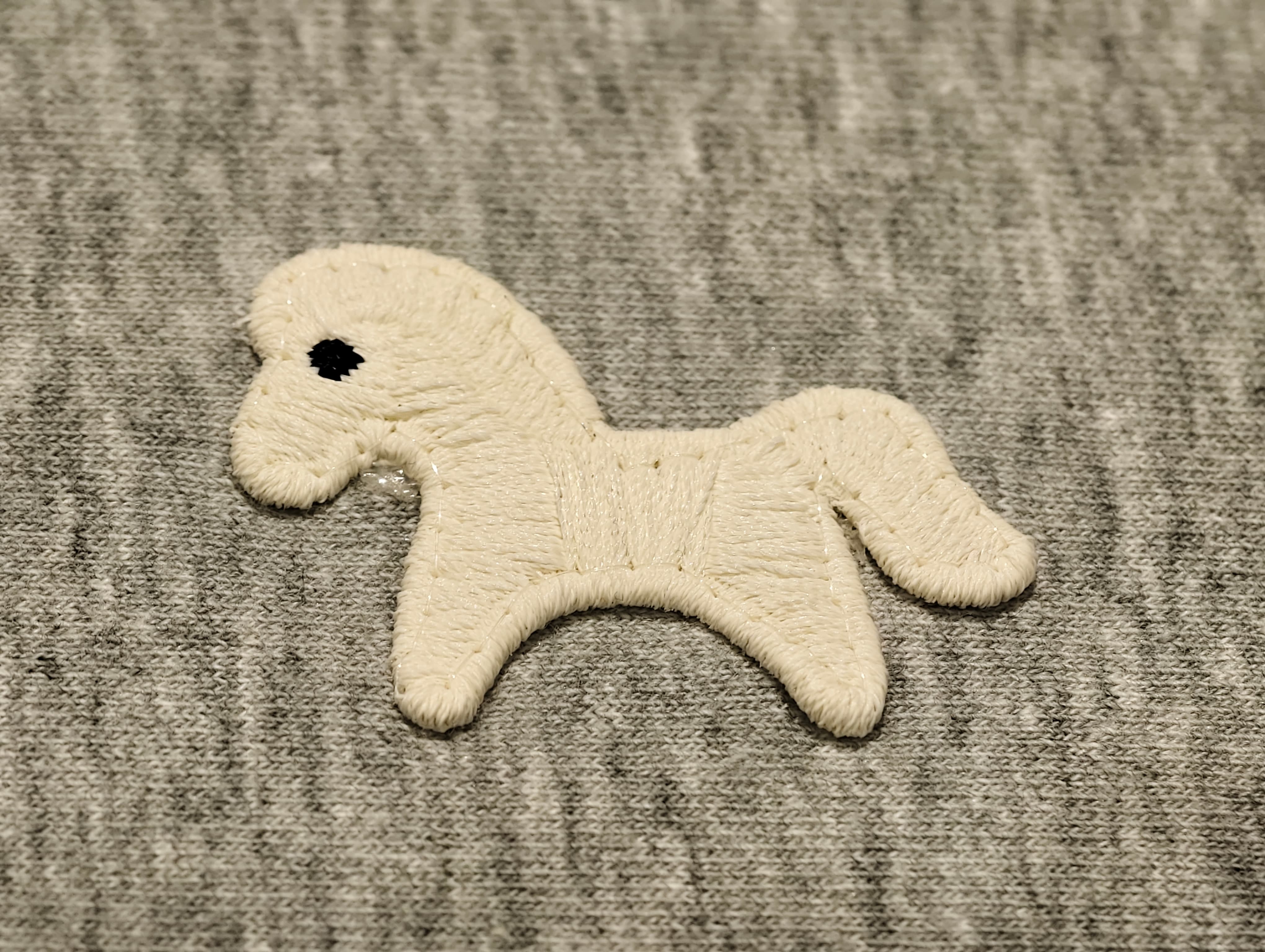
3D Flat Thick Thread embroidery uses heavier thread to build a bold, raised motif while keeping the overall shape relatively flat and controlled. The thicker yarn gives the surface more texture and visual weight than standard flat embroidery.
Best suited for: bold logos, tonal motifs and graphics that need visible thread texture.
Production note: thread thickness, corner definition and whether the base fabric can support the denser surface.
3d-flat-thick-thread-custom-apparel
3 Colors 3D Foam
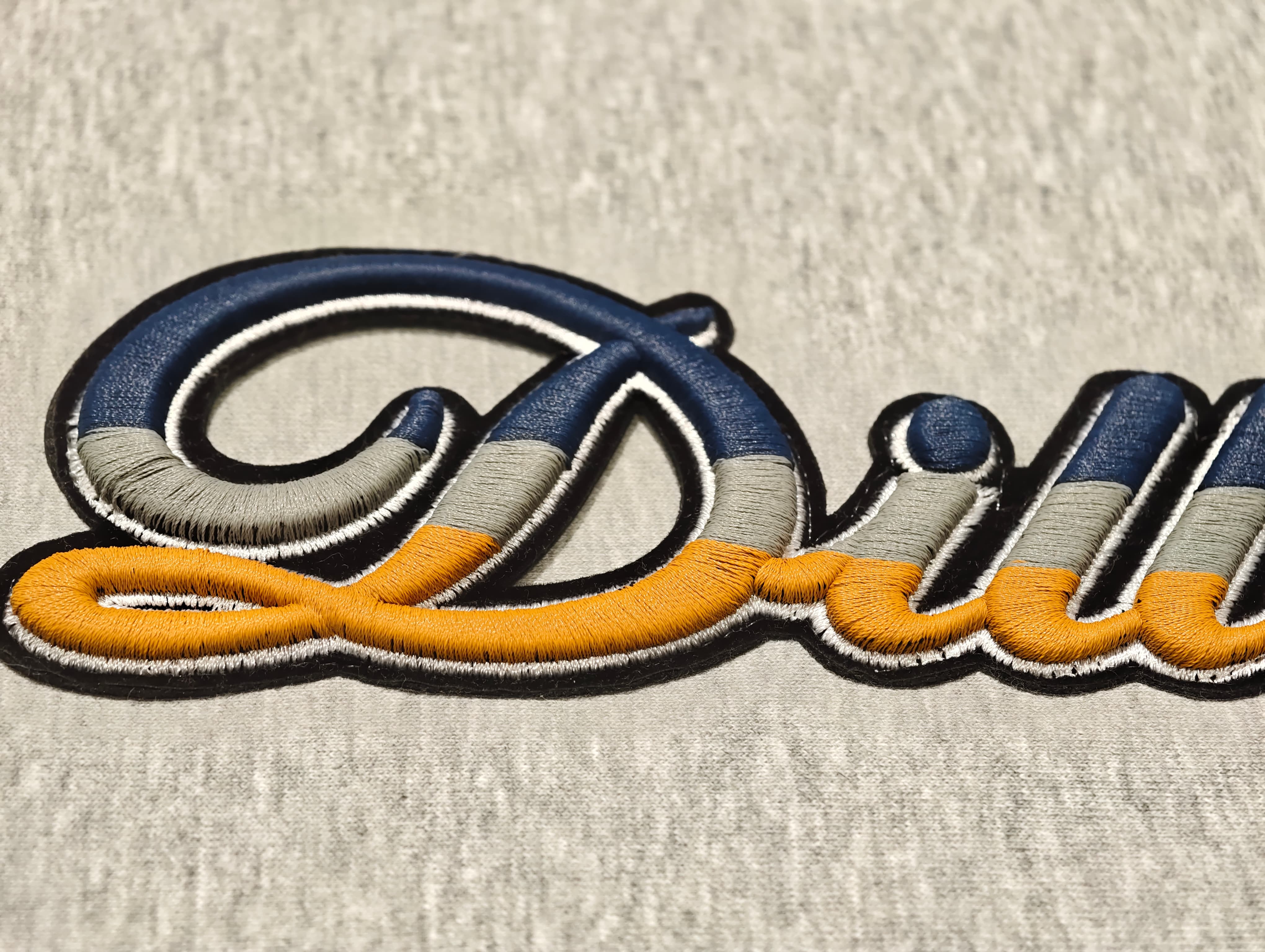
3 Colors 3D Foam combines foam-backed height with multiple thread colors to create layered lettering or logos. The color separation makes the raised structure more visible and can add outline or shadow effects within the same motif.
Best suited for: streetwear lettering, sports-inspired logos and high-contrast multi-color branding.
Production note: color registration, foam coverage and consistent edge definition between color layers.
3-colors-3d-foam-custom-apparel
3D Foam Embroidery
3D Foam Embroidery places foam beneath dense stitching so the finished motif rises clearly above the garment surface. It creates strong depth and is commonly chosen when a logo or wordmark needs to become a focal point.
Best suited for: bold lettering, logos, hoodies, sweatshirts and statement casualwear.
Production note: foam height, stitch coverage, narrow details and clean trimming around the raised edges.
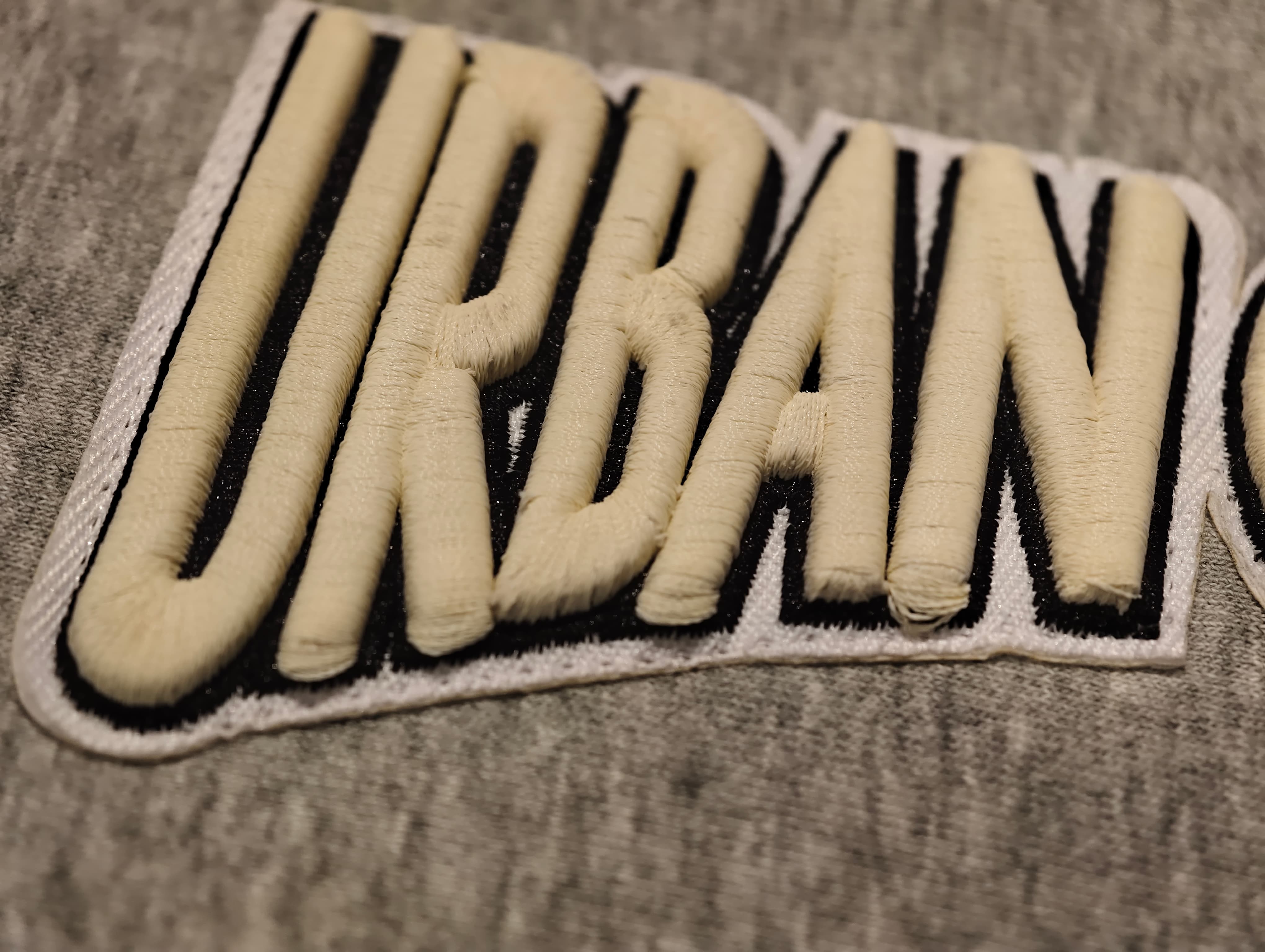
Arched 3D Embroidery
Arched 3D Embroidery uses layered stitching to build a curved, raised profile across letters or graphic elements. The arched surface creates a more sculpted finish than a simple flat raised stitch.
Best suited for: curved lettering, dimensional numbers and bold graphic logos.
Production note: consistent arch height, edge shaping and maintaining the intended curve across bulk pieces.

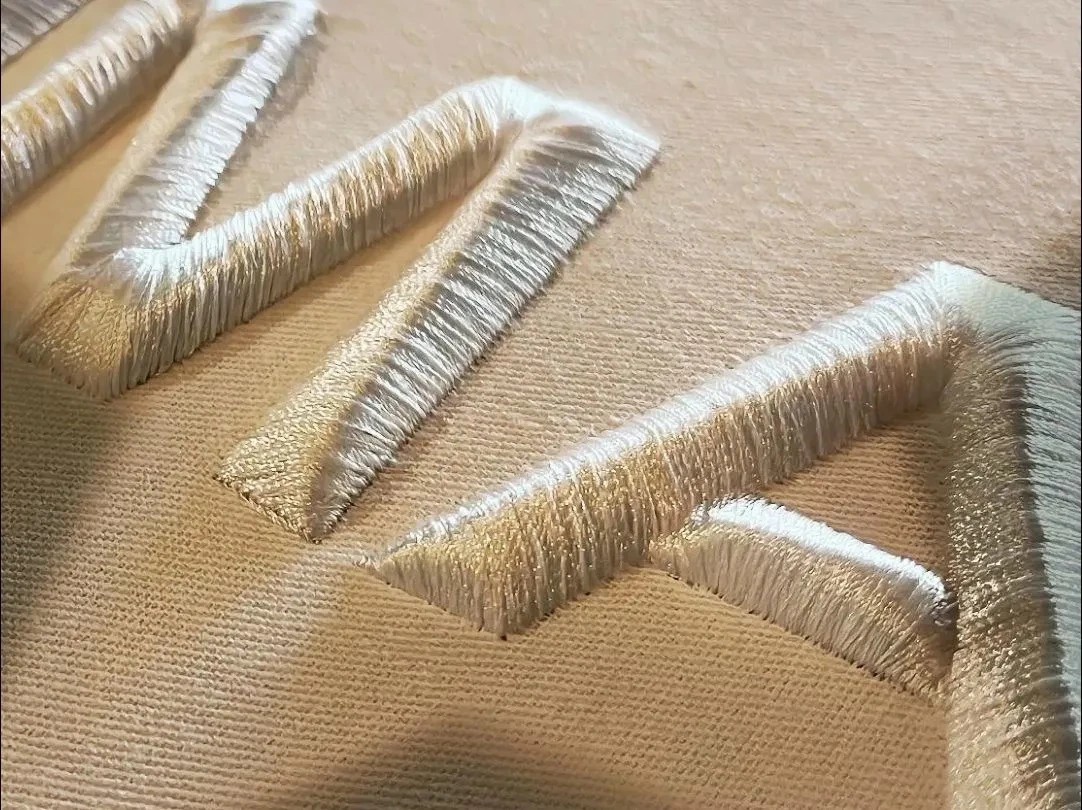
3D Puff Embroidery
3D Puff Embroidery uses a foam layer underneath the stitches to create a pronounced padded effect. The result is bold and graphic, with more visible height than ordinary flat or satin embroidery.
Best suited for: large letters, clean logo shapes and sports or streetwear branding.
Production note: small internal gaps, sharp corners and whether the foam is fully covered by the stitch structure.
3. Chenille Embroidery
Chenille embroidery is defined by a soft looped or cut-yarn surface. It creates more tactile volume than standard thread embroidery and works especially well for varsity, retro and oversized graphic directions.
Chenille Embroidery
Chenille embroidery builds a plush surface from looped yarn, giving letters and motifs a soft, tactile finish. It is visually substantial even without extreme stitch height, making it well suited to larger graphics.
Best suited for: varsity lettering, sweatshirts, jackets and retro sportswear graphics.
Production note: yarn density, loop consistency and clean boundaries around the motif.
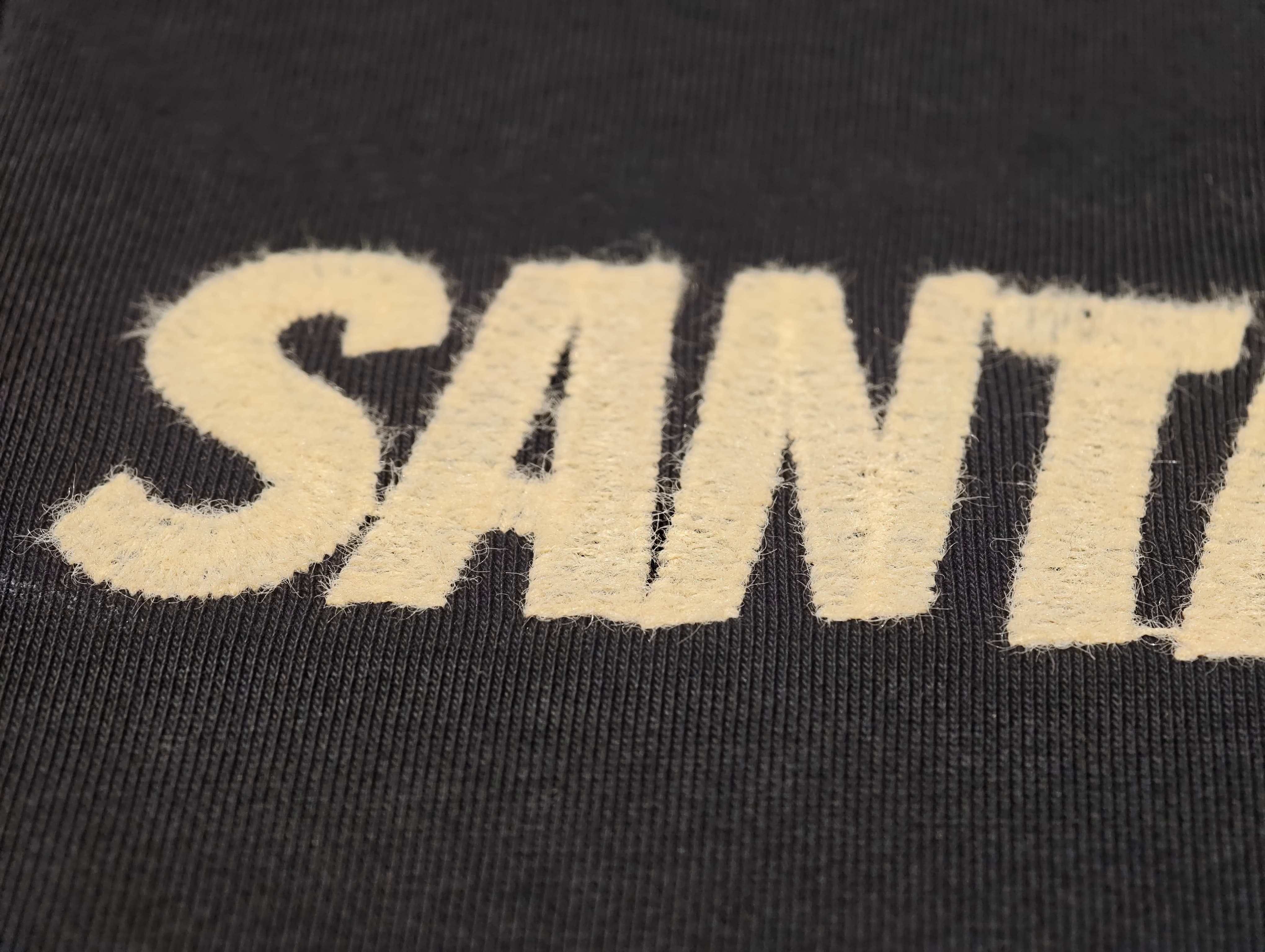
Two-tone Cut Chenille
Two-tone Cut Chenille combines a dense cut-pile surface with two colors to create stronger contrast and more visible depth. The dual-color construction can make letters and shapes read more clearly from a distance.
Best suited for: bold graphic lettering, varsity motifs and color-blocked chenille details.
Production note: color separation, cut-pile consistency and clean motif definition.
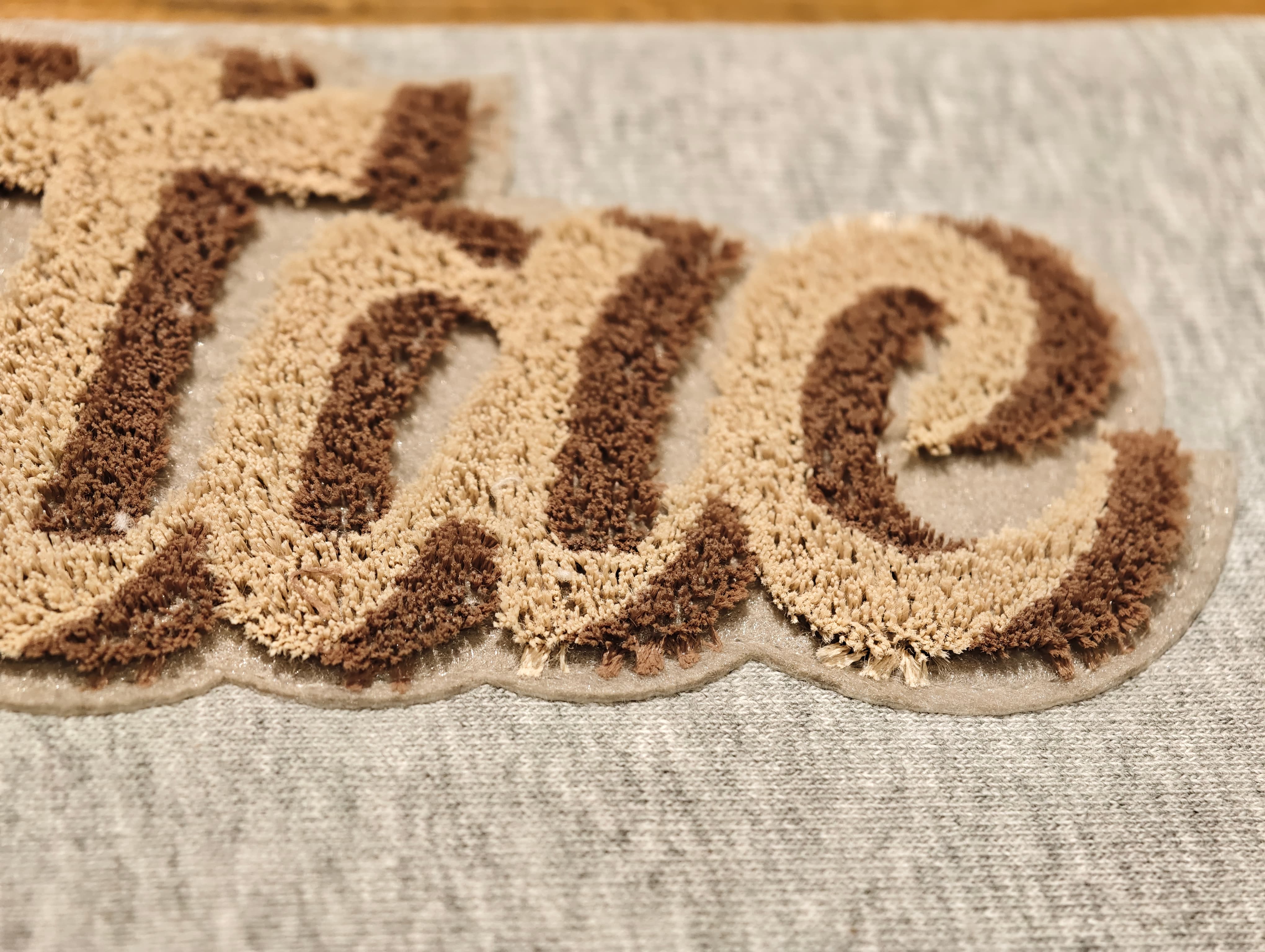
Thick Loop Chenille
Thick Loop Chenille uses heavier looped yarn to create a deeper, more plush surface. The oversized loop texture makes the technique feel soft and dimensional, even in simple lettering.
Best suited for: large letters, oversized logos and tactile statement details.
Production note: loop height, yarn density and snag resistance during handling and finishing.
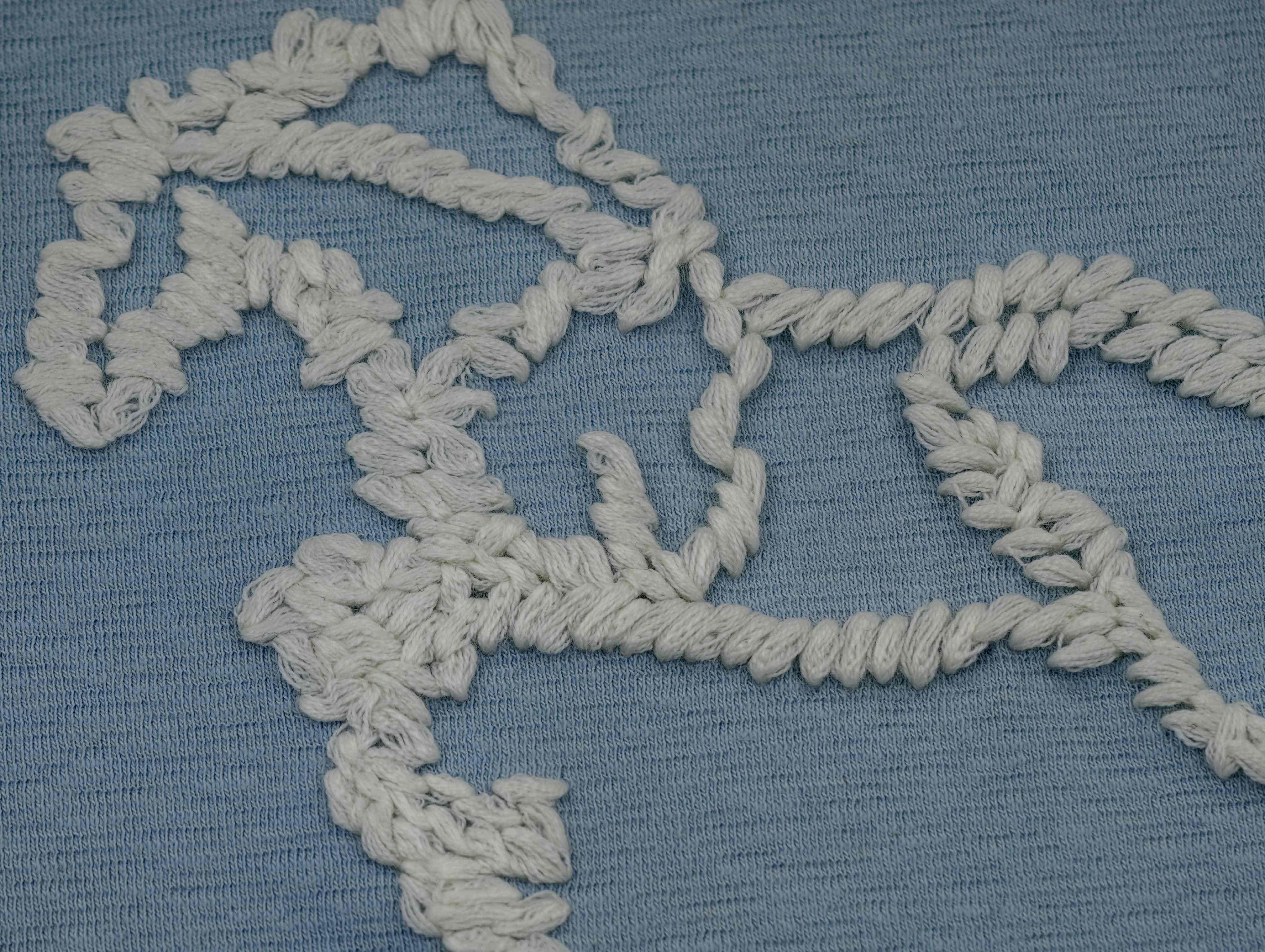
Sequin-Outlined Chenille
Sequin-Outlined Chenille combines a plush chenille center with reflective sequin edging. The contrast between soft yarn and light-catching trim gives the motif more definition and a more decorative finish.
Best suited for: statement graphics, fashion sweatshirts and designs needing both texture and shine.
Production note: sequin alignment, edge security and consistent spacing around curved chenille shapes.
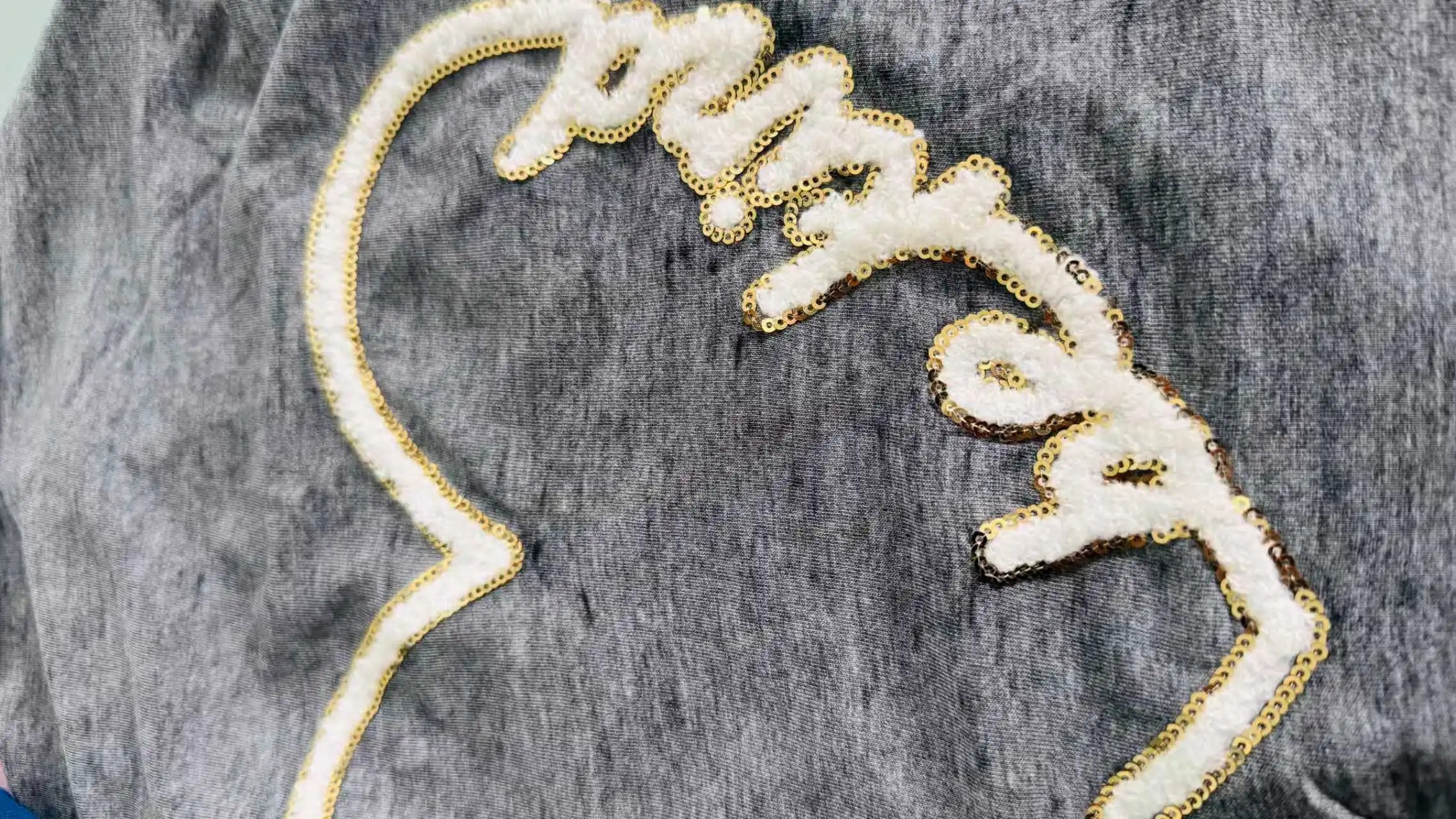
Hand-Beaded Chenille
Hand-Beaded Chenille adds beads to a plush chenille base, combining soft pile with hand-finished surface detail. The result has more visual depth and a crafted appearance than chenille alone.
Best suited for: premium fashion details, decorative lettering and limited statement placements.
Production note: bead attachment, handwork consistency and the additional time required for bulk production.

4. Appliqué Embroidery
Appliqué embroidery uses separate fabric pieces as part of the decoration instead of building the entire design with thread. The choice of appliqué material and edge finish has a major effect on the final look.
Appliqué Embroidery
Appliqué Embroidery secures a separate fabric panel to the garment with stitched borders. It creates a bold layered graphic while allowing the appliqué fabric itself to contribute color, texture or structure.
Best suited for: large letters, numbers, logos and panel-style graphics.
Production note: fabric compatibility, edge stitching and shrinkage differences between the base garment and appliqué.
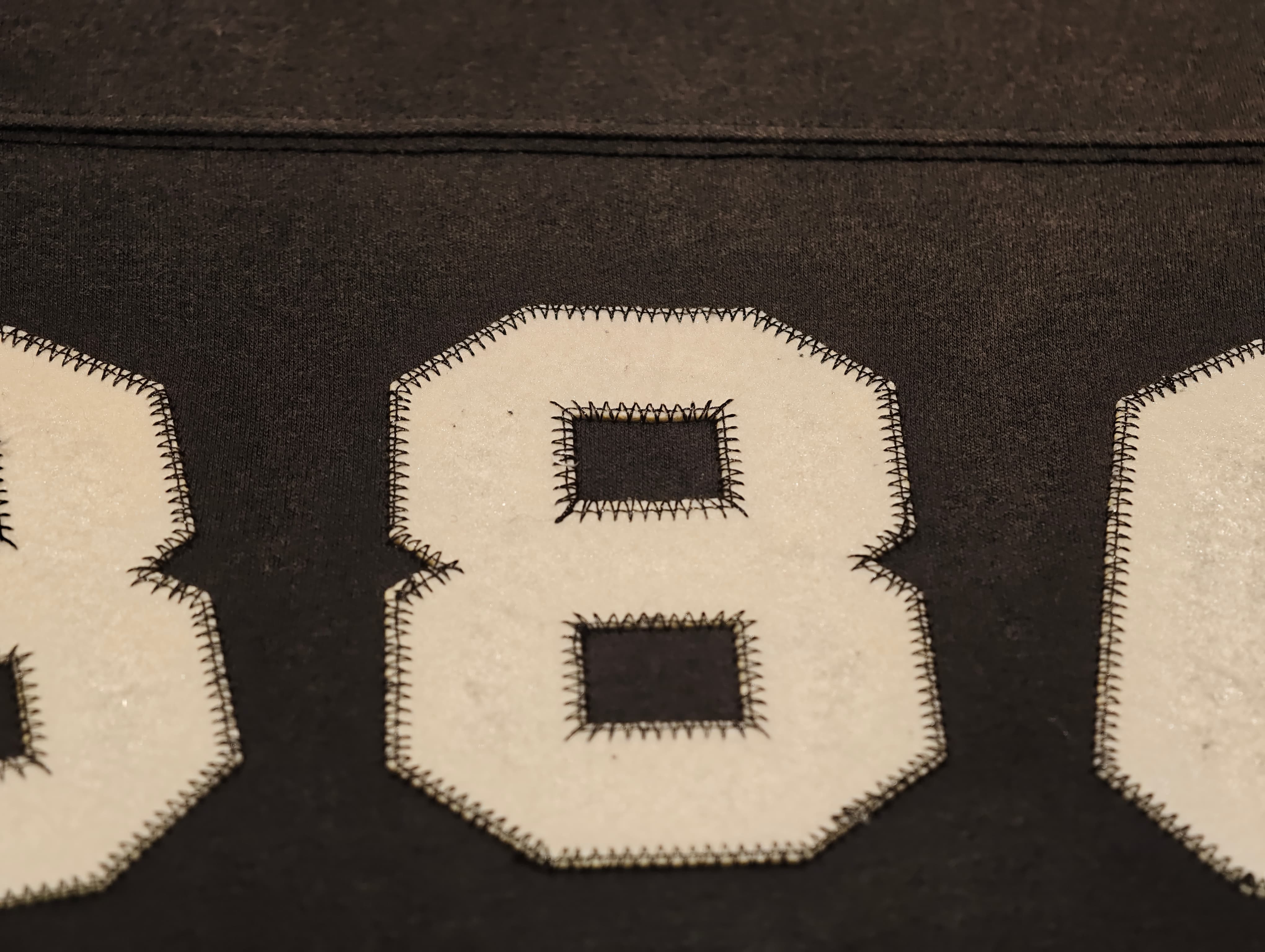
Frayed Appliqué Embroidery
Frayed Appliqué Embroidery intentionally leaves distressed or frayed fabric edges visible around the stitched motif. The unfinished-looking edge creates a more casual, vintage and handcrafted appearance.
Best suited for: washed casualwear, vintage graphics and relaxed statement lettering.
Production note: controlling the amount of fraying and keeping the stitched border secure after washing.
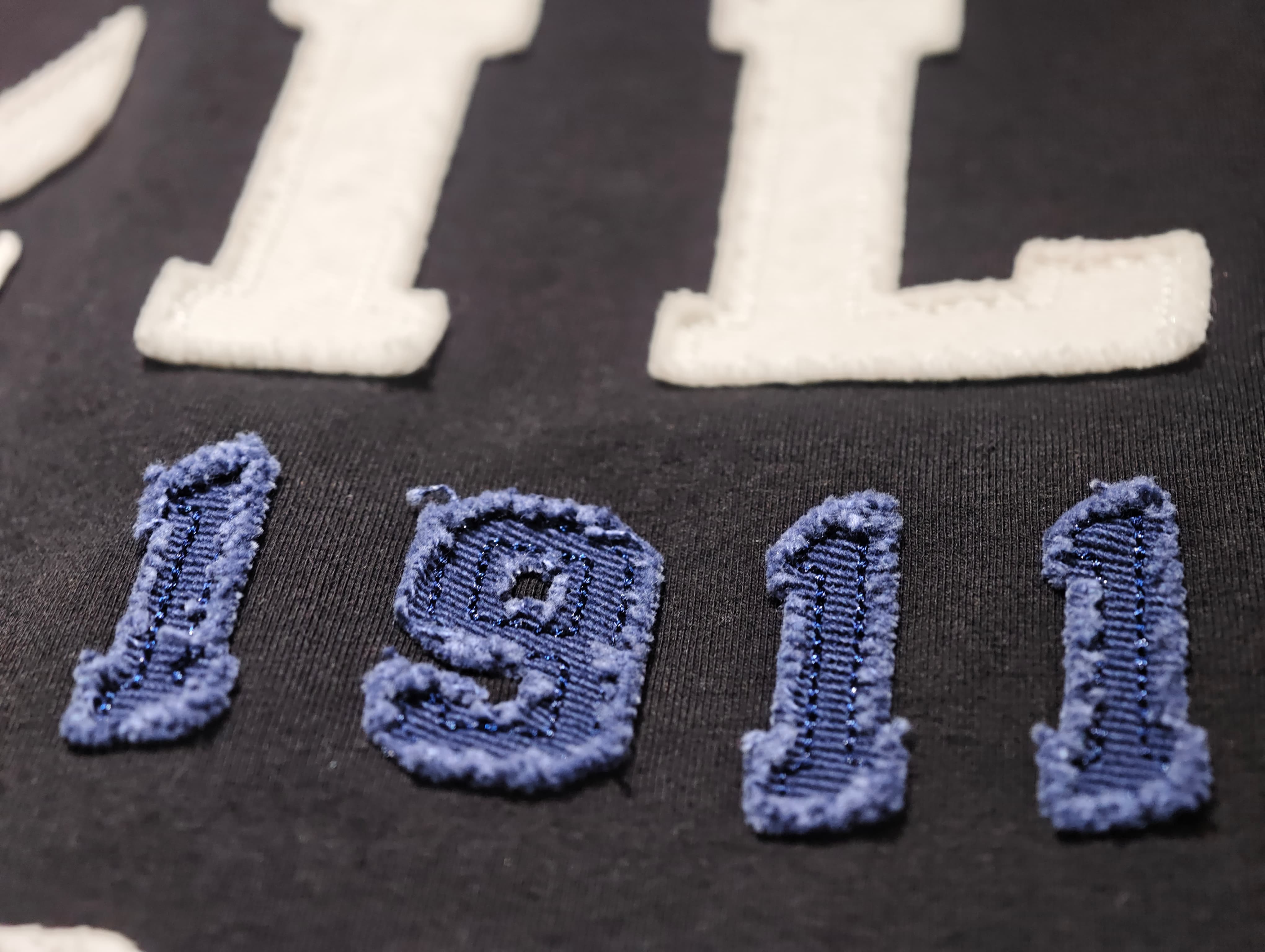
Frayed Denim Appliqué
Frayed Denim Appliqué uses denim as the appliqué layer and keeps raw or frayed edges as part of the design. The denim texture and worn-in edge create stronger material contrast than a smooth woven appliqué.
Best suited for: vintage streetwear, casual graphics and denim-accented motifs.
Production note: denim thickness, wash behavior, edge fraying and color transfer where relevant.

Raw Edge Appliqué
Raw Edge Appliqué leaves the cut edge of the applied fabric exposed instead of fully enclosing it. This creates a more natural, handcrafted texture and lets the material edge become part of the visual effect.
Best suited for: casual graphics, layered motifs and intentionally unfinished design directions.
Production note: fabric fray tendency, stitch distance from the edge and consistency after washing.
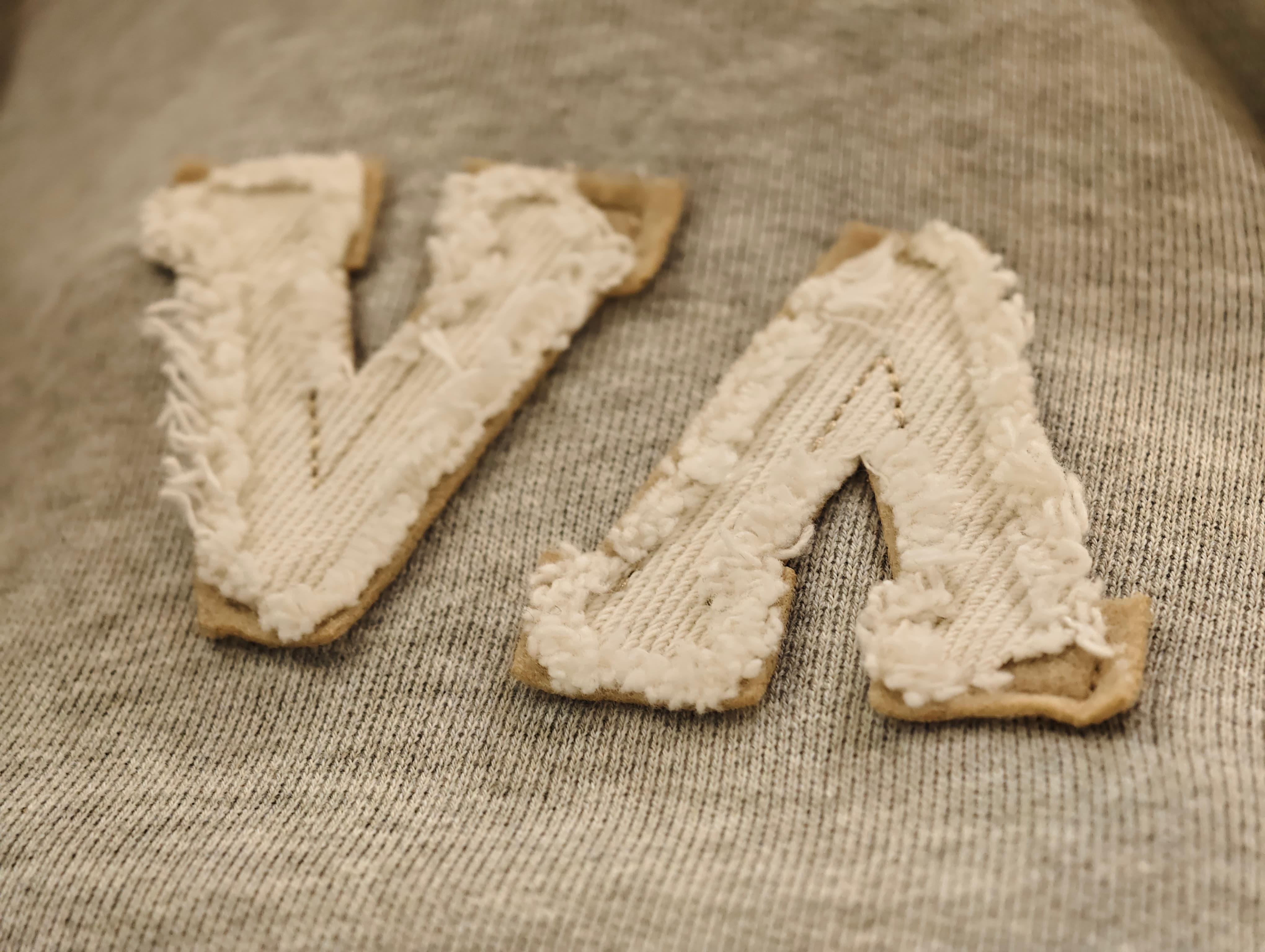
Dimensional Appliqué
Dimensional Appliqué combines layered fabric with padding or additional structure to create a raised motif. It gives larger letters and graphics more body without relying entirely on dense embroidery thread.
Best suited for: oversized letters, padded graphics and bold dimensional branding.
Production note: padding thickness, edge control and maintaining an even raised profile across production.
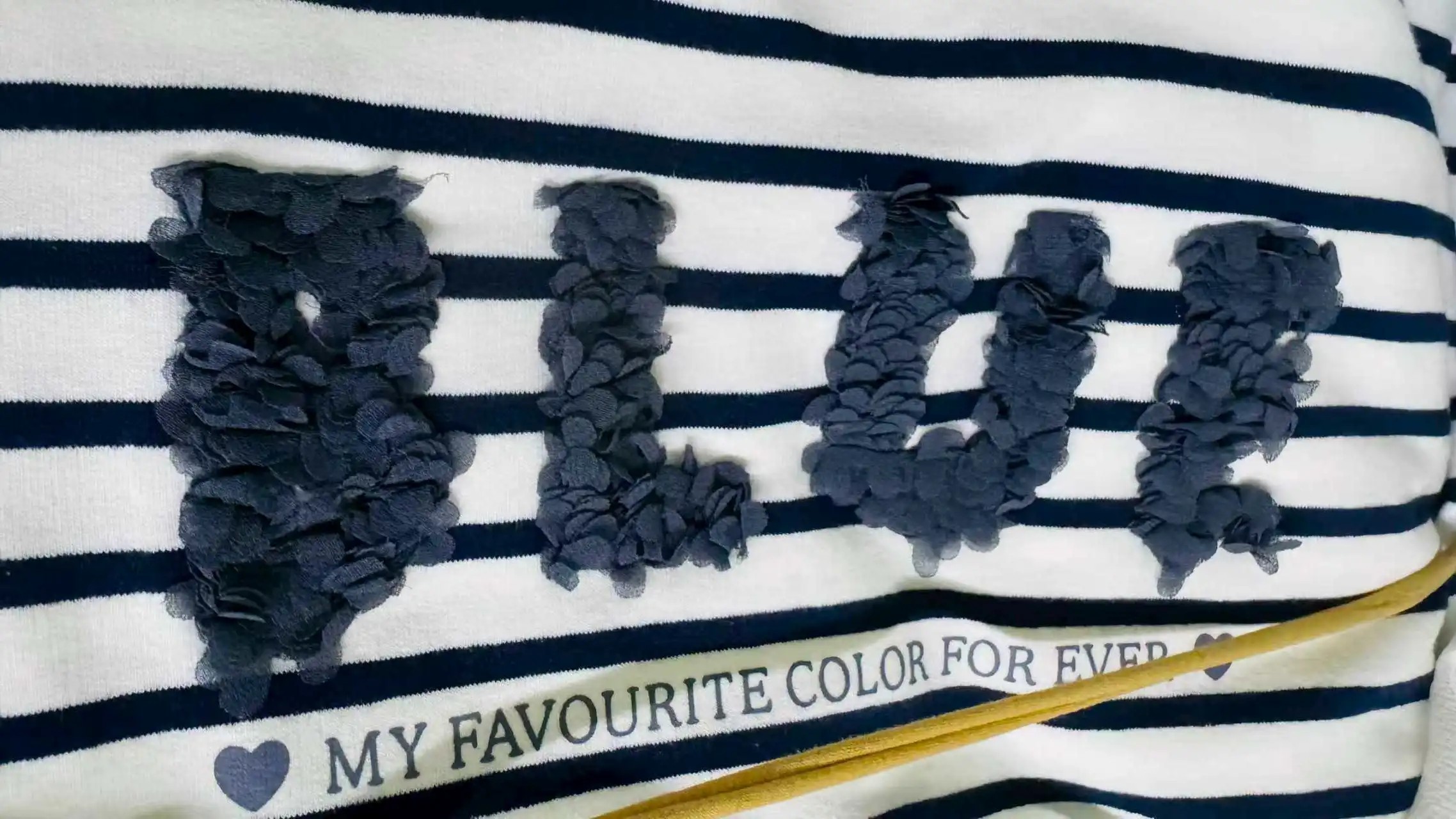
5. Cord & Heavy Yarn Embroidery
Cord and heavy-yarn techniques use thicker materials to create raised lines, outlines and textured graphics. They can look cleaner and more structured than chenille while still giving the surface a handcrafted character.
Cord Embroidery Patch
Cord Embroidery Patch uses corded yarn within a separate patch construction, creating a raised surface that can then be attached to the garment. The patch format helps define the motif as a distinct component.
Best suited for: logos, badges and dimensional graphic patches.
Production note: patch edge finish, attachment method and consistent cord placement.
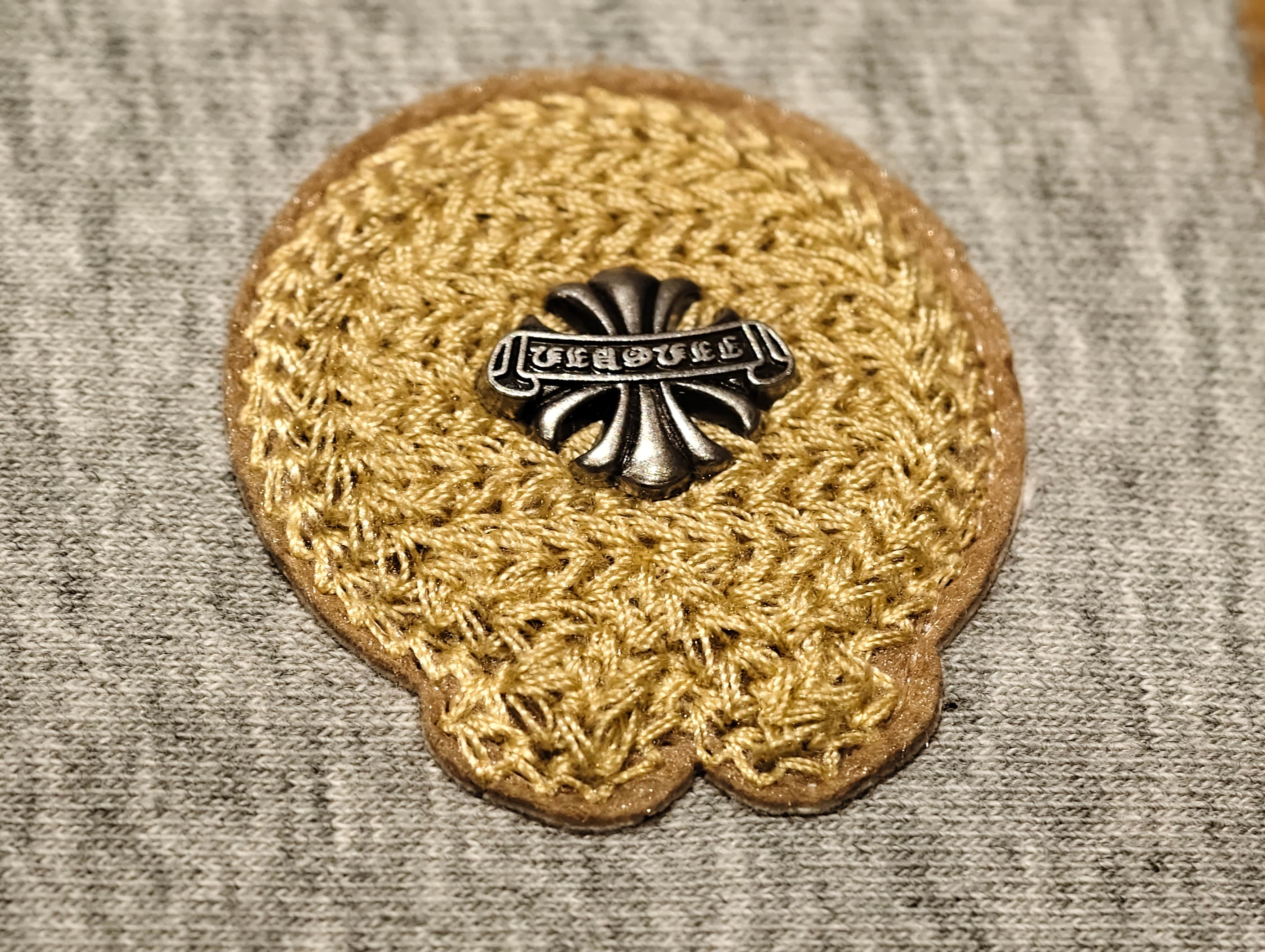
Faux Hand Heavy Yarn
Faux Hand Heavy Yarn uses thick yarn in a deliberately hand-worked style, creating visible stitch character and soft dimensional depth. It is useful when the design should feel crafted rather than mechanically uniform.
Best suited for: bold lettering, artisan-inspired motifs and tactile fashion graphics.
Production note: yarn tension, stitch spacing and keeping intentional irregularity controlled across bulk pieces.
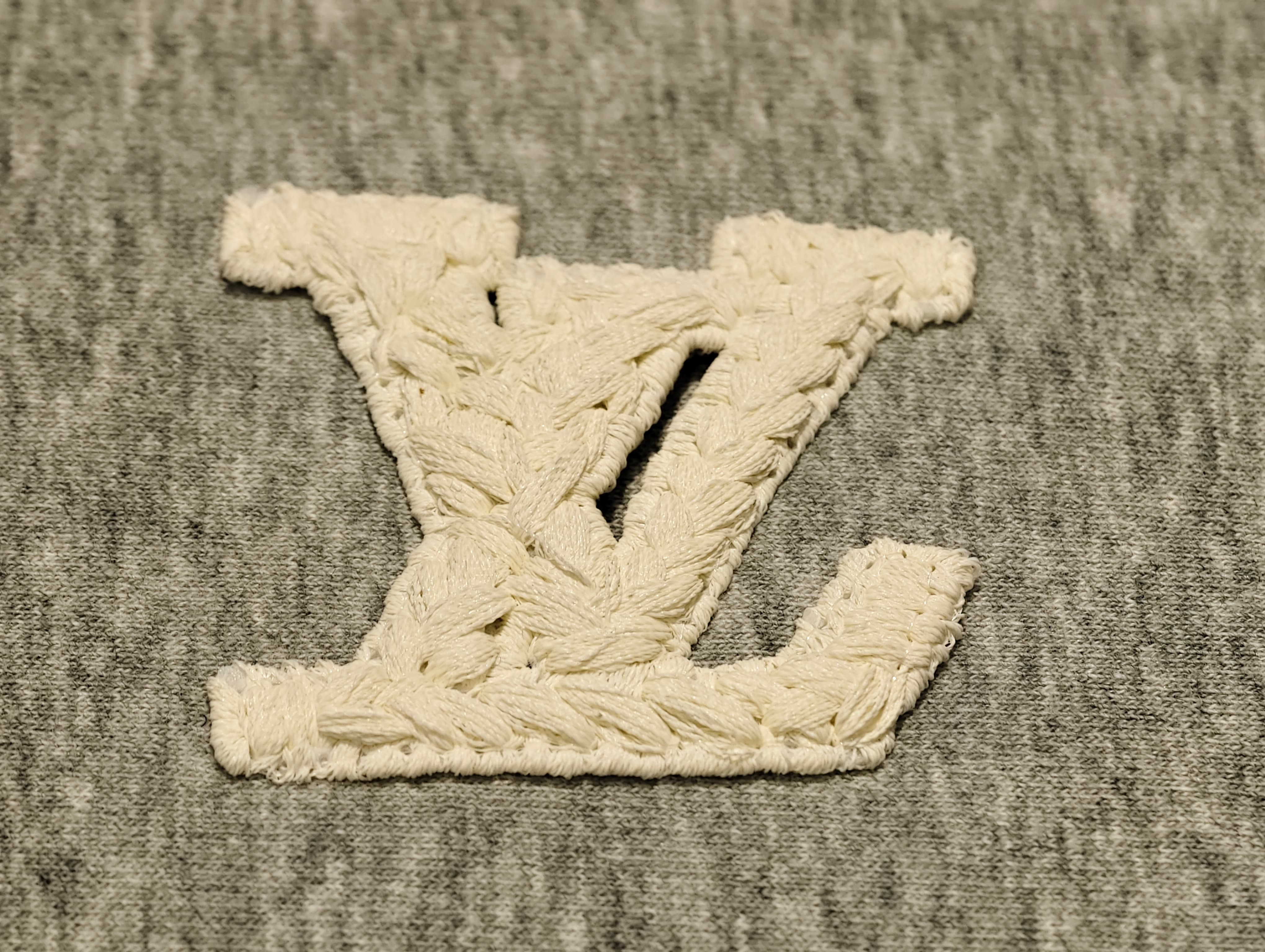
Mock Hand Cord
Mock Hand Cord uses corded stitches to imitate a hand-worked embroidered line. The raised cord produces expressive contours while remaining more structured than loose yarn embroidery.
Best suited for: freeform outlines, decorative lettering and handcrafted-looking graphics.
Production note: curve smoothness, cord tension and clean transitions in tight turns.

Cord Embroidery
Cord Embroidery secures raised cords onto the garment to create clean outlines and dimensional surface detail. The technique works especially well when the artwork depends on continuous lines rather than filled stitch areas.
Best suited for: graphic outlines, curved motifs, lettering and decorative borders.
Production note: cord thickness, turning radius and attachment density along the full motif.
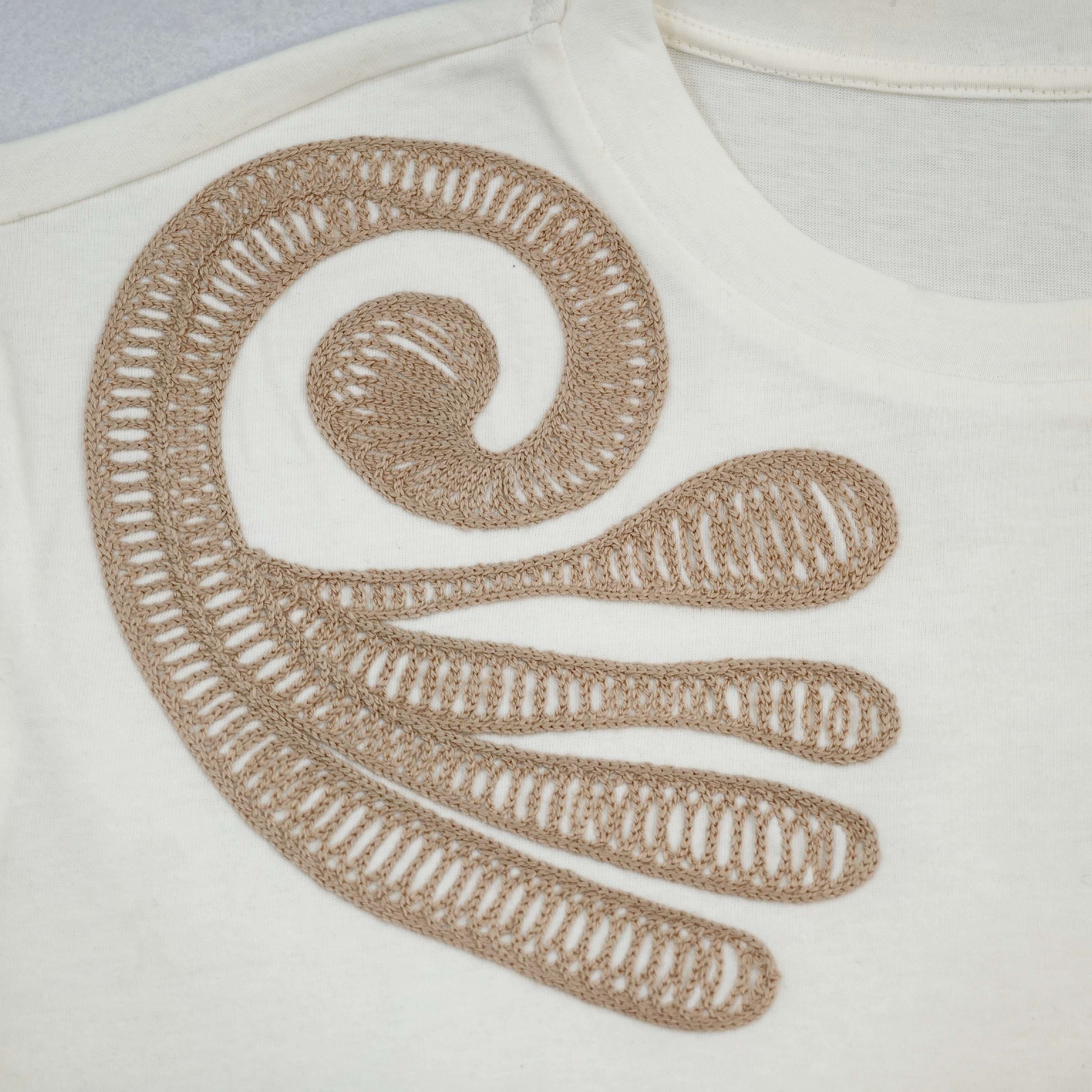
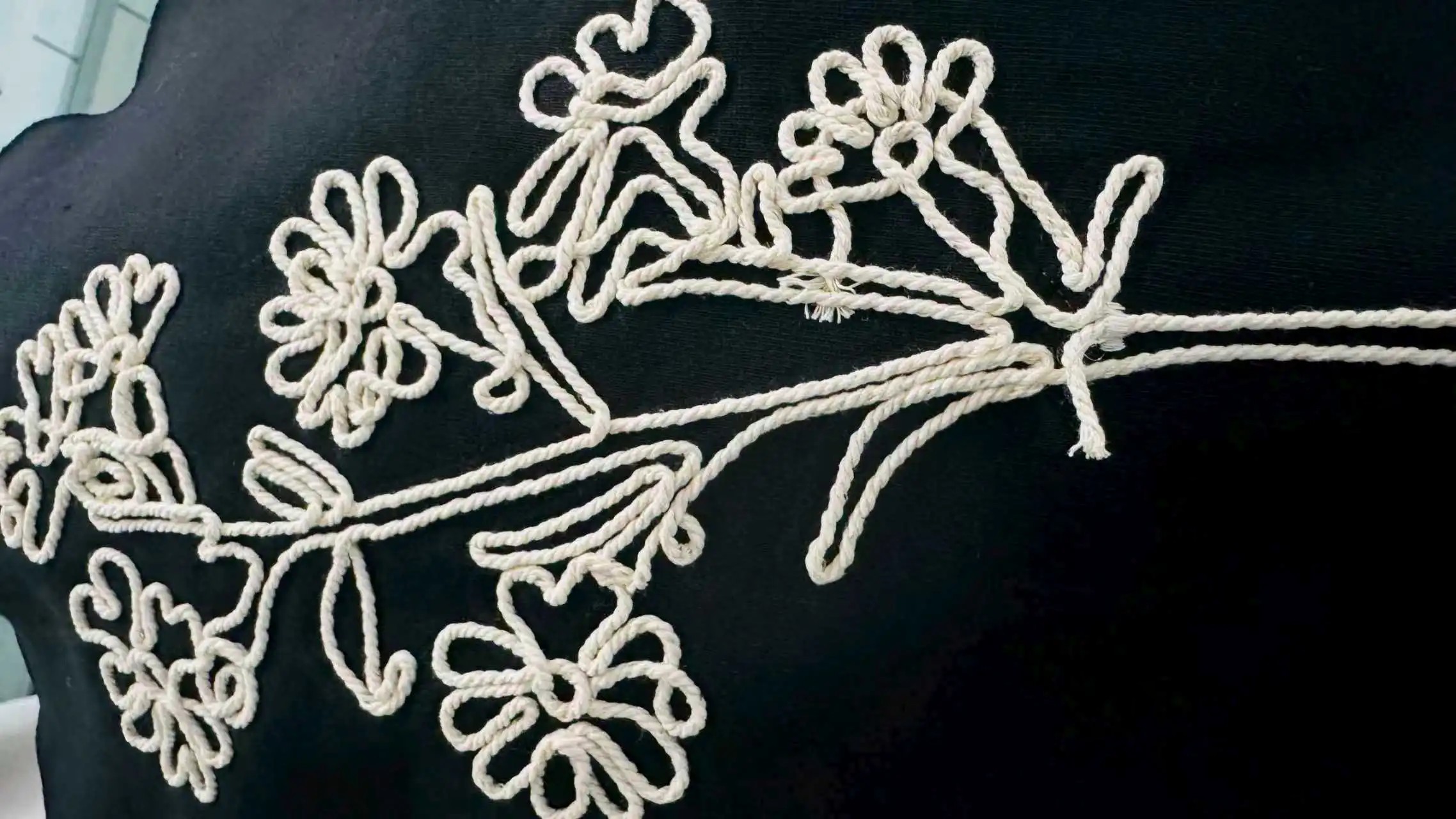
Thick Cotton Cording
Thick Cotton Cording uses substantial cotton cords to form raised linear graphics with a softer, more natural hand feel. The heavier cord makes even simple outlines visibly dimensional.
Best suited for: large graphic contours, tonal designs and soft tactile detailing.
Production note: cord thickness, seam crossing, motif scale and whether the garment fabric can support the added weight.
6. Beading & Sequin Embroidery
Beading and sequin techniques combine stitched construction with reflective or decorative components. They can range from subtle highlights to highly visible statement details, but attachment security and bulk consistency become especially important.
3D Flat & Sequin Embroidery
3D Flat & Sequin Embroidery combines raised or textured stitching with sequin accents in the same motif. The mix of thread depth and reflective detail creates a layered surface without making the design entirely sequin-based.
Best suited for: decorative logos, statement panels and fashion graphics needing both texture and shine.
Production note: sequin placement, stitch-to-sequin alignment and consistent motif definition.
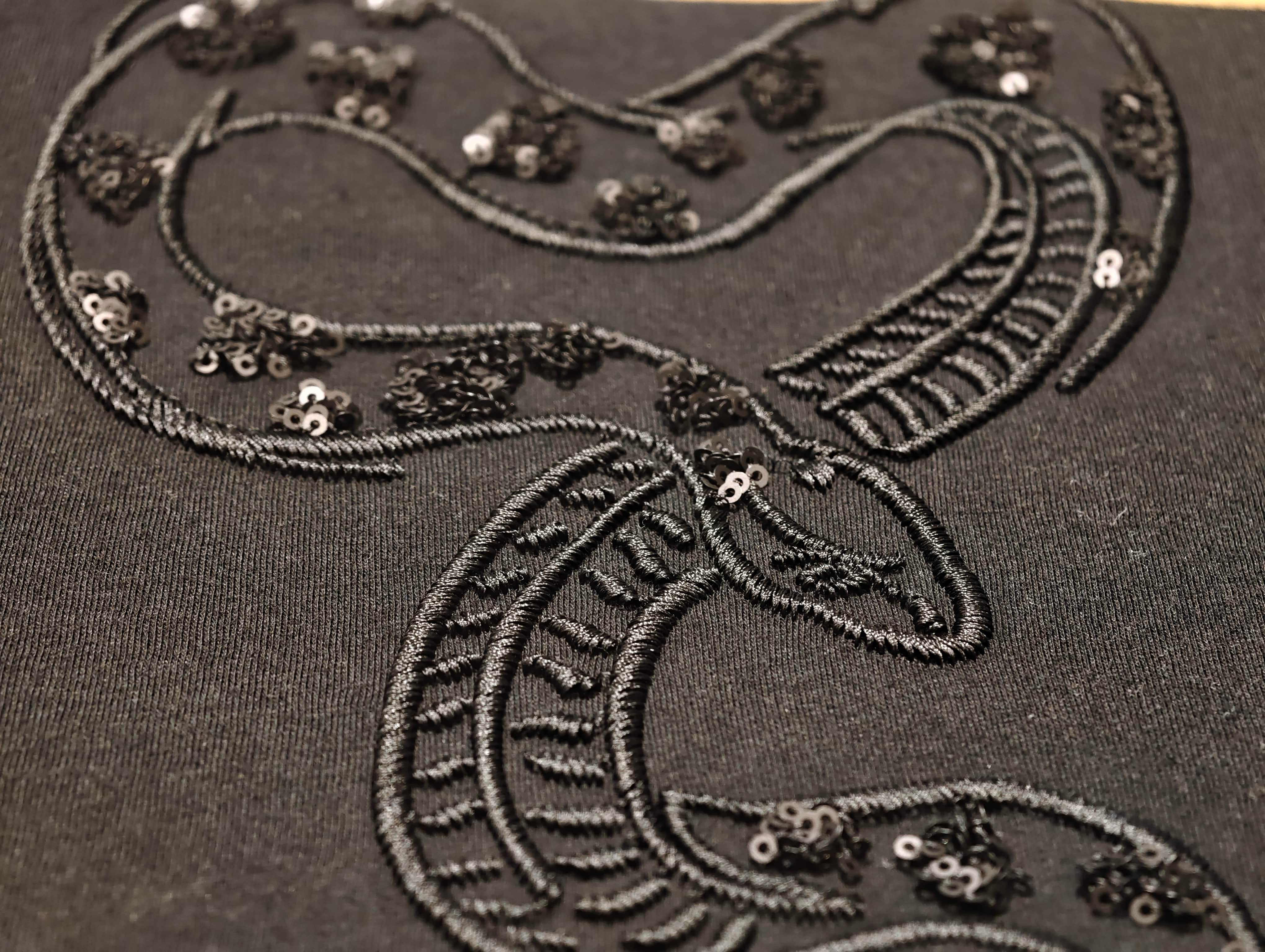
Toothbrush & Bugle Bead
Toothbrush & Bugle Bead combines a cut-loop, brush-like embroidered texture with elongated bugle beads. The contrast between soft pile and reflective bead accents gives the motif both tactile depth and light-catching detail.
Best suited for: decorative fashion motifs, premium graphics and mixed-texture embellishment.
Production note: bead attachment, cut-loop consistency and avoiding abrasion or snagging during handling.

Beading Embroidery
Beading Embroidery secures individual beads within an embroidered motif to create raised texture and reflective detail. The beads can be used sparingly as accents or placed more densely when the decoration is intended to become a major focal point.
Best suited for: fashion embellishment, decorative logos and premium surface detailing.
Production note: bead security, spacing, weight and whether hand finishing is required.

Beading & Sequins
Beading & Sequins combines two reflective embellishments in one construction. Different bead shapes, sizes and sequin finishes can create a richer surface than either element used alone.
Best suited for: decorative fashion panels, occasion details and high-visibility motifs.
Production note: mixed-material weight, spacing, attachment strength and consistency between hand-finished pieces.
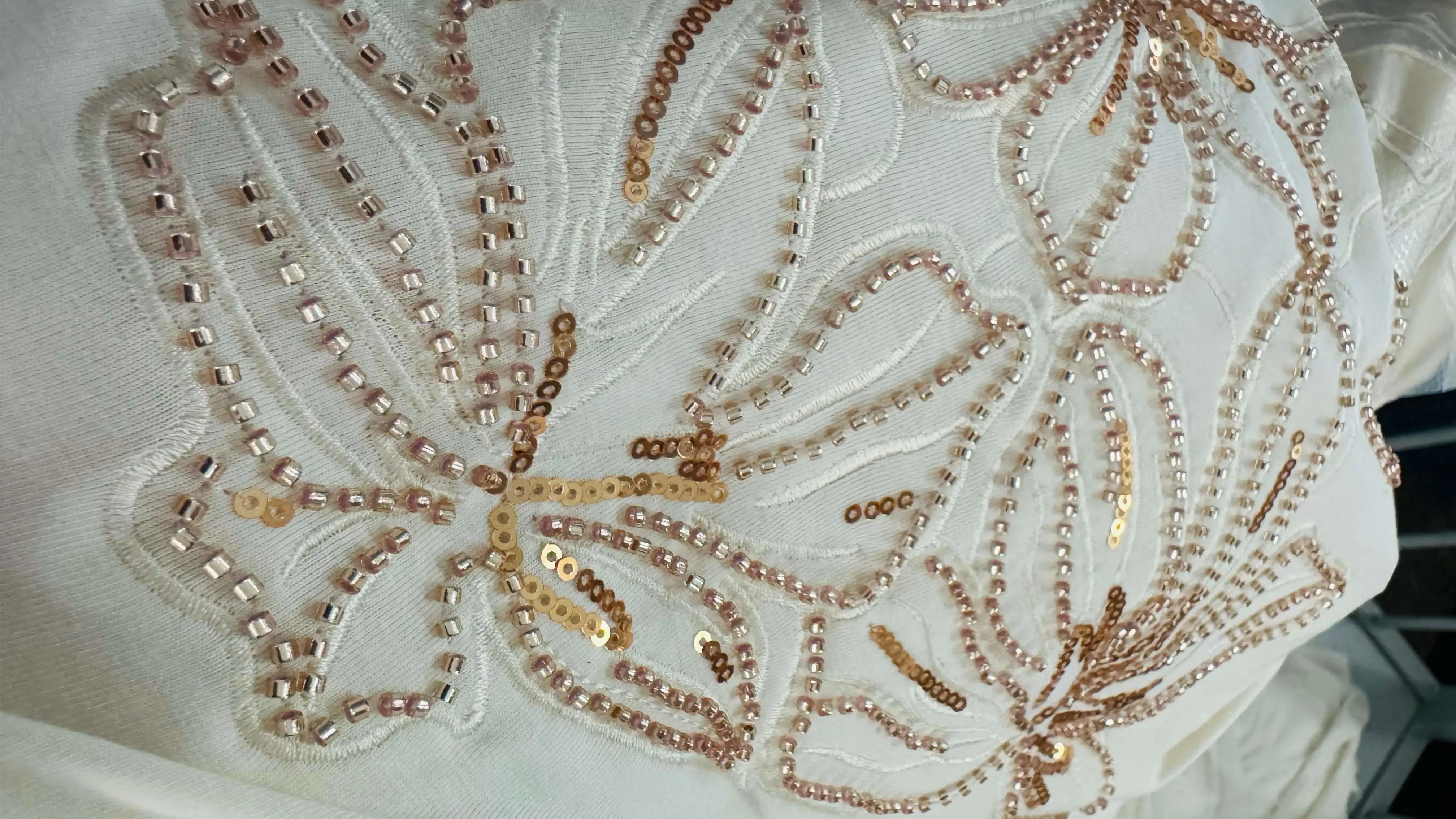
Sequin + Thread Embroidery
Sequin + Thread Embroidery uses standard thread stitching to define the motif while sequins add reflective accents. This combination keeps the graphic readable even when the sequins are used selectively rather than across the whole surface.
Best suited for: logos, floral motifs, fashion graphics and designs needing controlled sparkle.
Production note: sequin orientation, thread coverage and keeping both materials aligned with the approved artwork.

7. Cutwork Embroidery
Cutwork embroidery creates decorative openings by removing selected areas of fabric and reinforcing the cut edges with stitching. It produces a lighter, more open surface than the raised techniques above and is often used when negative space is part of the design.
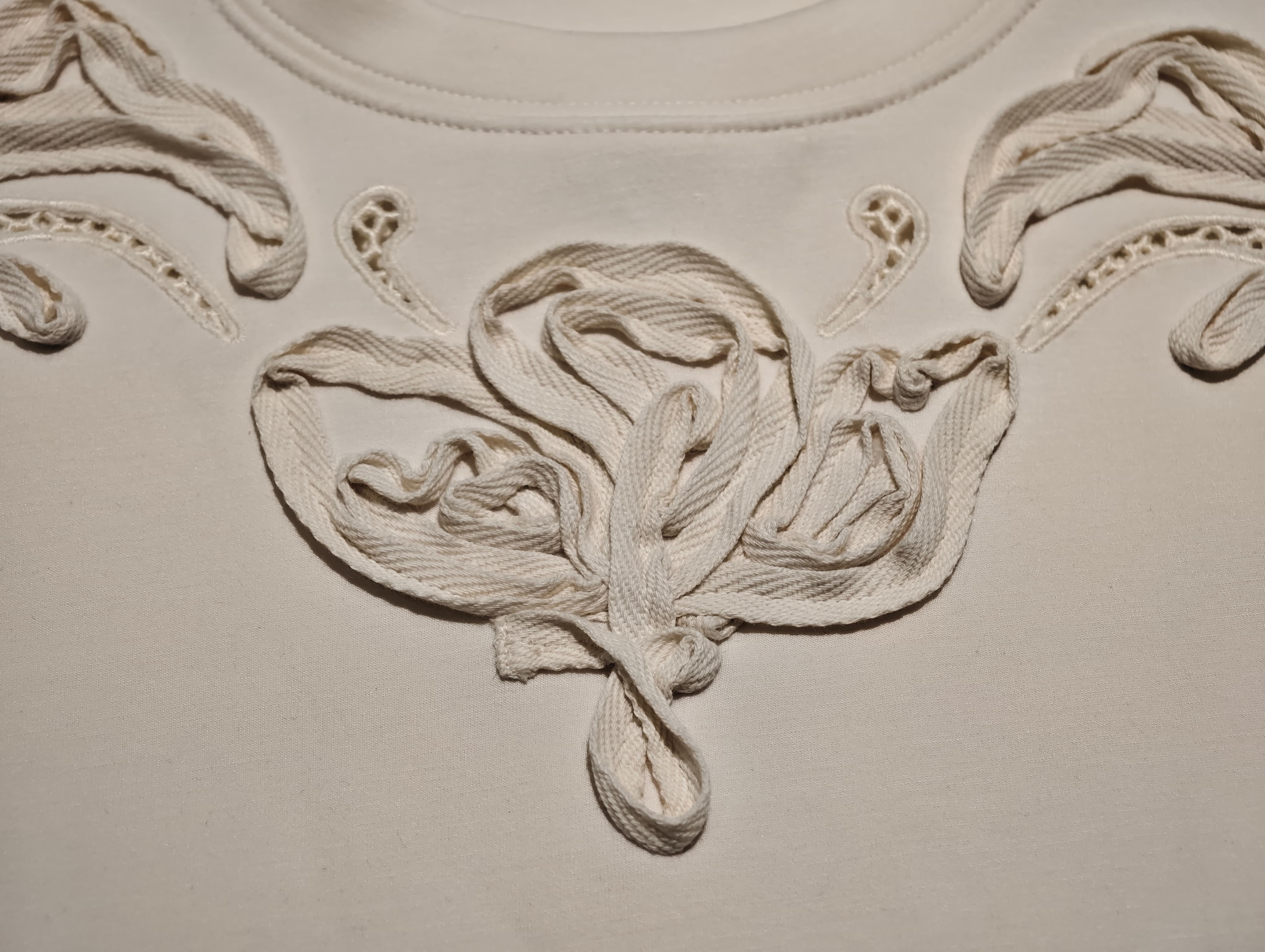
Ribbon with Eyelet Cutwork
Ribbon with Eyelet Cutwork combines openwork eyelets with woven ribbon embroidery. The ribbon adds another layer of texture around or through the cut areas, creating a more decorative and delicate finish.
Best suited for: floral motifs, feminine detailing and decorative openwork panels.
Production note: cut-edge reinforcement, ribbon placement and maintaining clean openings after finishing.
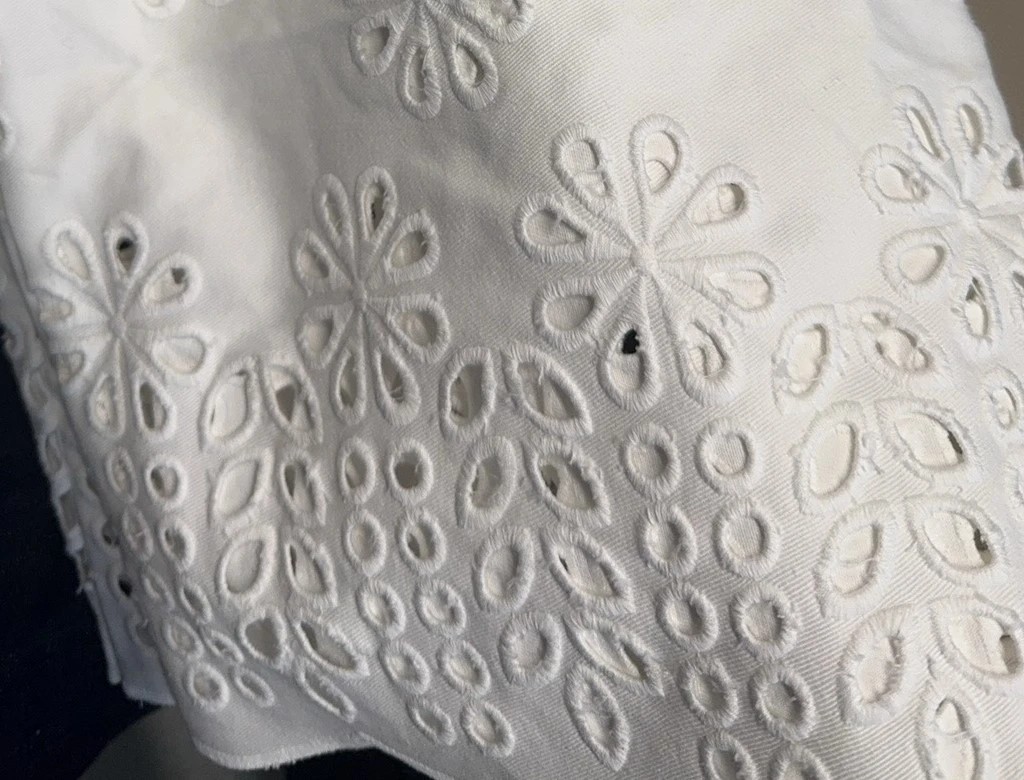
Eyelet Cutwork
Eyelet Cutwork removes small sections of the base fabric and finishes the openings with embroidered edges. The technique creates negative space, ventilation-like openings and decorative patterns without adding heavy surface bulk.
Best suited for: floral motifs, lightweight decorative panels and openwork garment details.
Production note: fabric stability, precision cutting and secure reinforcement around every opening.
How Buyers Can Compare Embroidery Techniques
The best embroidery technique depends on the garment fabric, artwork scale, desired surface and the level of repeatability required in bulk. A technique that works well on a heavyweight sweatshirt may need a different stitch density, backing or construction when used on a softer jersey.
| Technique Family | Main Effect | Typical Uses | Key Production Point |
|---|---|---|---|
| Flat & Satin | Clean, precise stitched surface | Logos, lettering, detailed motifs | Density, edge definition and puckering control |
| 3D & Foam | Raised, bold dimensional surface | Streetwear, sports graphics, bold lettering | Foam coverage, height and base-fabric stability |
| Chenille | Soft, plush and tactile texture | Varsity, retro and oversized graphics | Yarn density, loop height and edge control |
| Appliqué | Layered fabric contrast | Large letters, numbers and panel graphics | Fabric compatibility, edge finish and shrinkage |
| Cord & Heavy Yarn | Raised lines and handcrafted texture | Graphic outlines, lettering, decorative motifs | Material thickness, curves and attachment density |
| Beading & Sequins | Reflective, dimensional embellishment | Fashion details and statement motifs | Attachment security, weight and handwork consistency |
| Cutwork | Openwork and negative-space detail | Decorative panels and lighter motifs | Precision cutting and reinforced edges |
If the artwork still needs to be translated into a production-ready garment, our clothing design and development service can help review placement, scale, fabric compatibility and construction direction before sampling begins.
What to Confirm Before Bulk Production
A successful embroidery sample is only the first approval point. Before bulk production, buyers should confirm whether the chosen effect can be repeated consistently on the actual garment fabric and across the intended order quantity.
- Artwork size and placement: confirm exact dimensions and position on the garment.
- Thread, yarn and embellishment colors: approve physical references rather than relying only on screen colors.
- Stitch density and surface height: particularly important for satin, chenille and 3D foam effects.
- Base-fabric stability: check whether the garment can support the embroidery weight and stitch density without distortion.
- Backing and reinforcement: define the support method where required.
- Edge and small-detail definition: review letters, tight curves and corners after sampling.
- Wash and finishing behavior: verify appliqué fabrics, cords, beads, sequins and threads remain stable after finishing.
- Bulk repeatability: retain an approved physical sample as the reference standard for production.
For new embroidery developments, the sampling stage is where stitch density, material combination, scale and placement should be tested before the style moves forward. Our garment sampling development process can be used to review these details before bulk confirmation.

embroidery-sample-bulk-production-review
Embroidery FAQ
Which embroidery technique is best for a clean logo?
Flat embroidery or satin embroidery is usually the most suitable starting point when the design requires clean outlines, smaller lettering and a smooth stitched surface.
What is the difference between 3D embroidery and chenille embroidery?
3D embroidery creates height through foam, thick thread or layered stitching, while chenille uses looped or cut yarn to create a softer, plush surface. Both are dimensional, but their texture and visual character are very different.
Can several embroidery techniques be combined in one design?
Yes. Appliqué, chenille, sequins, beads, cords and standard thread embroidery can be combined in a single motif. Hybrid constructions should be sampled first because every added material changes weight, thickness and production complexity.
Does embroidery work on every apparel fabric?
Not in the same way. Lightweight, stretchy or soft fabrics may require lower stitch density, backing or simplified artwork. Heavy sweatshirts, jackets and structured fabrics generally support thicker and more dimensional embroidery more easily.
What should buyers approve before placing an embroidery order?
Buyers should confirm artwork size, placement, color, stitch type, material combination, backing, surface height and the approved physical sample. For complex techniques, the physical sample is especially important because screen artwork cannot fully represent texture and depth.
Developing an embroidered apparel style?
Share your artwork, garment reference, fabric direction and target effect so the embroidery construction can be reviewed during sampling.