
340 GSM Tapered Knit Pants Factory











Fabric, wash, decoration, branding, and sampling — aligned to your program from first
sketch to bulk delivery.
Customization & Development
Product Details
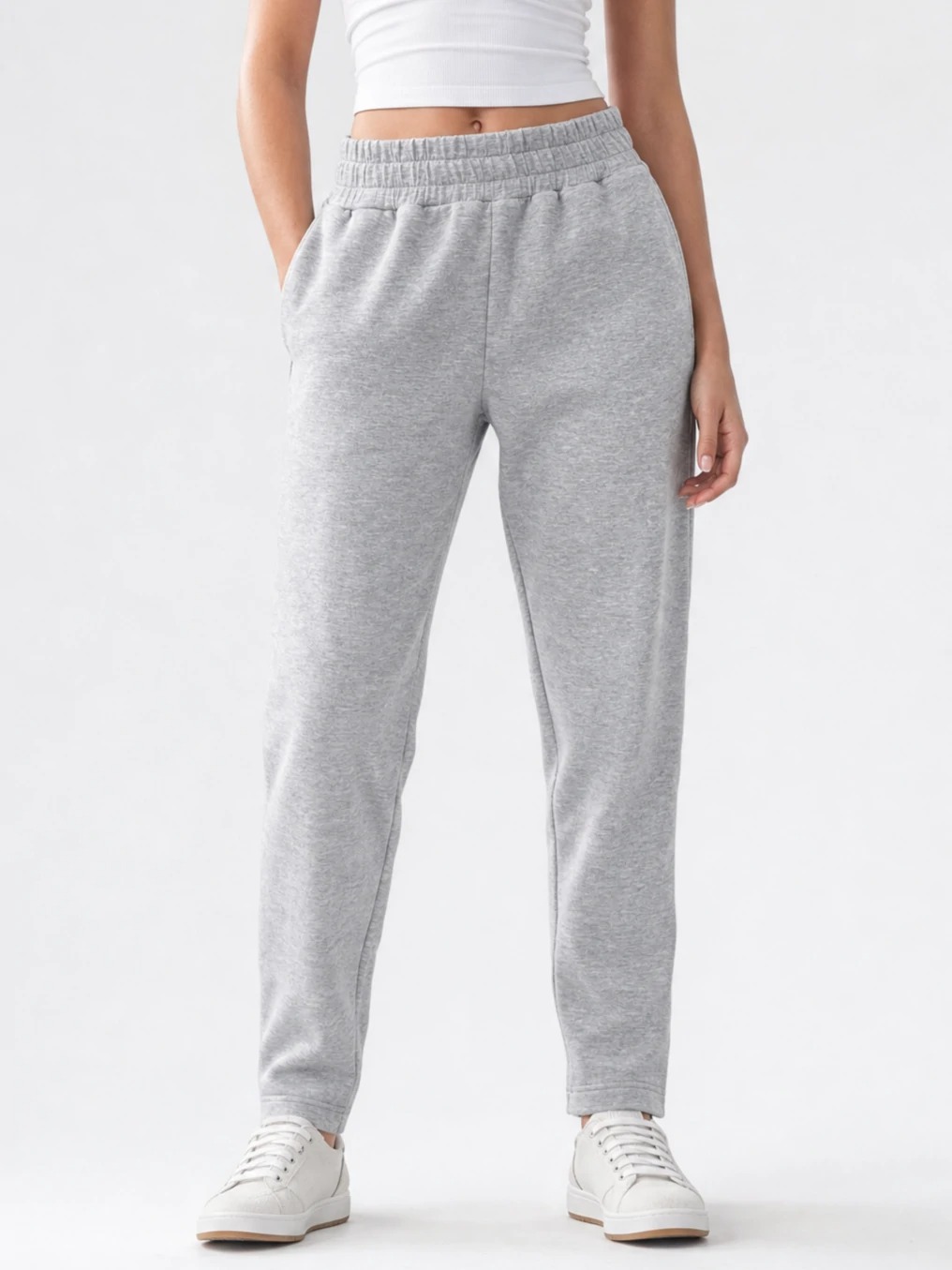
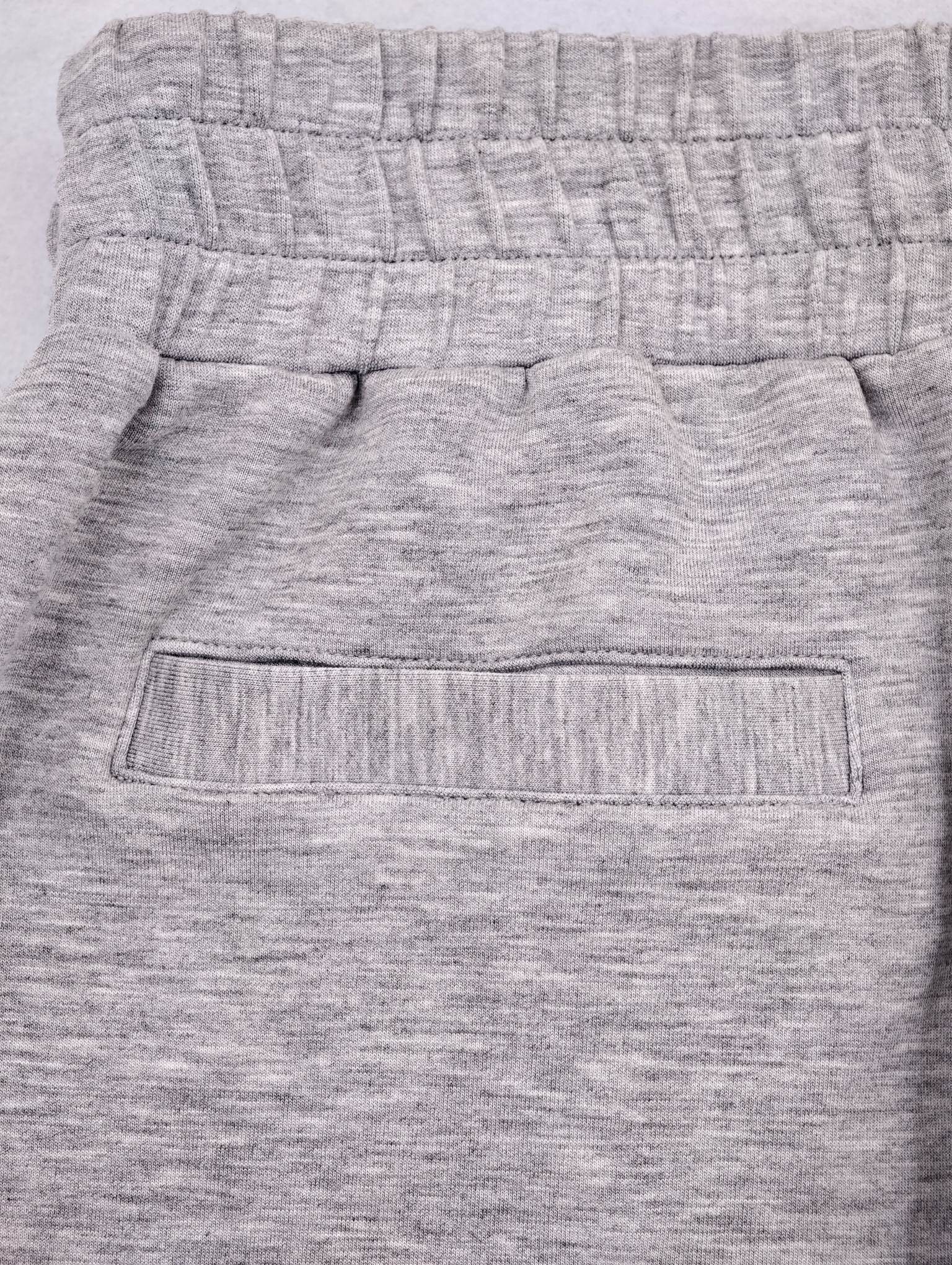
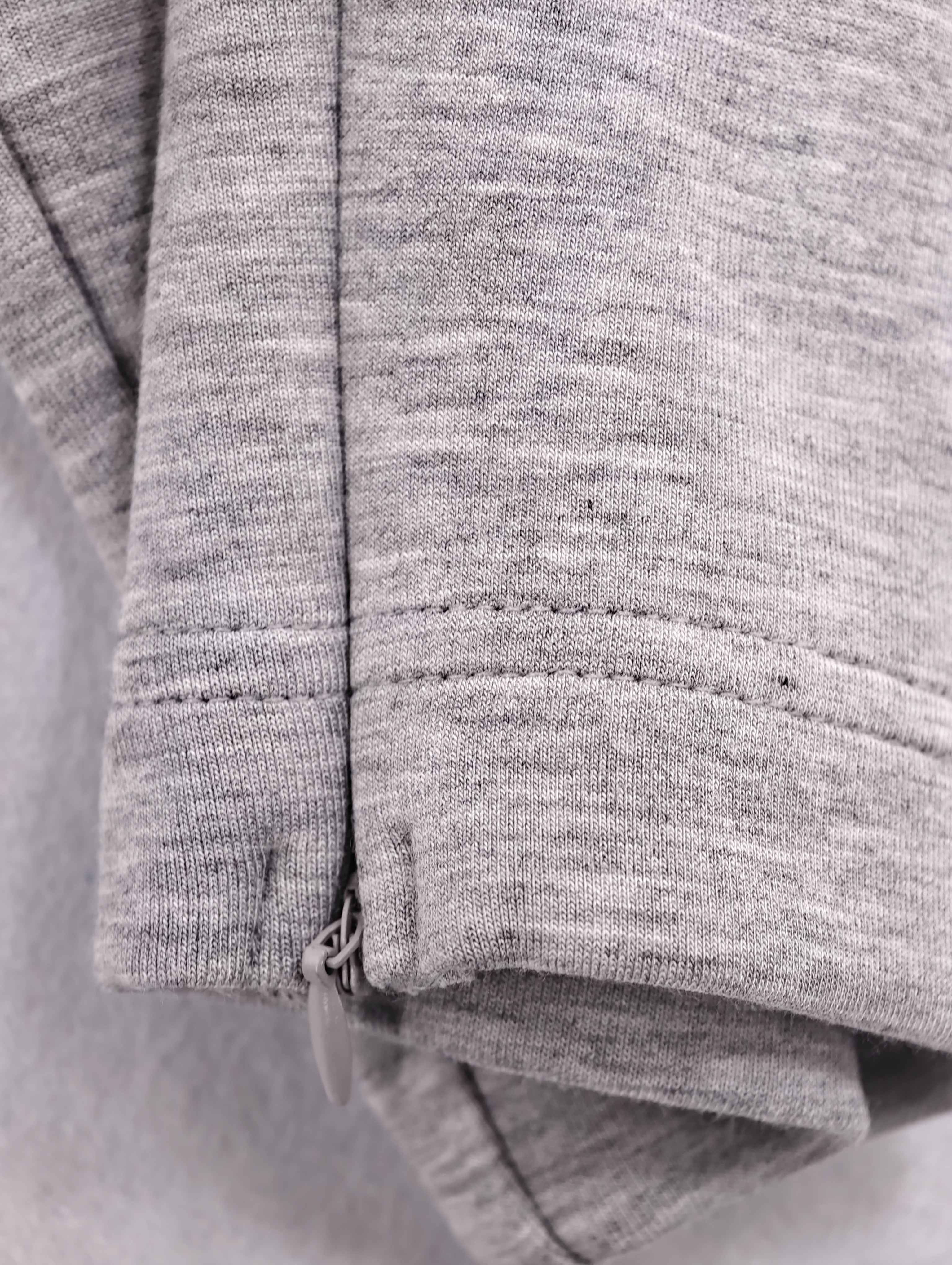
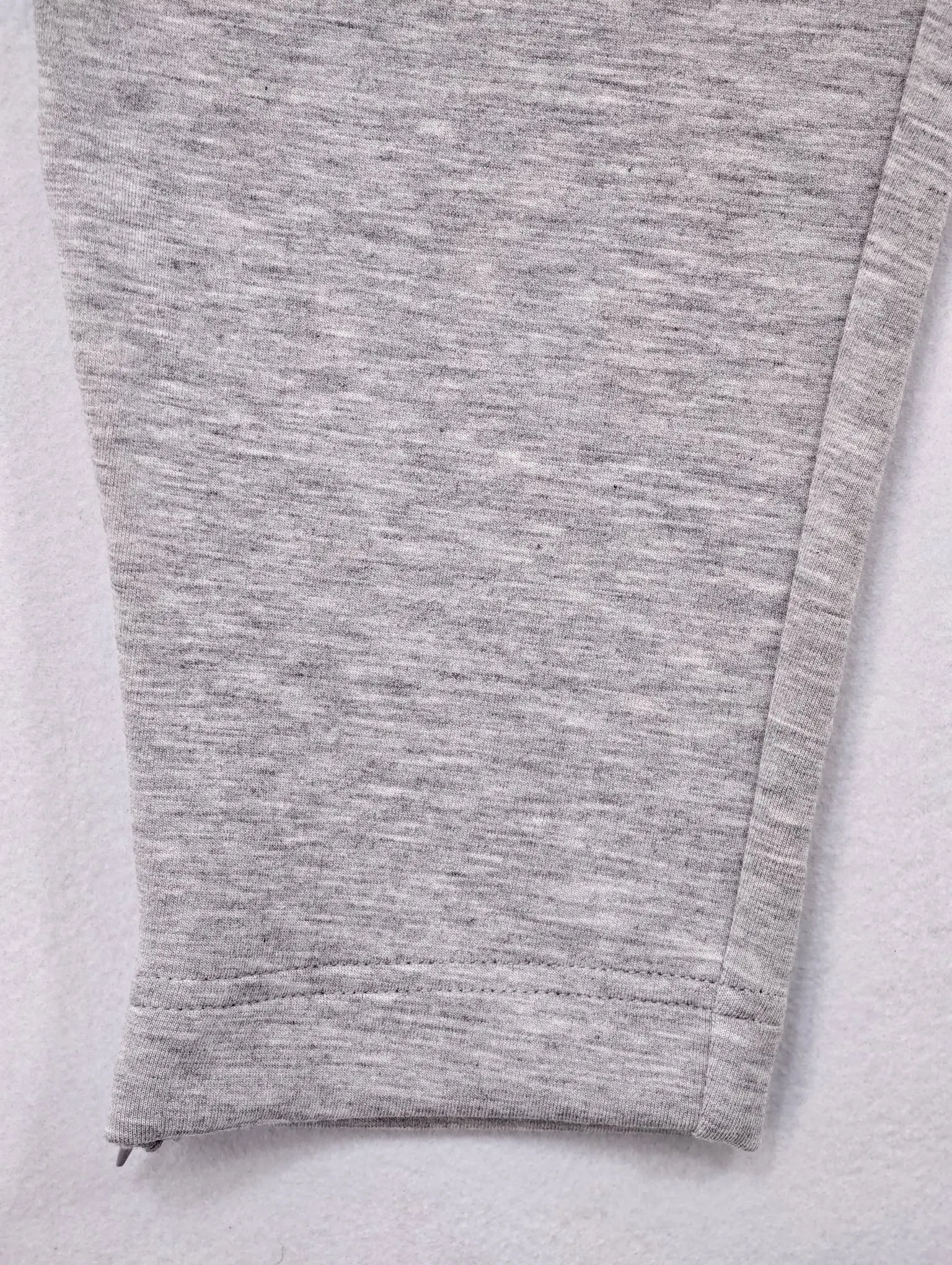
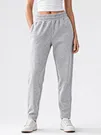
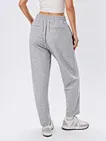
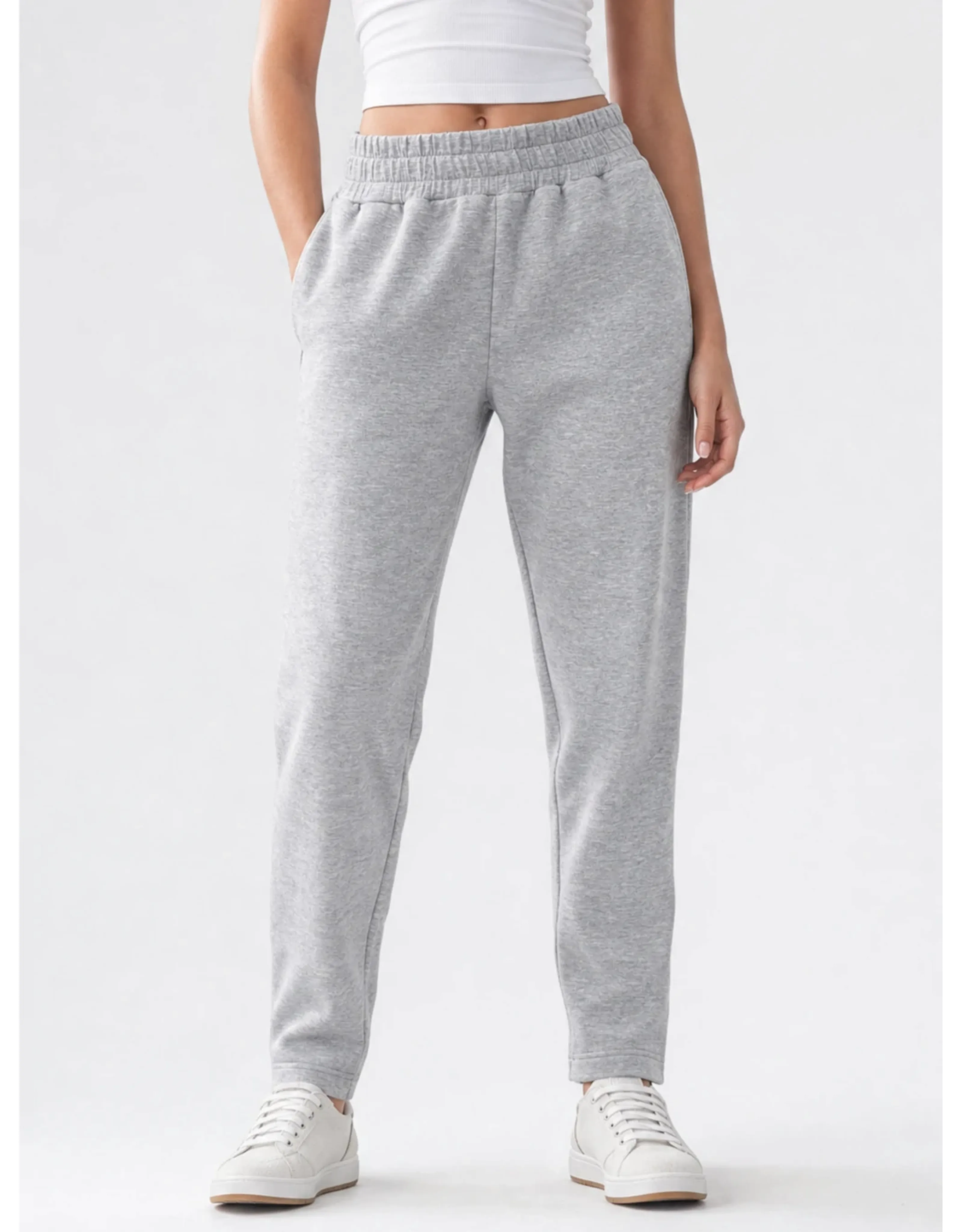
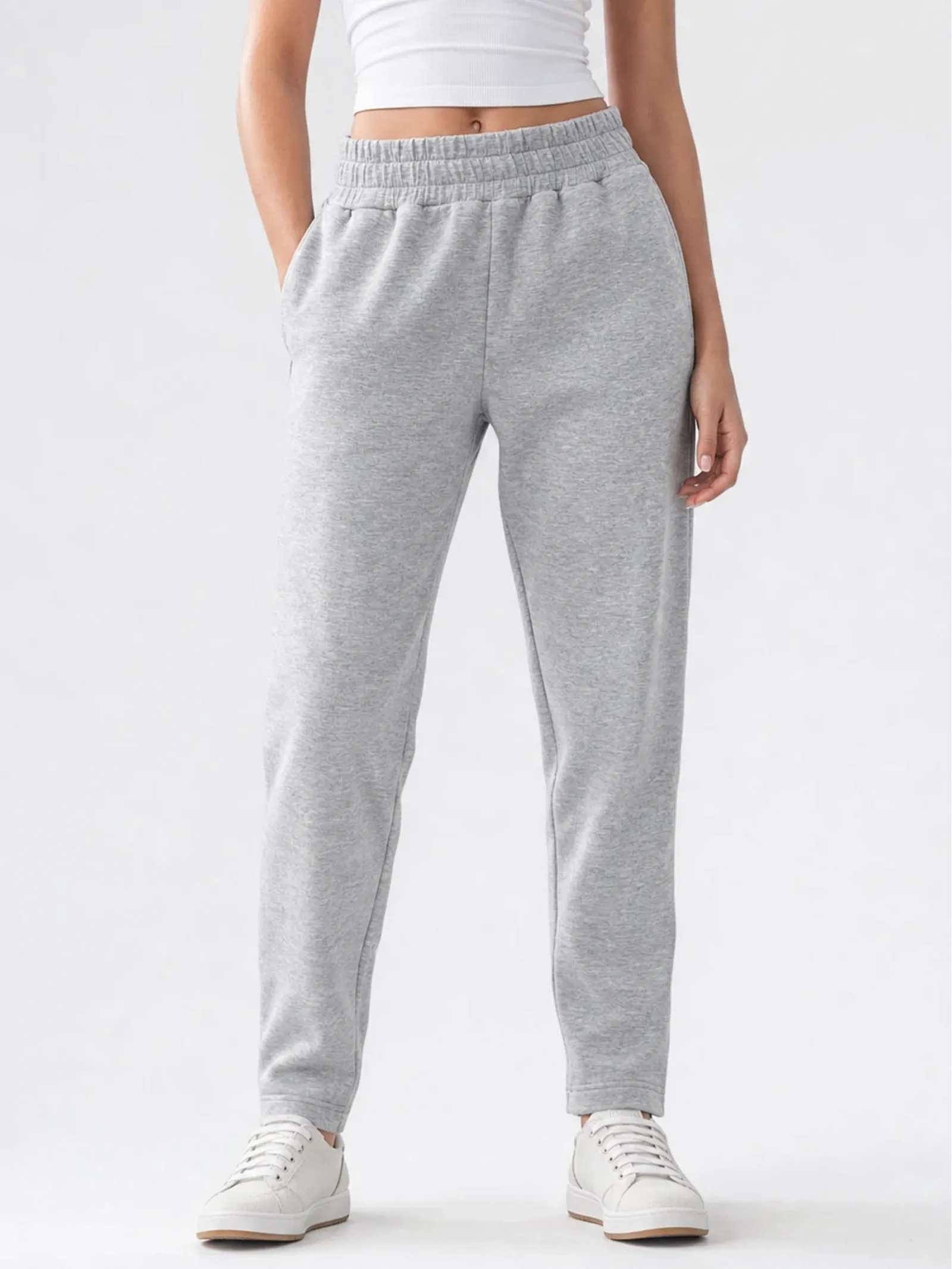
These custom women’s tapered knit pants combine a high-rise elasticated waistband with relaxed room through the hip and thigh before narrowing toward the ankle. The 330–340 GSM rayon-blend knit provides a smooth surface and substantial drape, while the heavier 380 GSM rib supports the waistband and improves recovery. Angled side pockets and a rear welt pocket add practical function without interrupting the clean heather-grey silhouette.
| Main fabric | 75% rayon, 23% polyester, 5% spandex — supplied ratio requires confirmation |
|---|---|
| Fabric weight | 330–340 GSM main fabric; 380 GSM rib |
| Fit | High-rise relaxed fit with tapered ankle-length legs |
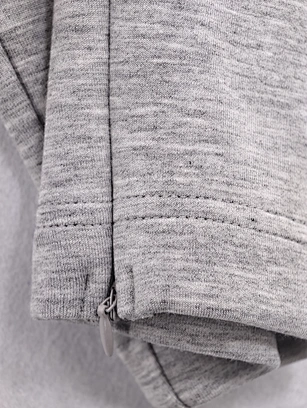
| Design details | Elastic waistband, angled side pockets, rear welt pocket and clean ankle hems |
| Suitable for | Elevated loungewear, casualwear, travel, athleisure and coordinated sets |
330–340 GSM Knit with Controlled Tapered Drape
Rayon Softness and Smooth Surface
Rayon gives the fabric a softer touch and allows the pants to fall cleanly from the hip without creating the stiffness associated with heavier conventional sweatpants. The substantial weight provides enough coverage and body to support the tapered leg while maintaining a more polished appearance for travel and elevated lounge collections.
Polyester Stability and Spandex Recovery
Polyester supports dimensional stability, while spandex provides flexibility through the waistband, seat, knees and lower legs. Fabric relaxation, shrinkage and recovery should be checked before bulk cutting because changes in width or length can affect the rise, knee position and finished ankle opening. The supplied fiber percentages total 103%, so the final composition should be confirmed before care labels and production specifications are released.
380 GSM Rib Waistband and Elastic Control
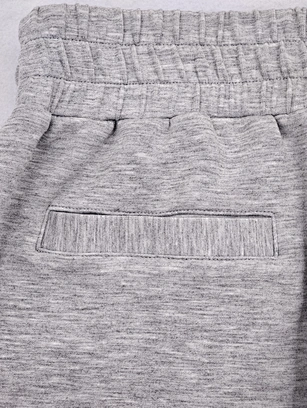
The waistband uses a heavier rib quality to provide stronger recovery than the main fabric. Rib extension, elastic tension and waistband height should be approved together so the top edge remains secure without rolling, collapsing or creating excessive gathering through the upper hip. Multiple stitching rows should remain parallel across the full waistband circumference.
The rib and main fabric may respond differently during sewing and laundering. Attachment ratios should therefore be tested on the fitting sample to prevent twisting, uneven gathering or visible pulling around the waist seam.
Tapered Leg Shape and Ankle Opening
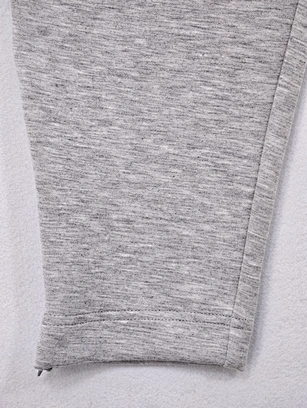
The leg begins with comfortable volume through the hip and thigh before gradually narrowing below the knee. Thigh width, knee width, calf circumference and hem opening should be reviewed together so the taper appears balanced rather than tight or abruptly shaped. Both legs should remain equal in length and hang without twisting toward the front or back.
Side Pockets and Rear Welt Pocket Construction
Angled side pockets provide easy hand access while maintaining a clean front body. Pocket opening length, reinforcement and bag depth should be checked on body so the edges remain flat and do not pull away from the hip. Pocket bags should offer practical depth without creating visible bulk beneath the main fabric.
The rear welt pocket adds a more finished casualwear detail to the back body. Welt width, opening position and reinforcement need to remain level and secure, particularly because stretch knit fabrics can distort during pocket construction.
Custom Options for Private Label Programs
Private label tapered pants development may include:
- Alternative rayon blends, fabric weights and surface finishes
- Custom rib qualities, waistband heights and elastic widths
- Adjustments to rise, hip width, inseam and ankle opening
- Side pockets, welt pockets, patch pockets or pocket-free versions
- Embroidery, raised logos, heat transfers or woven labels
- Matching tops, care labels, hangtags and branded packaging
Sample approval should confirm the final fabric composition, waistband recovery, pocket position, tapered-leg balance and post-wash measurements before bulk grading and cutting begin.
Frequently Asked Questions
Why is the rib heavier than the main fabric?
The 380 GSM rib provides additional recovery and structure at the waistband, helping the high-rise opening remain secure during movement and repeated wear.
Can the leg shape be made straighter or more fitted?
Yes. Thigh width, knee width, calf measurement, inseam and ankle opening can be adjusted during pattern and sample development.
Can the rear welt pocket be removed?
Yes. The back can be developed with a welt pocket, patch pocket, embroidered detail or a cleaner pocket-free construction.
What should be approved before manufacturing?
Confirm the final fabric composition, main and rib handfeel, waistband recovery, rise balance, pocket construction, leg taper, shrinkage and post-wash measurements.
Confirming Waistband Recovery Before Taper and Bulk Measurements Are Released
Review the sample for waist comfort, rise balance, side-pocket access, rear welt alignment, knee position, ankle opening and finished inseam length. For sampling and quotation, provide the confirmed fabric composition, target quantity, size range, preferred rise, inseam, fit direction, color standard, branding details and any available technical files.