
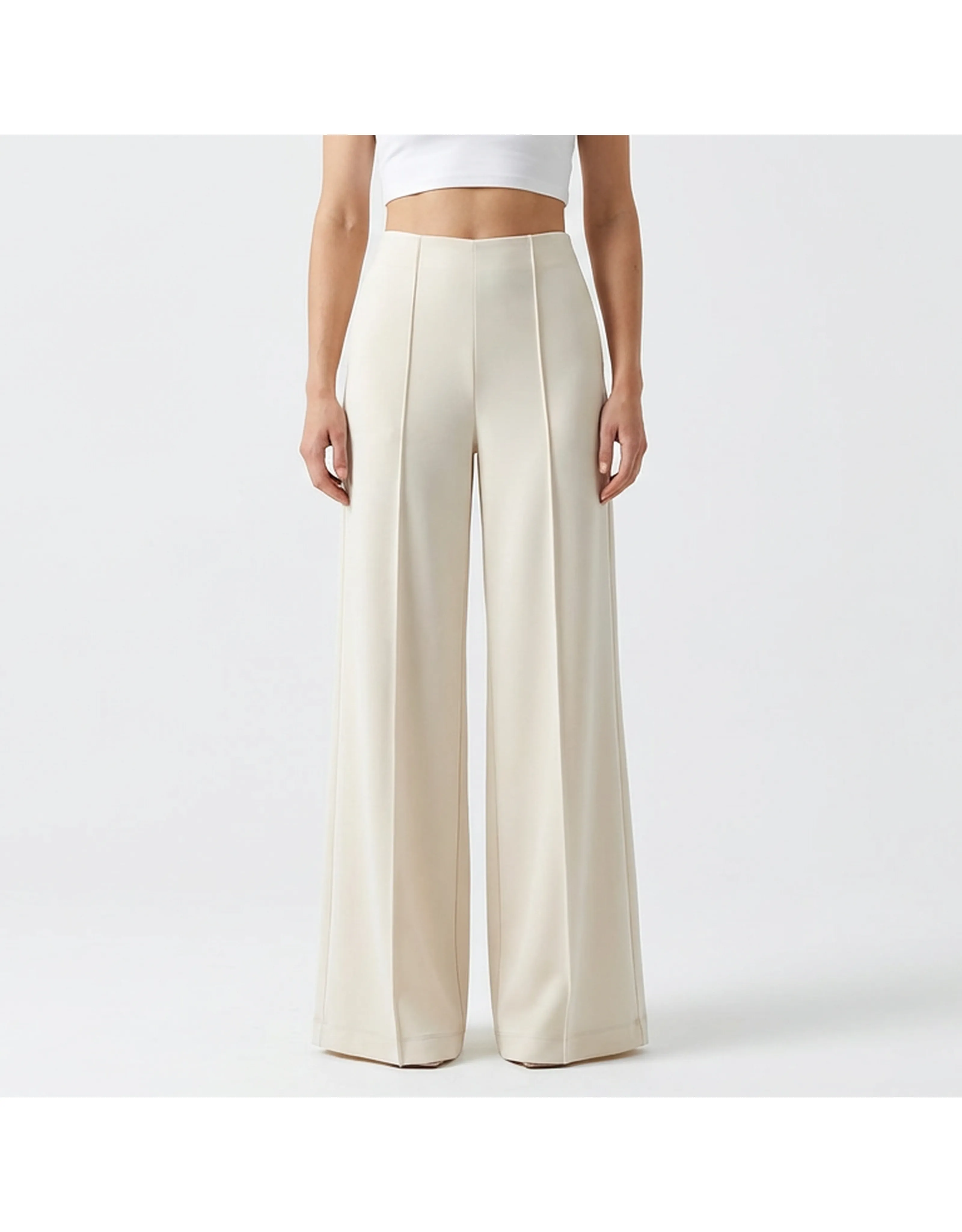
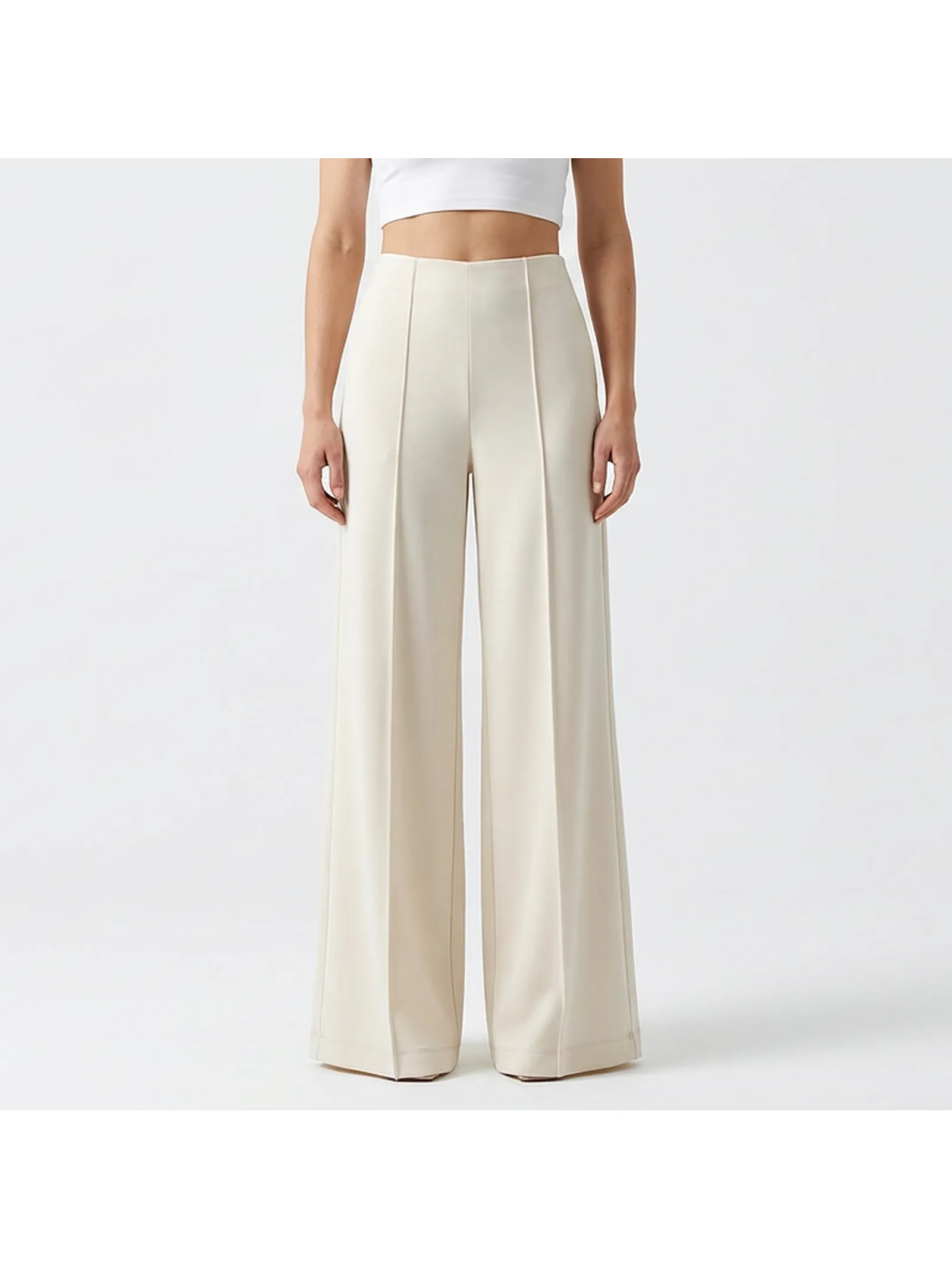
Custom Stitched-Pintuck Stretch Knit Wide-Leg Pants











Fabric, wash, decoration, branding, and sampling — aligned to your program from first
sketch to bulk delivery.
Customization & Development
Product Details
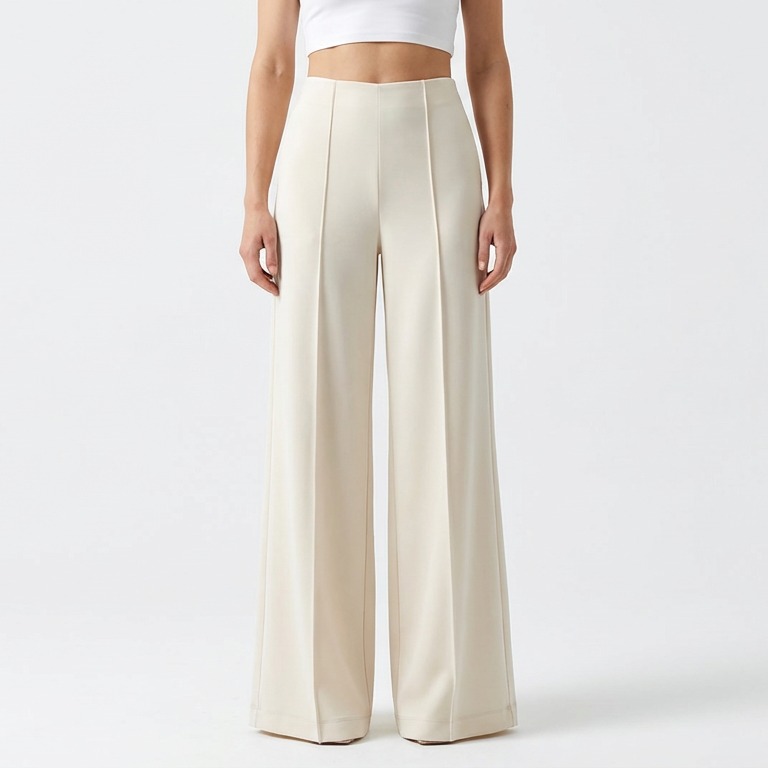
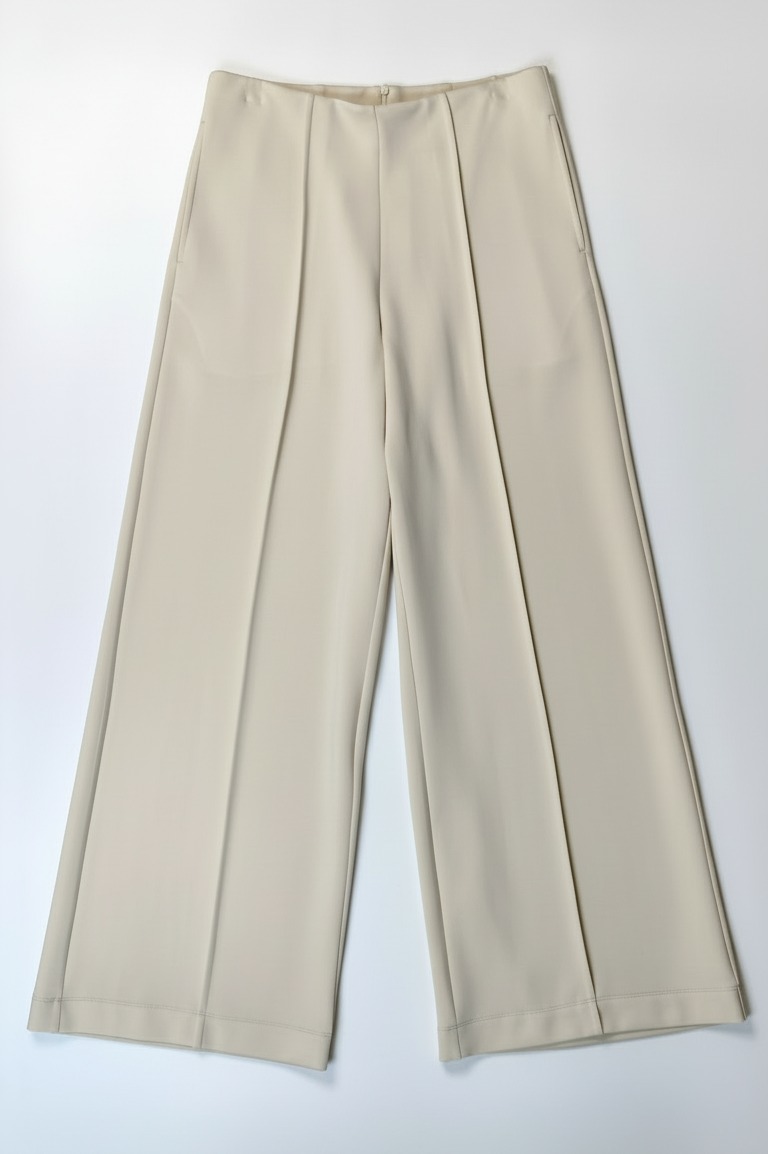
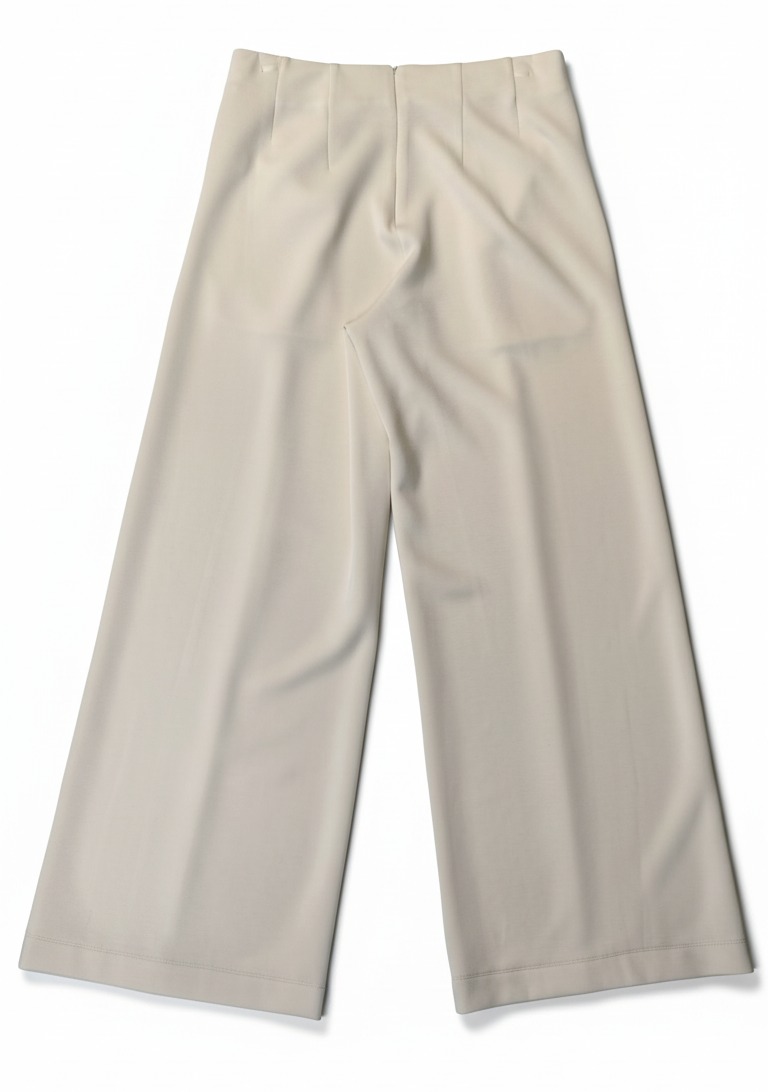
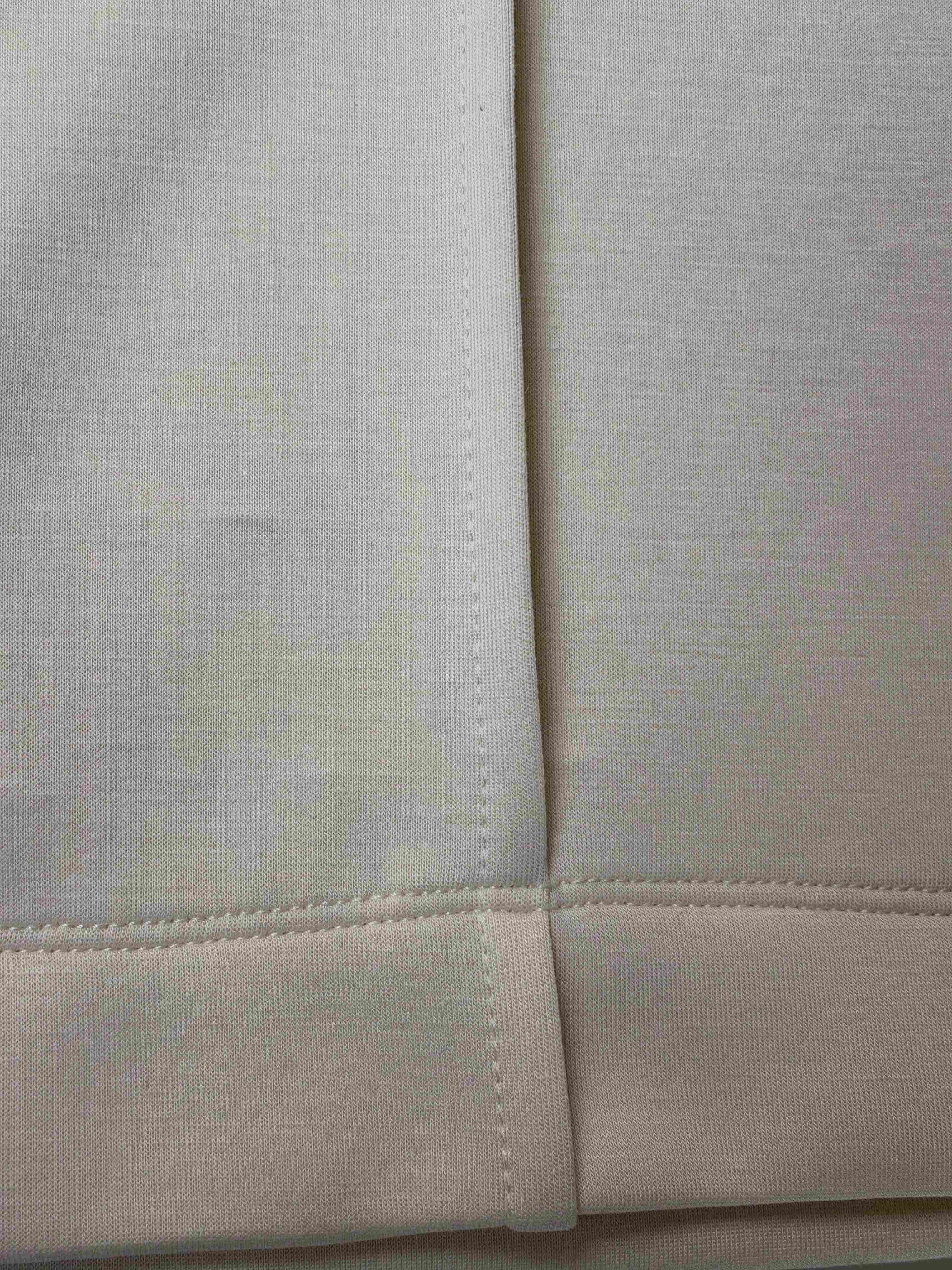
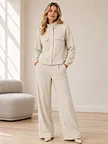
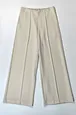
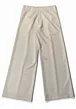
These stitched-pintuck stretch knit wide-leg pants combine a clean high-rise waist with long vertical front lines and a fluid full-length silhouette. The ivory tone gives the style a polished, minimal appearance, while the wide legs create easy movement from the hip through the hem. This direction suits elevated loungewear, travel capsules and refined casual collections that need comfort without a traditional sweatpant look.
| Main composition | 48% rayon, 48% polyester, 4% spandex |
|---|---|
| Fabric weight | 260 GSM |
| Fabric structure | Smooth rayon-polyester stretch knit |
| Fit direction | High-rise full-length wide-leg silhouette |
| Key details | Clean waistband, stitched front pintucks, fluid legs and wide hem openings |
260 GSM Stretch Knit with Fluid Drape
Rayon Softness with Polyester Stability
Rayon supports a smoother handfeel and softer vertical drape, while polyester helps the fabric maintain shape and dimensional stability. At 260 GSM, the material is substantial enough to create a clean trouser line without the weight of heavy fleece or scuba.
Four Percent Spandex for Daily Movement
The 4% spandex content adds flexibility through the waist, hips and knees. Recovery, seat growth and knee bagging should be checked through wear testing. Panels need adequate relaxation before cutting so both legs remain equal after sewing.
High-Rise Waist and Upper-Fit Control
The waistband should sit smoothly against the body without rolling, gaping or compressing the waist. Waist height, internal support and stretch ratio require on-body approval. The transition from waist to hip should remain clean so the fabric does not gather beneath the band.
Stitched Pintucks and Vertical Line Accuracy
Keeping Both Front Lines Symmetrical
The stitched pintucks create a lengthening effect and help organize the wide-leg silhouette. Their position, depth and stitch tension must match on both legs. Uneven feeding can pull the line inward or create rippling through the front panel.
Maintaining Placement Across Sizes
Grading should preserve the visual distance between the pintucks, inseams and side seams. The lines should remain centered on the legs rather than shifting as the size increases.
Wide-Leg Drape and Finished Hem Level
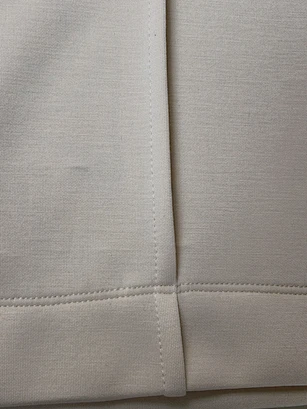
Both legs should fall evenly from the hip and remain balanced at the floor. Hanging and wash tests should confirm final inseam and hem level, particularly because rayon-rich fabrics may relax vertically. Hem depth and stitching must remain smooth without visible tunnelling.
Opacity and Surface Appearance in Light Colors
Ivory and cream shades require careful opacity review under different lighting conditions. Fabric density, seam allowances and undergarment visibility should be checked during sample fitting. Bulk inspection should also monitor shade consistency, snagging and surface shine along stitched areas.
OEM Options for Stretch Knit Wide-Leg Pants
OEM pants development may include:
- Alternative rises, leg widths and finished inseams
- Stitched pintucks, pressed creases or clean front panels
- Side pockets, concealed pockets or pocket-free styling
- Matching tops, jackets and coordinated knit separates
- Custom labels, hangtags and packaging
Buyer FAQs for Rayon Blend Wide-Leg Pants
Does the fabric have stretch?
Yes. The 4% spandex content provides flexibility through the waist, hips and knees.
Can the front pintucks be removed?
Yes. The style can use clean front panels, pressed creases or alternative seam lines.
Is opacity testing necessary for ivory colors?
Yes. Light shades should be checked under multiple lighting conditions before bulk approval.
What should be approved before manufacturing?
Confirm waistband fit, pintuck symmetry, opacity, vertical relaxation, hem level and finished inseam.
Approving Pintuck Position After Vertical Relaxation and Opacity Are Confirmed
Review the sample for waist fit, hip balance, pintuck alignment, leg drape, opacity and post-wash measurements. For sampling and quotation, provide the quantity, size range, target inseam, color standard, pocket requirement, branding details and technical specifications.