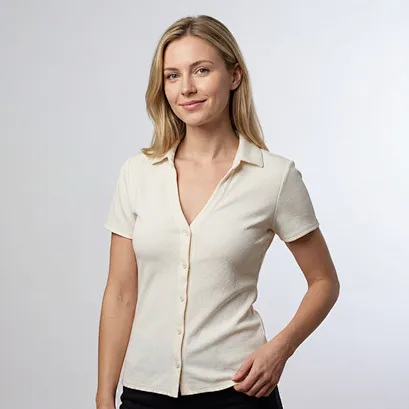
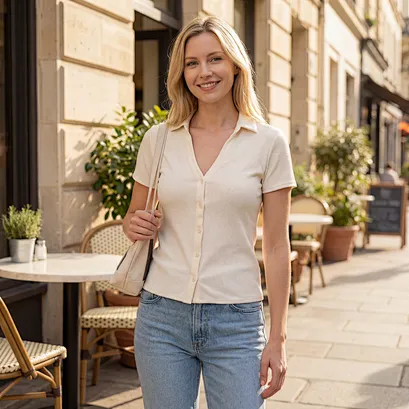
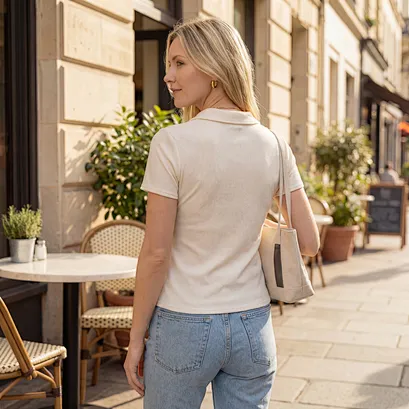
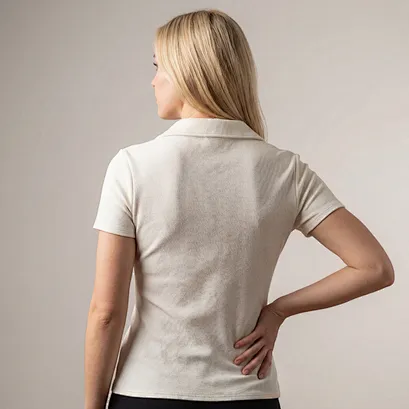
Custom Twill Jacquard Double-Knit Button Shirt










Fabric, wash, decoration, branding, and sampling — aligned to your program from first
sketch to bulk delivery.
Customization & Development
Product Details
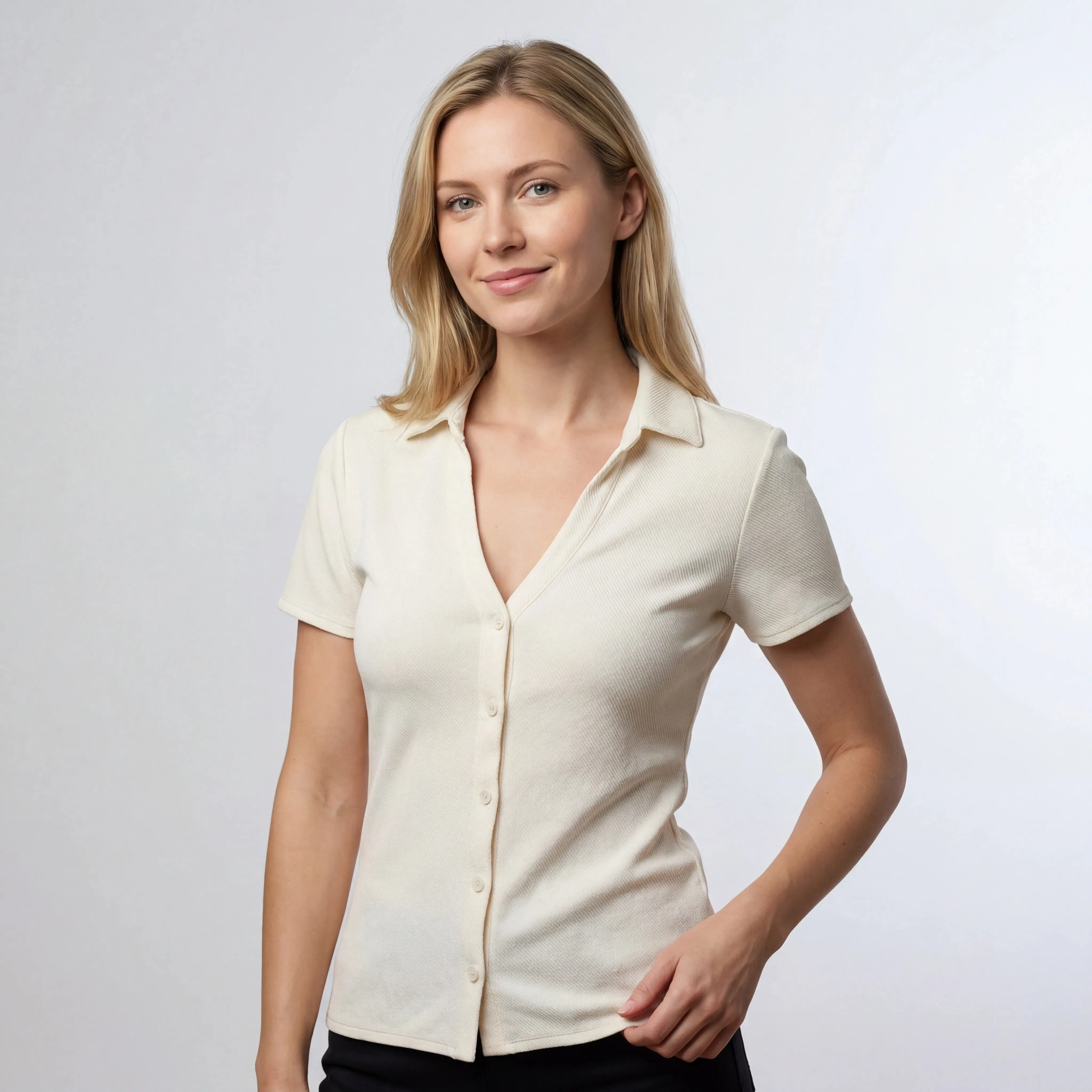
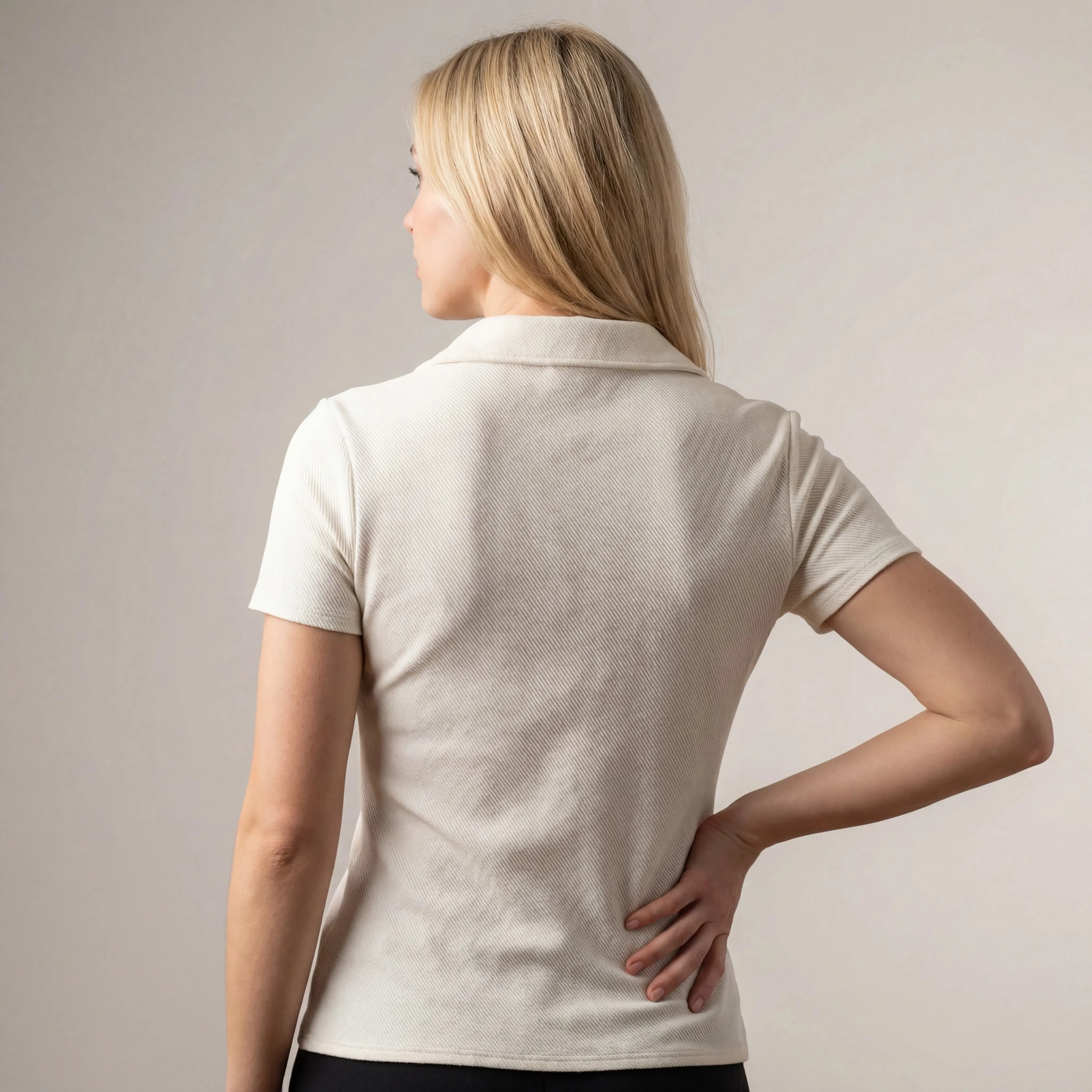
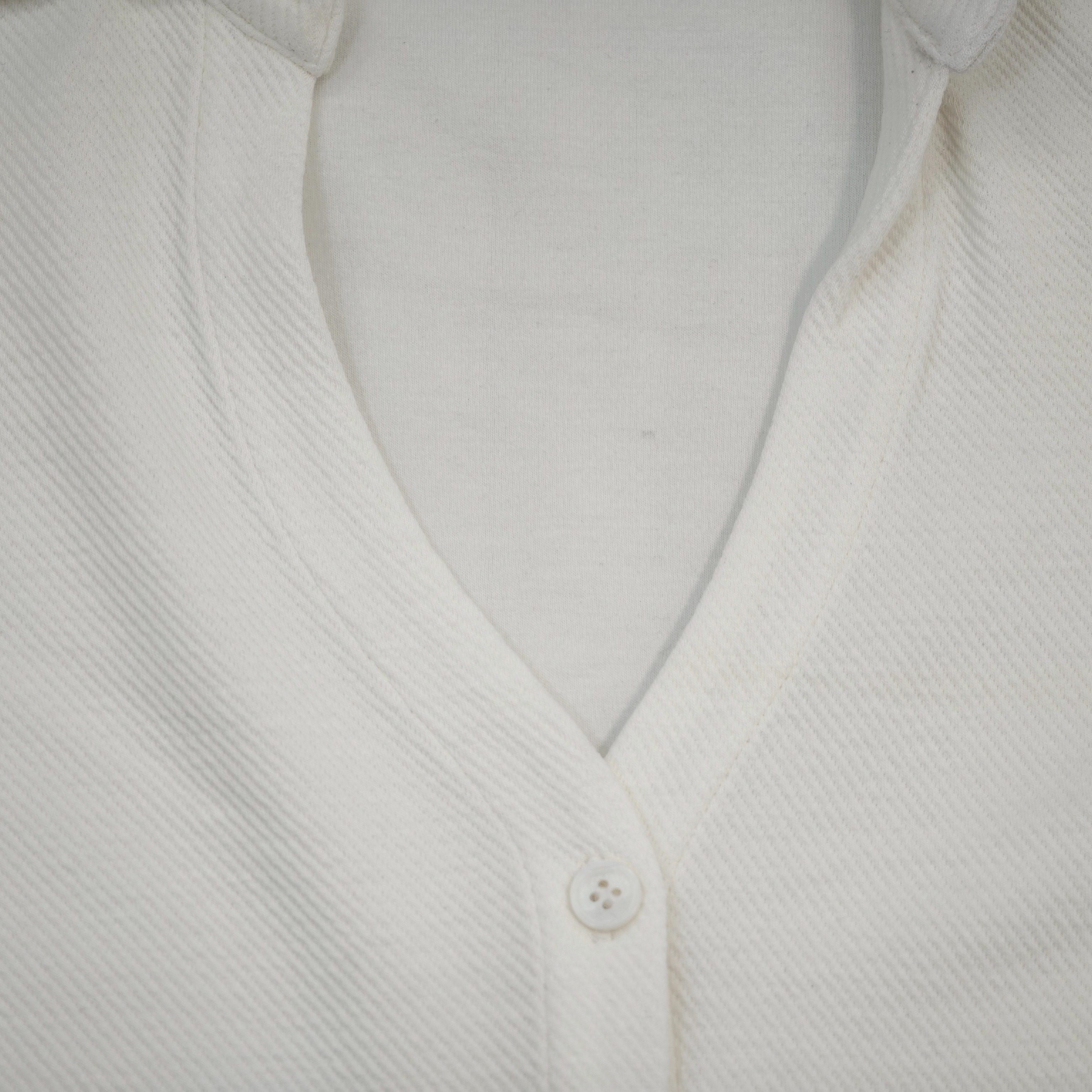
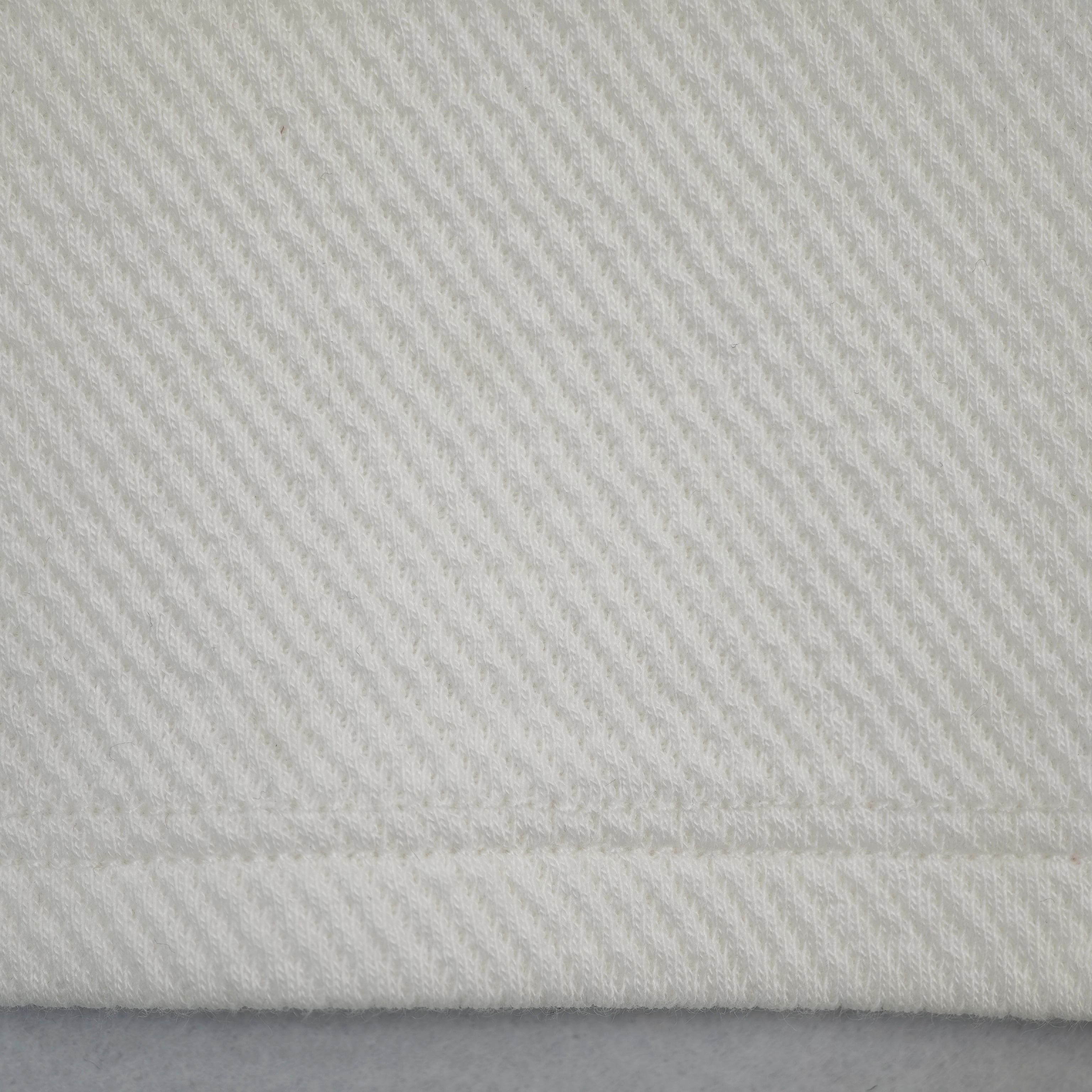
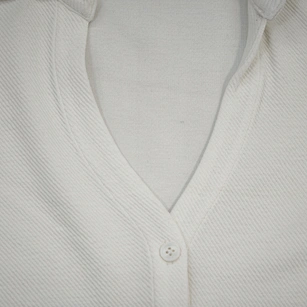
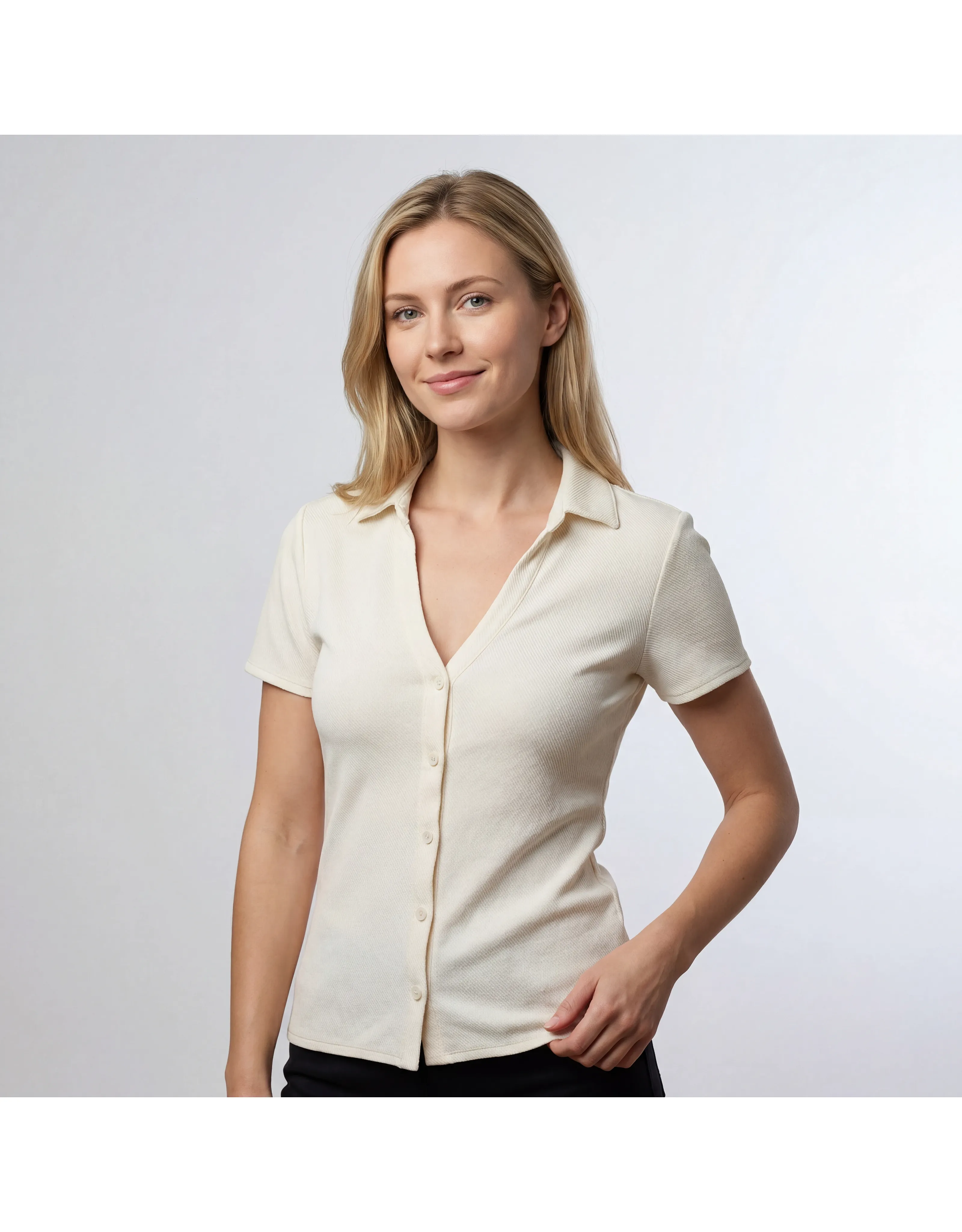
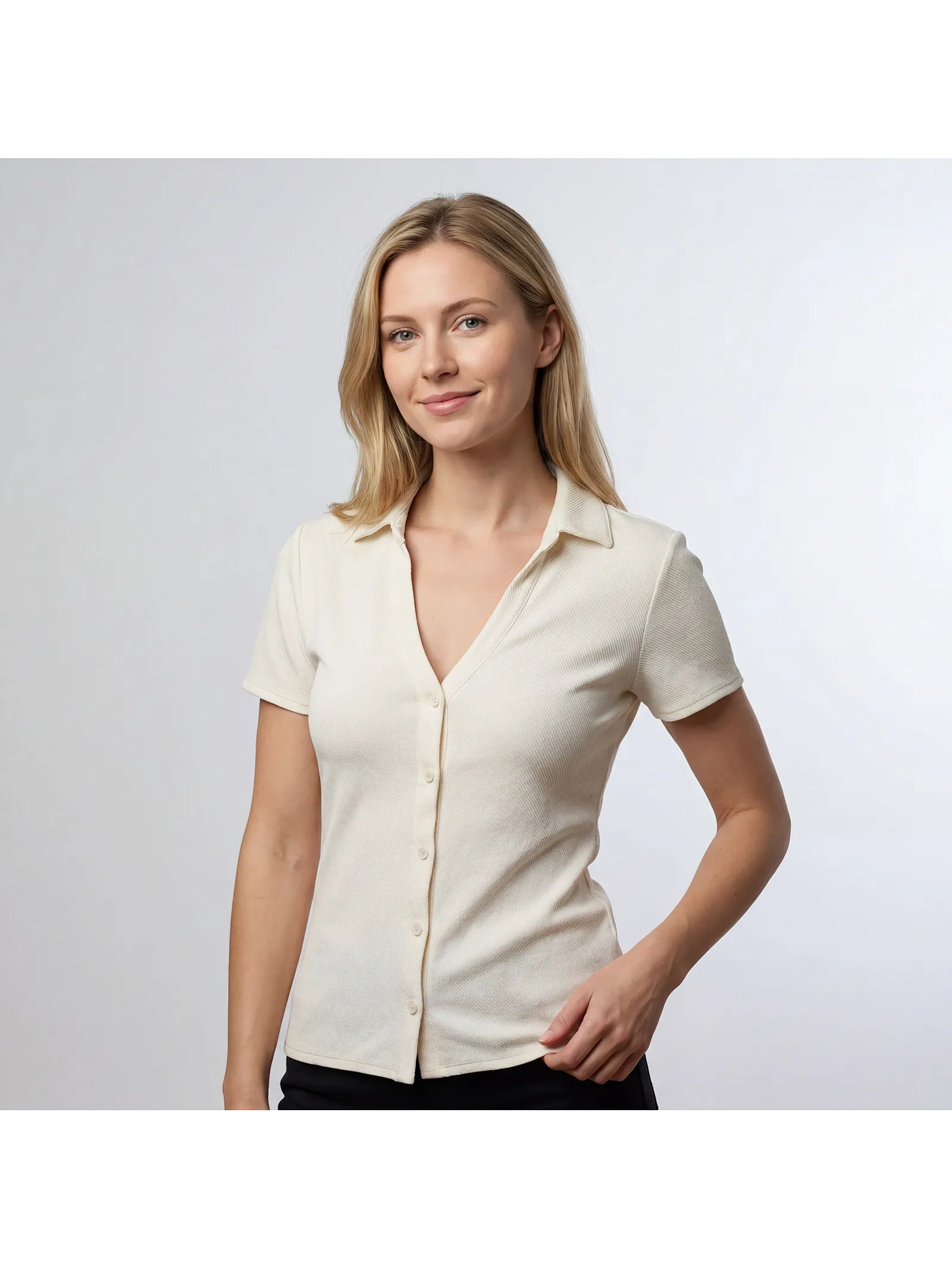
This twill jacquard double-knit button shirt combines a fitted short-sleeve silhouette with a soft open collar and clean tonal buttons. The ivory color keeps the style versatile, while the 290 GSM cotton-rich knit gives more structure than a lightweight jersey. It suits polished casualwear, work-to-weekend collections, travel capsules and coordinated separates.
| Main composition | 96.5% cotton, 3.5% spandex |
|---|---|
| Fabric weight | 290 GSM |
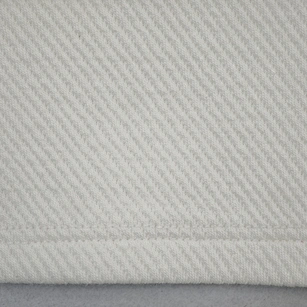
| Fabric structure | Twill jacquard double knit |
| Fit direction | Close-fitting hip-length silhouette |
| Key details | Open collar, button front, short sleeves, shaped side seams and straight hem |
290 GSM Cotton Double Knit with Clean Structure
Cotton Handfeel and Everyday Comfort
The high cotton content provides a breathable, familiar handfeel suitable for close-to-body styling. At 290 GSM, the fabric has enough density to support the collar, button placket and fitted silhouette without becoming overly rigid.
Double-Knit Stability
The double-knit construction gives more body and dimensional control than a lightweight single jersey. Both sides should remain smooth, with consistent width, weight and texture across the production lot. Fabric relaxation is required before cutting.
Twill Jacquard Texture and Panel Direction
The subtle twill effect should run consistently across the front, back and sleeves. Cutting markers need to control fabric direction so adjacent panels do not reflect light differently. Shade and texture should be checked under the same lighting conditions used for approval.
Three-and-a-Half Percent Spandex for Fitted Comfort
Spandex provides enough flexibility for movement through the bust, waist and upper arms while supporting recovery. Stretch testing should confirm that the button front remains flat and that the side seams return to shape after wear.
Open Collar and Neckline Balance
Keeping the Collar Points Symmetrical
Both collar points should match in length, angle and roll. Collar support must remain light enough for the knit structure while preventing the edge from curling or collapsing after washing.
Controlling the Open Neckline
The neckline should sit close to the body without gaping. Collar depth, top-button position and front opening length require approval on body, especially across different bust measurements.
Button Placket and Center-Front Stability
Button spacing should remain even from neckline to hem. Reinforcement must prevent the placket from stretching while preserving the fabric’s flexibility. Buttonholes should lie flat, and the two front edges should match in length when fastened.
Short Sleeves and Side-Seam Shaping
Sleeve opening circumference and upper-arm fit should be checked together so the fabric does not pull or flare. Shaped side seams create the fitted line and must remain symmetrical. Excess tension may cause twisting around the waist or hem.
Customization for Cotton Knit Button Shirts
Custom knit shirt development may include:
- Alternative collar shapes and neckline depths
- Short, elbow-length or long sleeve versions
- Regular, fitted or relaxed body proportions
- Tonal, pearl-effect or contrast buttons
- Custom labels, hangtags and packaging
Buyer FAQs for Twill Double-Knit Shirts
Does the fabric have stretch?
Yes. The 3.5% spandex content provides moderate stretch and recovery.
Can the fit be made more relaxed?
Yes. Body width, waist shaping and sleeve circumference can be adjusted during pattern development.
Can the collar style be changed?
Yes. Standard shirt collars, smaller point collars and open resort collars can be developed.
What should be approved before manufacturing?
Confirm texture direction, collar symmetry, neckline coverage, button spacing, sleeve fit and post-wash measurements.
Confirming Collar Roll Before Button Spacing and Waist Shaping Are Released
Review the sample for neckline balance, collar symmetry, placket stability, sleeve comfort, side-seam shaping and post-wash recovery. For sampling and quotation, provide the quantity, size range, target fit, color standard, button reference, branding details and technical specifications.