
Garment-Washed Cotton Utility Vest Factory











Fabric, wash, decoration, branding, and sampling — aligned to your program from first
sketch to bulk delivery.
Customization & Development
Product Details
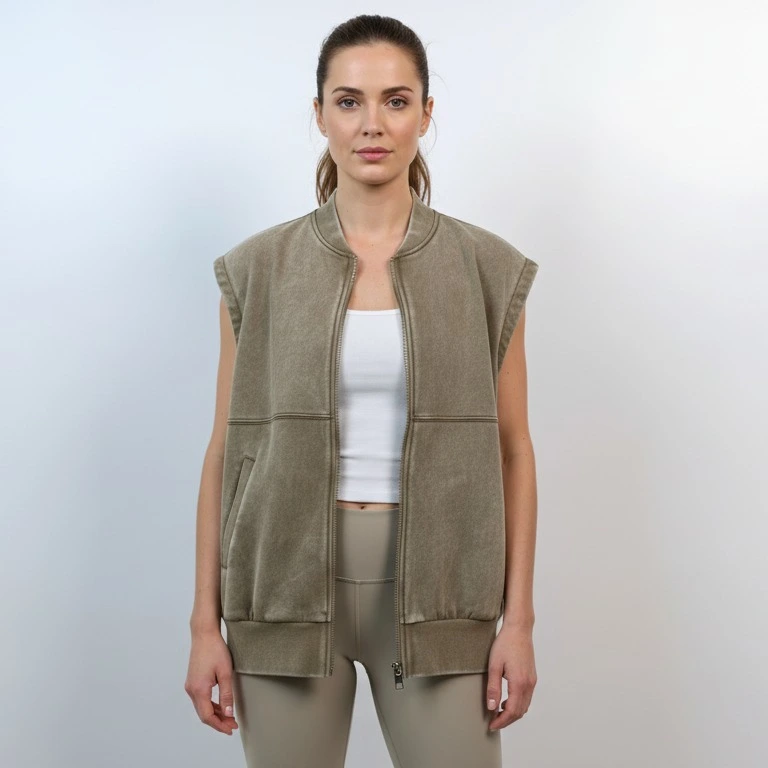
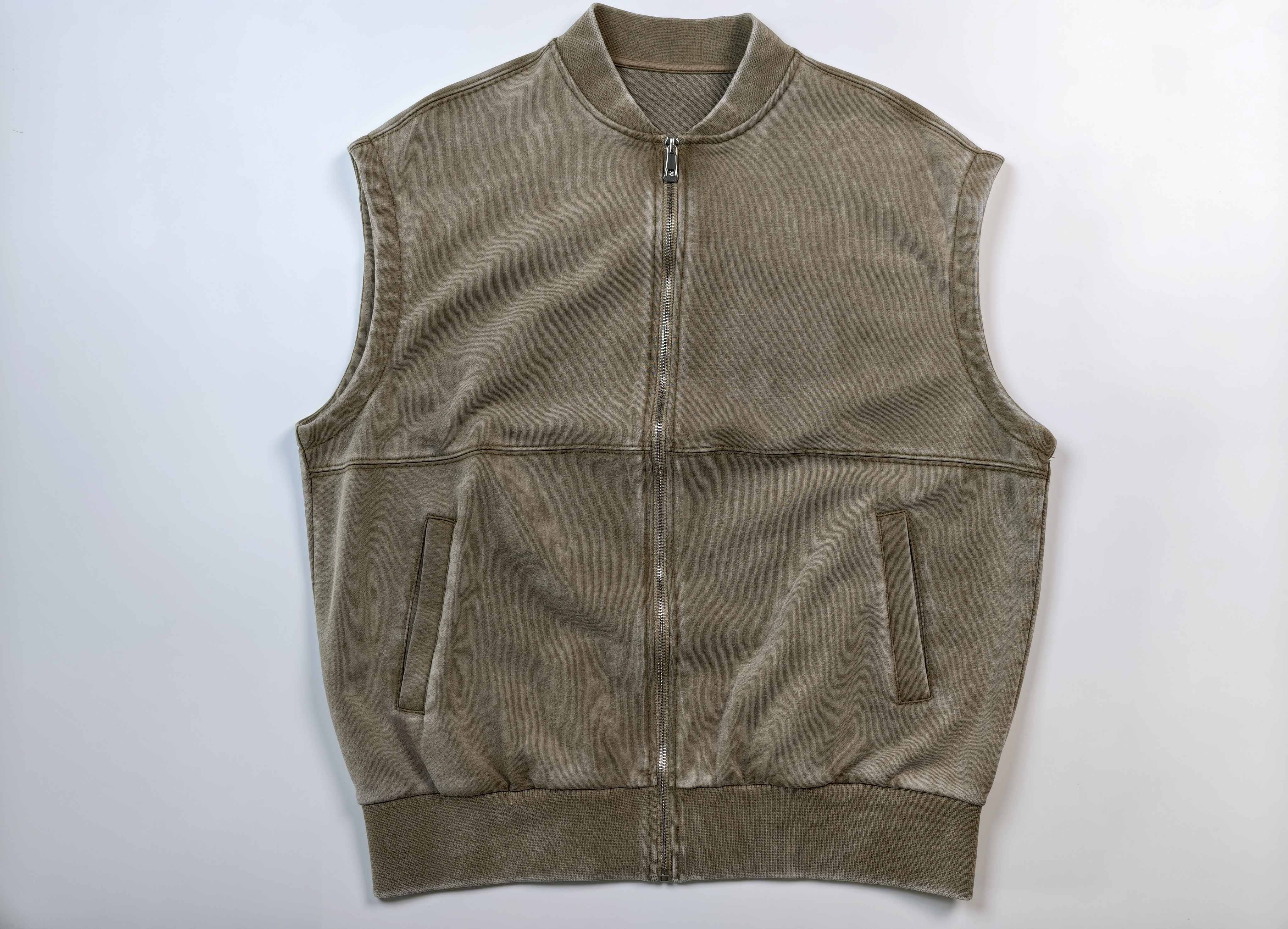
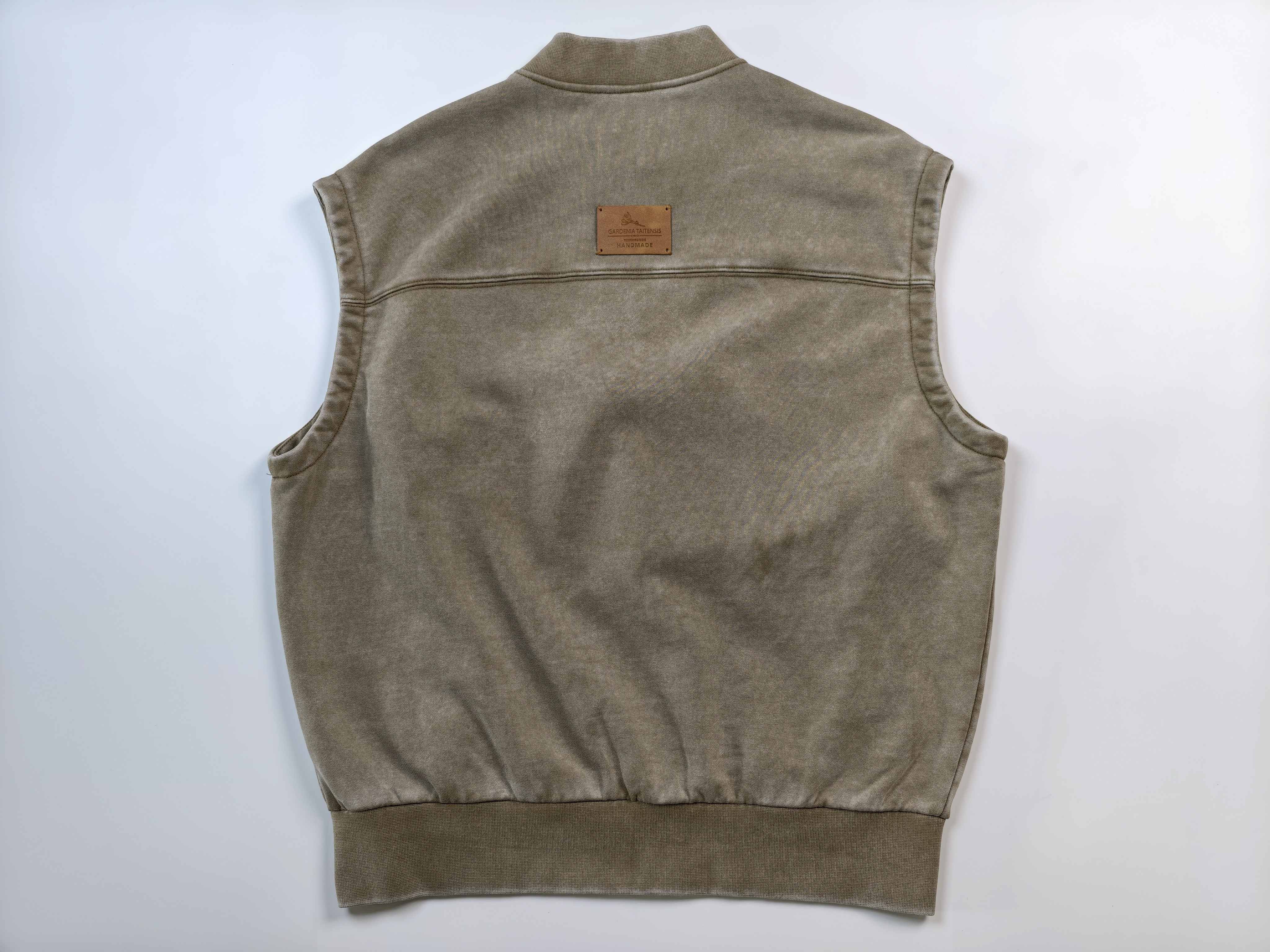
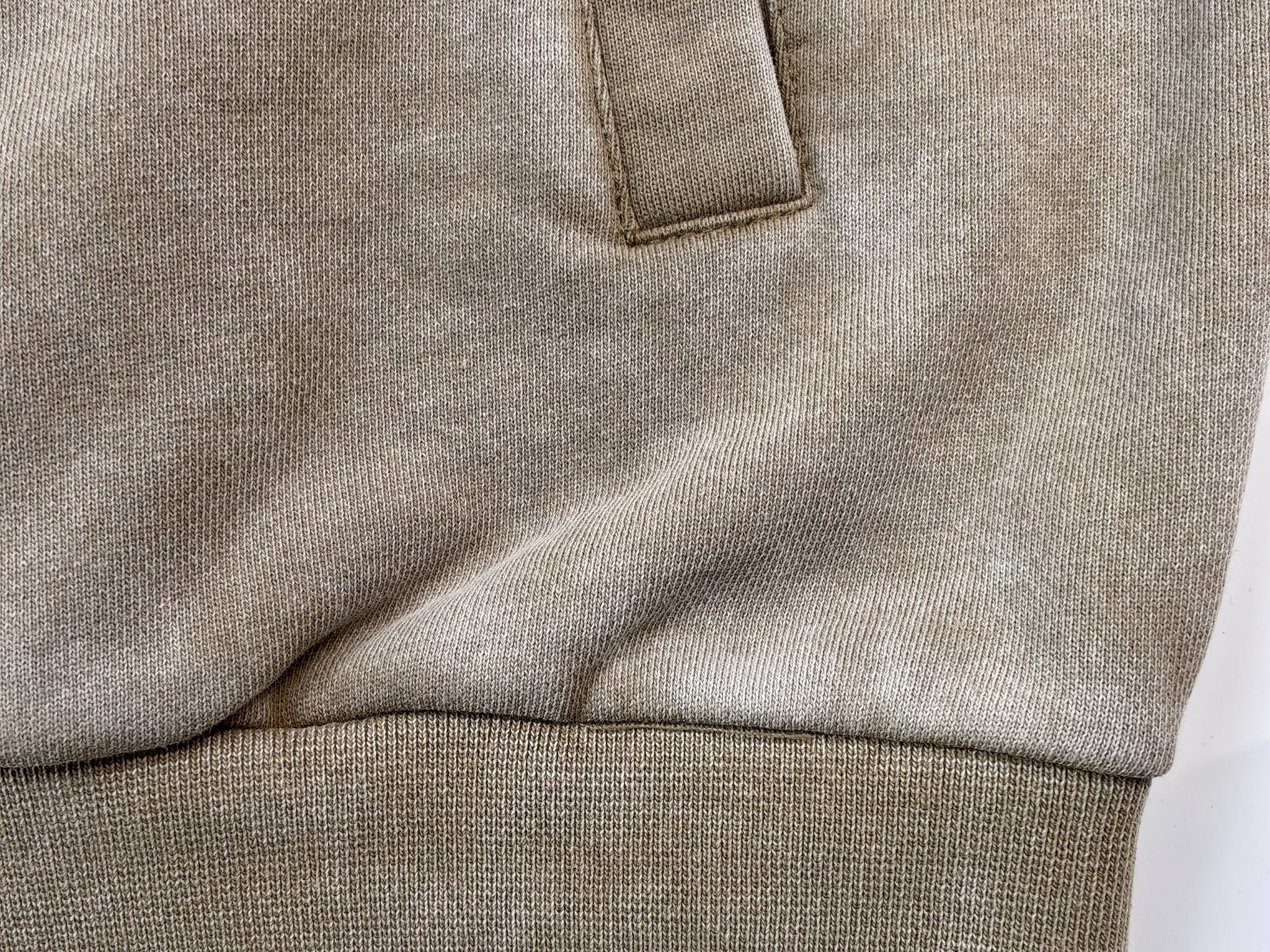
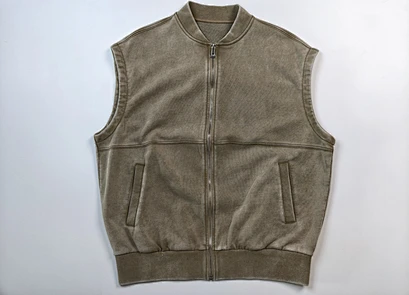
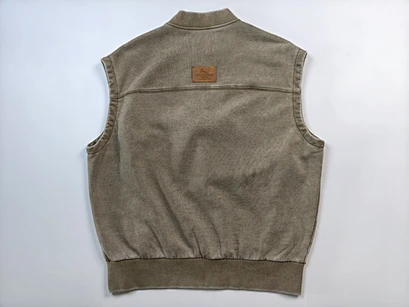
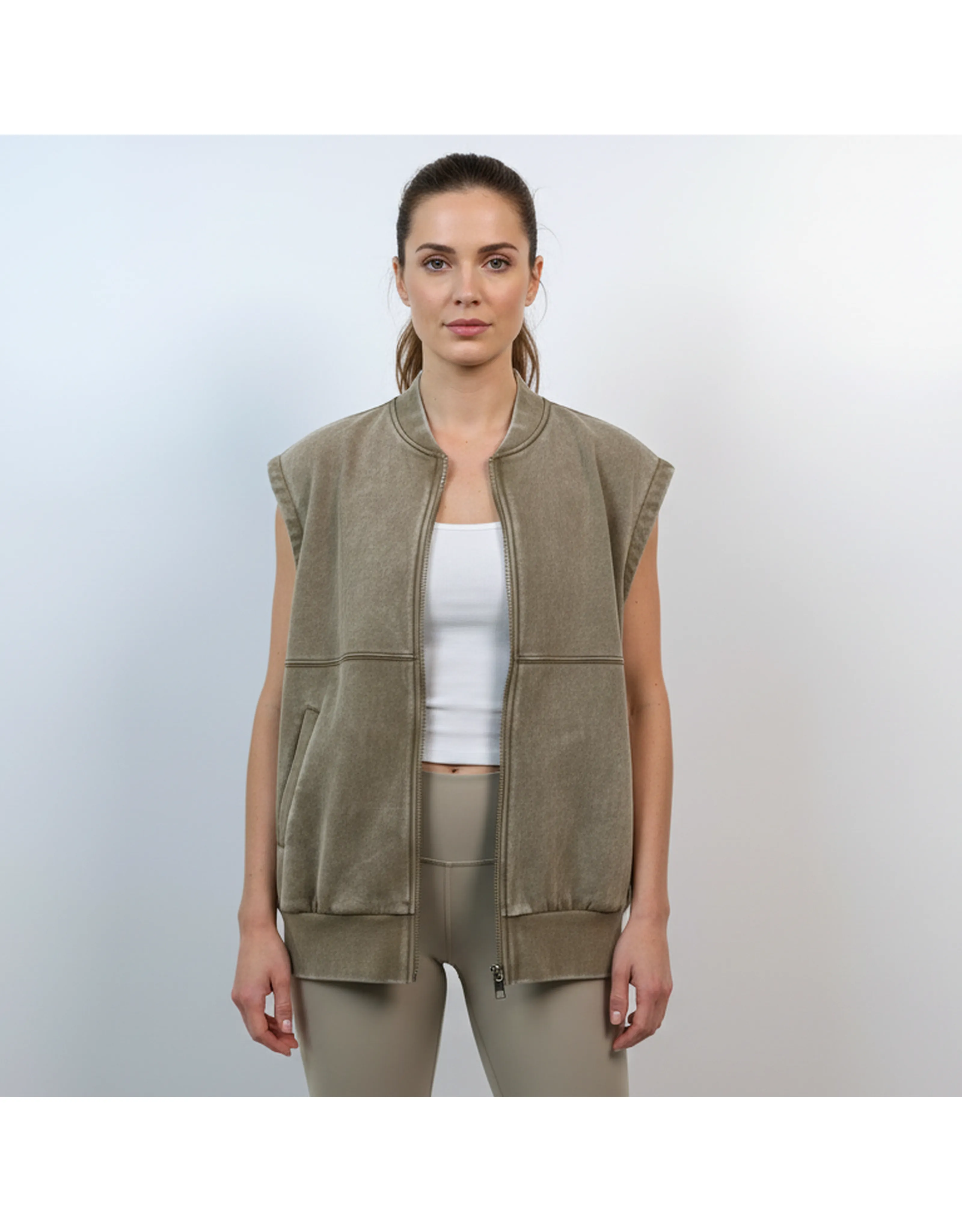
This custom women’s cotton utility vest combines a relaxed hip-length silhouette with extended shoulders, a raised collar and a full front zipper. The heavyweight 100% cotton fabric changes from approximately 350 GSM before washing to 380 GSM after washing, creating a denser handfeel and a more developed surface. Horizontal front seams and large lower pockets give the vest a utility-inspired appearance suitable for casual outerwear, streetwear, travel and coordinated collection programs.
| Main composition | 100% cotton |
|---|---|
| Fabric weight | 350 GSM before wash; 380 GSM after wash |
| Fabric structure | Heavyweight garment-washed cotton knit |
| Fit direction | Relaxed hip-length silhouette with extended shoulders |
| Key details | Stand collar, full front zipper, horizontal waist seam, large lower front pockets and straight hem |
350 GSM Before Wash and 380 GSM After Wash
Weight Change Through Fabric Compaction
The specified fabric weight increases after washing as the cotton structure relaxes and compacts. This creates a denser finished surface and can make the garment feel more substantial than the original pre-wash material. The final 380 GSM result should be used when evaluating handfeel, finished measurements and retail positioning.
Controlling Shrinkage Before Pattern Release
Because the fabric changes during washing, shrinkage should be tested in both length and width before the production pattern is finalized. Pattern allowances need to reflect the approved wash result so body length, chest width, armhole depth and pocket position remain within tolerance after processing.
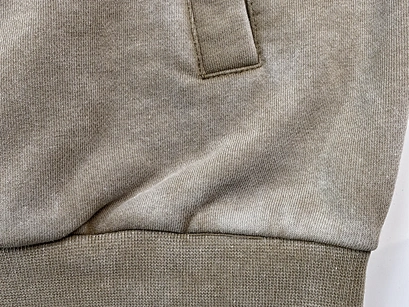
Heavyweight Cotton Handfeel and Natural Surface
The 100% cotton construction provides a natural touch and a more breathable wearing experience than fully synthetic utility fabrics. At the specified finished weight, the material has enough body to support the collar, front opening and large pocket areas without requiring a rigid woven appearance.
Cotton surface variation should be controlled during fabric inspection because heavier washed materials can show differences in texture, shade and compactness. Bulk rolls should be grouped by dye lot and tested under the same washing conditions used for the approved sample.
Garment-Washed Color and Surface Approval
The washed taupe shade gives the vest a softer, more casual appearance than a clean solid-dyed outerwear fabric. Wash time, temperature and mechanical action can influence shade depth, edge fading and finished handfeel. The approved wash reference should therefore define both the required color and the acceptable level of surface variation.
Managing Panel-to-Panel Shade Difference
Front panels, collar pieces, pocket sections and back panels should be cut from compatible fabric lots. Shade grouping before cutting helps prevent visible color differences between adjoining sections, especially after garment washing emphasizes the seam and edge areas.
Stand Collar and Center-Front Zipper Balance
The raised collar gives the sleeveless silhouette more outerwear structure and provides additional coverage around the neckline. Collar height, neckline circumference and zipper endpoint should be approved together so the collar remains upright without pressing against the neck.
Keeping the Front Opening Flat
Zipper tape and heavyweight cotton fabric may shrink or relax at different rates during processing. Stabilization, seam allowance and sewing tension should be tested to prevent waviness, twisting or uneven front lengths. Both zipper sides should finish evenly at the collar and lower hem.
Extended Shoulders and Armhole Coverage
The vest uses extended shoulders rather than a narrow fitted armhole, creating a stronger utility-inspired outline. Shoulder width and armhole depth should be reviewed over the intended base layer so the garment provides coverage without restricting movement or creating excessive fabric under the arms.
Armhole Edge Stability
The armhole edge receives repeated tension during dressing and wear. Seam construction and finishing should remain compatible with the heavyweight cotton so the opening stays flat and does not stretch outward after washing.
Horizontal Waist Seam and Front-Panel Alignment
A horizontal seam separates the upper and lower front sections and adds structure across the body. The seam should meet the center-front zipper at the same level on both sides. Pocket openings, side seams and panel lines should also remain symmetrical to preserve the intended utility appearance.
Large Lower Pockets and Functional Reinforcement
The lower front pockets are positioned for practical hand access and contribute to the vest’s relaxed proportions. Pocket opening length, bag depth and reinforcement should be tested according to the fabric weight. Stress points require secure stitching so the pockets remain stable during repeated use.
Controlling Bulk Around Pocket Openings
Heavy cotton layers can create thickness where pocket bags, facings and body seams meet. Seam allowances and pocket construction should be selected to reduce visible ridges while maintaining sufficient strength. Both pockets should remain equal in height and opening angle.
Relaxed Hip-Length Fit and Hem Position
The body finishes around the upper hip, allowing the vest to layer over tanks, T-shirts, sweatshirts or fitted knit tops. Chest width, body length and lower opening should be approved after washing because shrinkage can alter the relationship between the pockets, waist seam and finished hem.
Private Label Options for Cotton Utility Vests
Custom utility vest development may include:
- Alternative cotton weights, knit structures and wash effects
- Custom collar heights, shoulder widths and body lengths
- Tonal, contrast or metal zipper and puller options
- Patch pockets, welt pockets or zipped pocket constructions
- Embroidery, printing, patches and woven label applications
- Custom care labels, hangtags and branded packaging
Buyer FAQs for Garment-Washed Cotton Vests
Why does the fabric weight increase after washing?
The cotton structure compacts during washing, increasing the measured GSM while reducing part of the original fabric width or length. The finished garment should be evaluated using the after-wash specification.
Can the wash effect and shade be customized?
Yes. Wash intensity, softness, shade depth and edge character can be adjusted through sampling according to the required collection direction.
Can the vest be developed in a longer or oversized fit?
Yes. Body length, chest width, shoulder extension, armhole depth and lower opening can be revised during pattern and sample development.
What should be approved before manufacturing?
Confirm the after-wash fabric weight, shrinkage, surface handfeel, shade, collar height, zipper alignment, pocket position, body length and finished measurements.
Confirming Wash Shrinkage Before Pockets, Zipper and Bulk Measurements Are Released
Review the washed sample for final fabric weight, shade consistency, collar balance, zipper stability, shoulder coverage, pocket alignment and finished body dimensions. For sampling and quotation, provide the target quantity, size range, wash reference, color standard, preferred fit, zipper requirements, branding details and any available technical files.