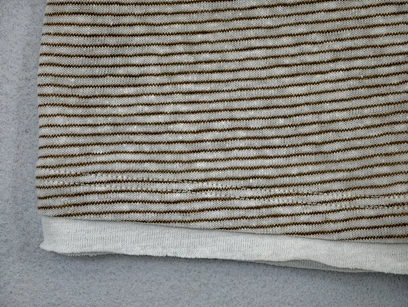


Linen-Cotton Neutral Micro-Stripe Layered V-Neck T-Shirt Manufacturing










Fabric, wash, decoration, branding, and sampling — aligned to your program from first
sketch to bulk delivery.
Customization & Development
Product Details
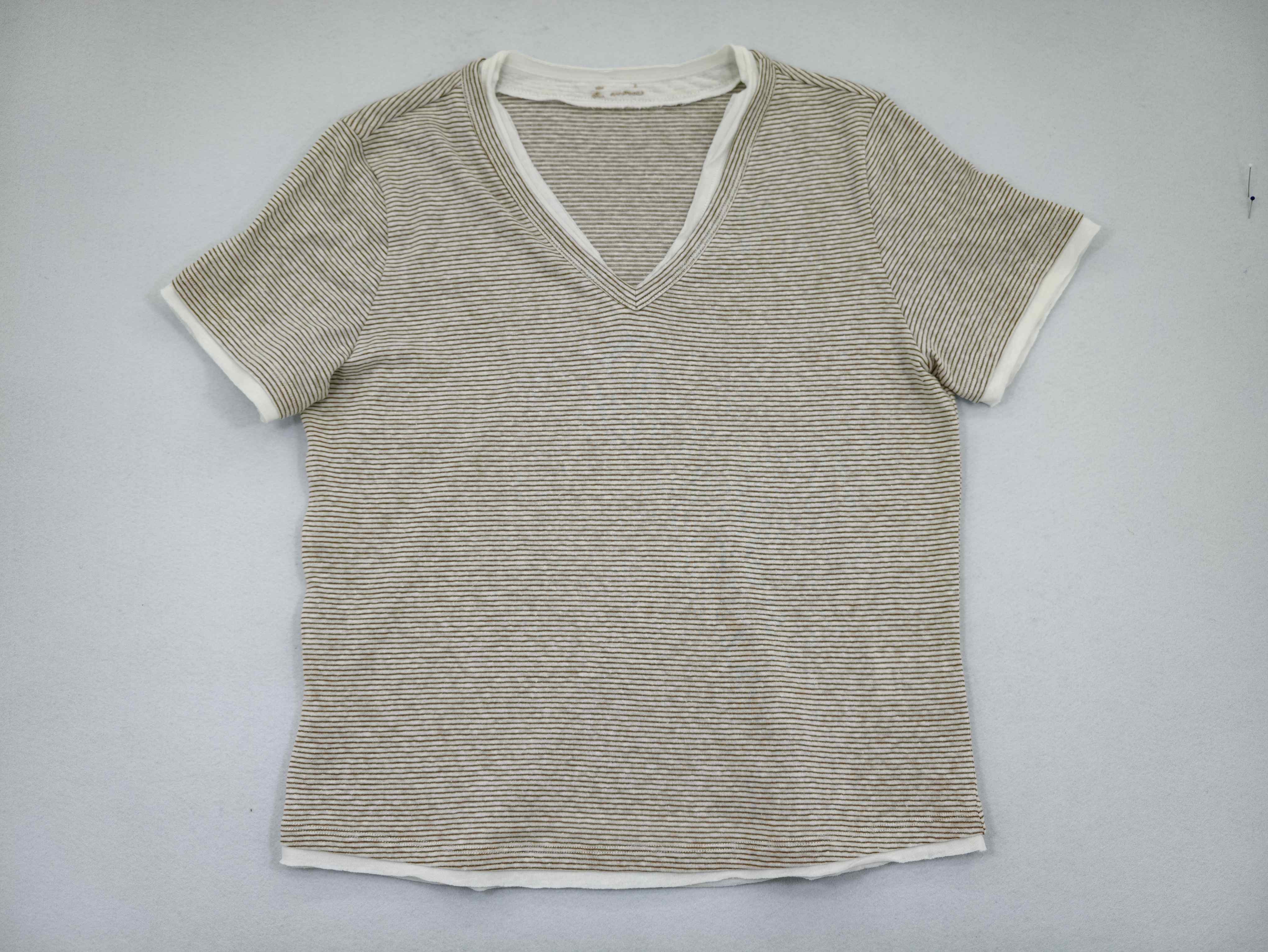
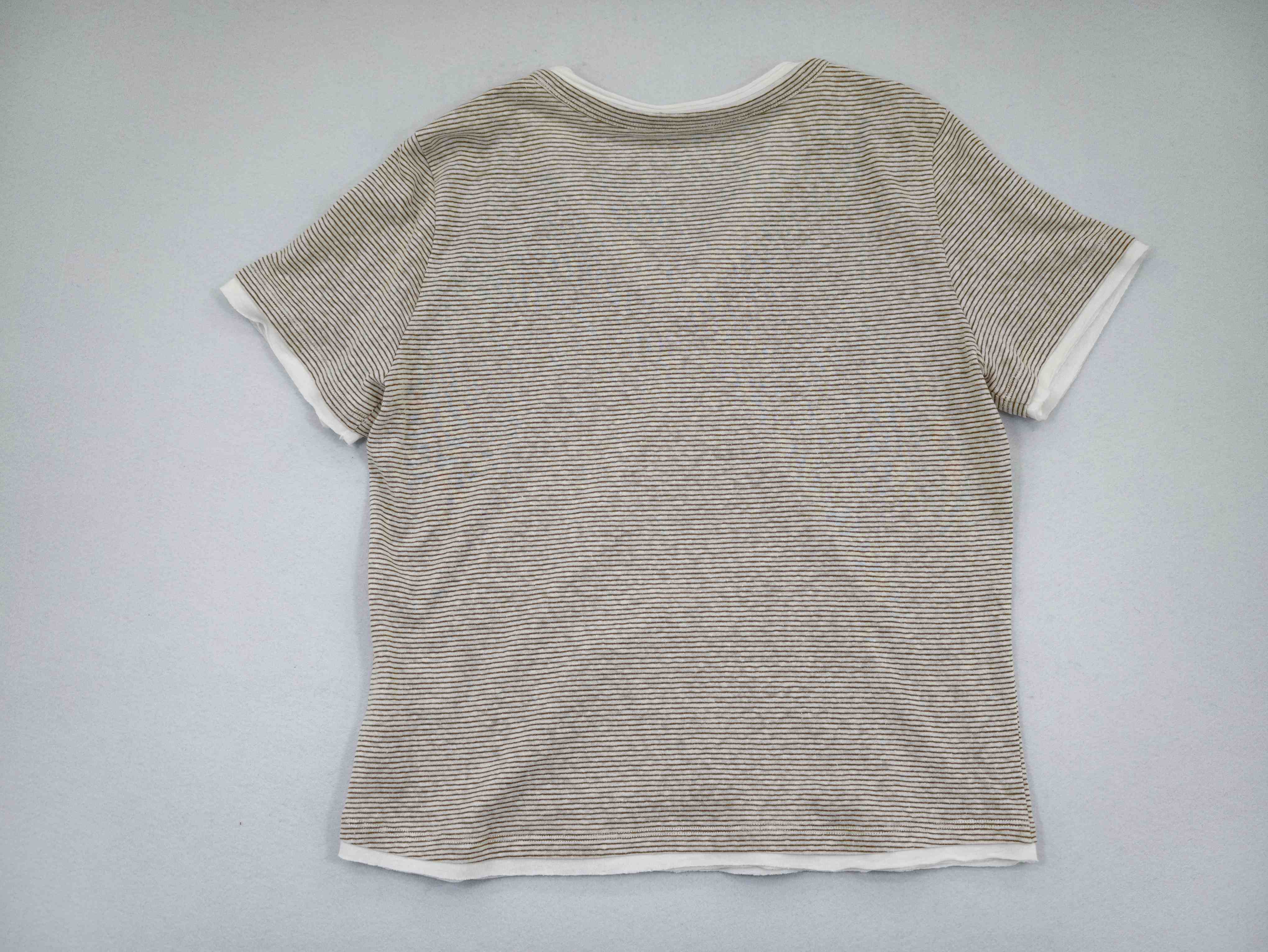
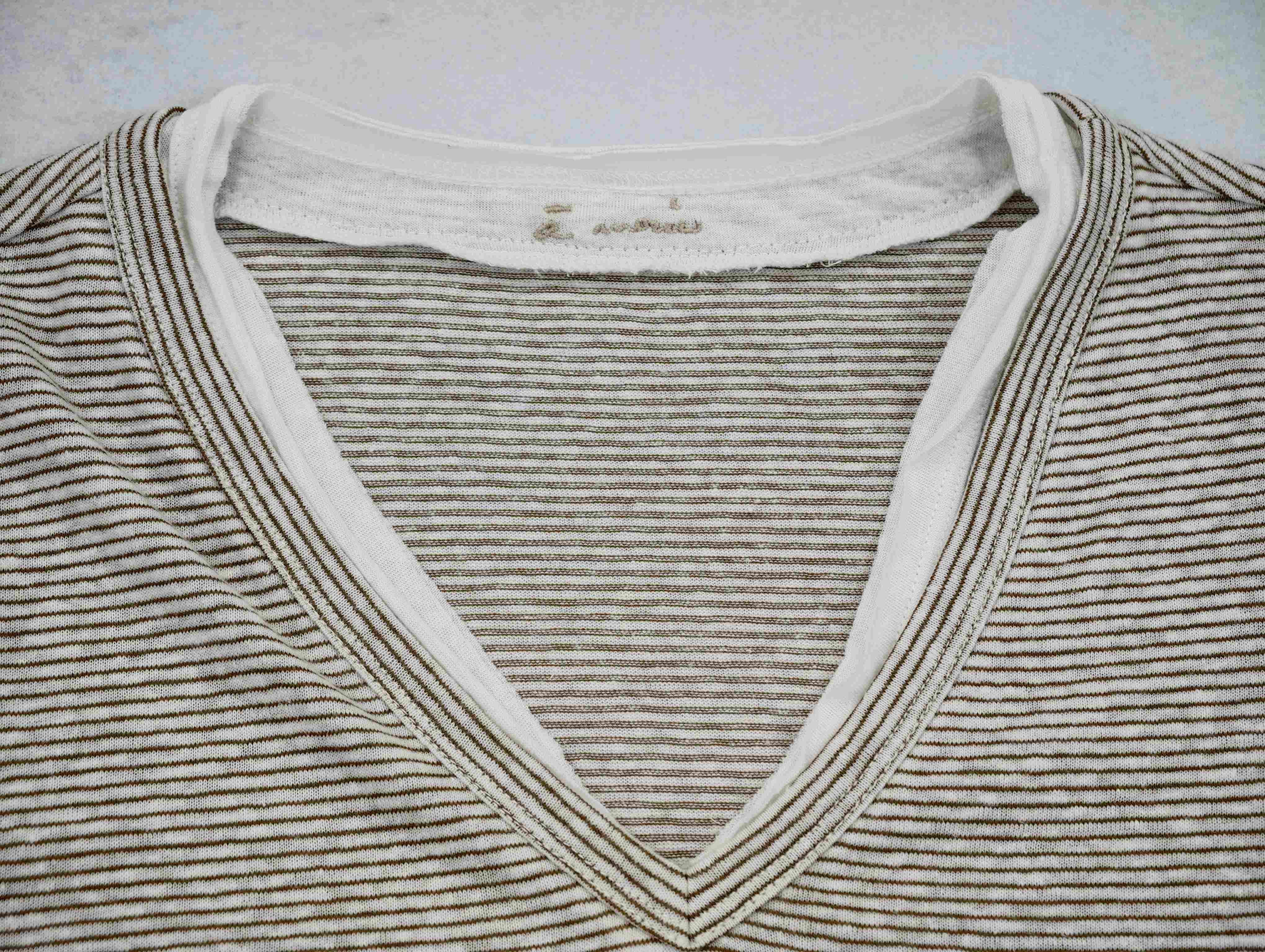
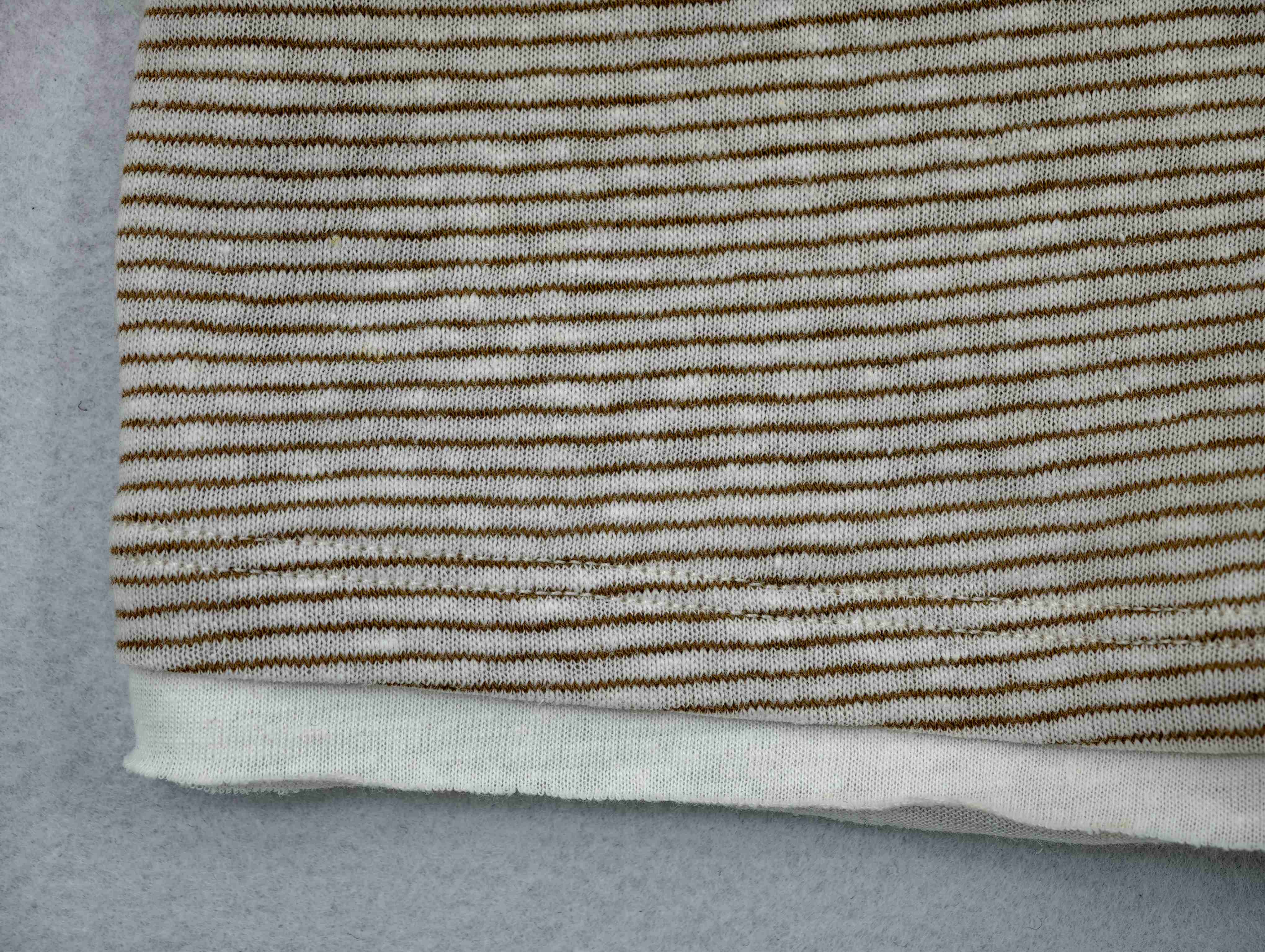
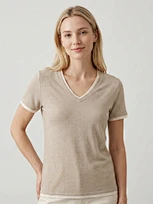
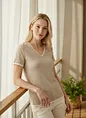
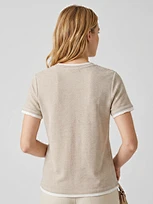
This neutral linen-cotton micro-stripe V-neck T-shirt combines a soft taupe stripe with pale contrast layers at the neckline, sleeve openings and hem. The color direction is quieter than a navy nautical stripe, giving the style a natural lifestyle character. A regular relaxed fit keeps the garment easy to wear, while the layered construction adds visible depth without relying on prints or heavy decoration.
| Main fabric | 41% linen, 34% cotton, 25% polyester |
|---|---|
| Contrast fabric | 85% polyester, 15% linen |
| Fabric standard | Fine horizontal stripe knit; final GSM and construction to be confirmed |
| Key details | Layered V-neck, pale sleeve trim and exposed contrast hem |
| Collection use | Natural lifestyle, resort casual, travel and summer layering |
Linen-Cotton Micro-Stripes with a Softer Neutral Direction
Dry Touch Balanced with Everyday Comfort
Linen gives the main fabric a breathable, slightly dry handfeel, while cotton softens the surface for direct skin contact. Polyester improves dimensional stability and helps the stripe repeat remain more controlled after washing. Since the fabric weight has not been supplied, GSM, opacity, drape and shrinkage should be confirmed before pattern approval.
Managing Stripe Level in a Low-Contrast Colorway
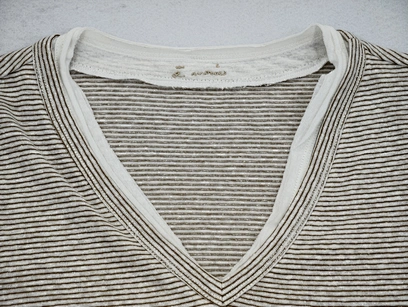
The stripe contrast is subtle, but uneven alignment can still make the garment appear distorted. Cutting markers should account for repeat spacing, and stripe direction must remain level across the front, back and sleeves. Spirality testing is important because even slight skew becomes visible along the V-neck and hem.
Layered Trim Construction and Differential Shrinkage
Keeping the V-Neck Layers Even
The striped outer edge and pale inner layer must follow the same neckline curve. V-point reinforcement, binding length and visible contrast width should be approved together. Uneven feeding may cause one side to expose more contrast fabric or pull the neckline off center.
Controlling Sleeve and Hem Exposure
The contrast fabric extends slightly beyond the sleeve openings and lower hem. Exposure width should remain consistent across sizes, and both fabrics must be washed together before measurements are finalized. Different shrinkage rates can cause curling, puckering or an uneven layered edge.
A Warm Neutral Option for Resort and Lifestyle Capsules
The taupe-and-ivory palette pairs easily with linen trousers, cream denim, relaxed shorts and natural-tone skirts. Compared with the navy version, this colorway feels less nautical and more suited to understated resort, travel and natural lifestyle collections. The fine stripe also makes it easy to coordinate with solid outer layers.
Private Label Options for Neutral Stripe Tees
Private label stripe-top development may include:
- Alternative neutral stripe colors and repeat widths
- Adjustments to neckline depth, body width and sleeve length
- Different contrast tones or reduced layer exposure
- Straight, curved or clean-finished hem options
- Neck labels, hangtags and customized packaging
Buyer FAQs for Layered Micro-Stripe Tops
Can the contrast trim match the main stripe color?
Yes. A tonal contrast can create a quieter finish, while ivory or white gives the layered construction more visibility.
Will the linen content cause strong wrinkling?
Some natural creasing is expected, but the polyester content helps improve recovery and dimensional stability.
Can the layered hem be removed?
Yes. The design can be simplified into a single-layer V-neck tee with revised hem and sleeve finishes.
Which points need bulk approval?
Priority checks include stripe level, V-point symmetry, contrast exposure, differential shrinkage, seam twisting and finished measurements.
Confirming Neutral Stripe Alignment Before Layer Widths Are Set
Review the approved sample for stripe direction, V-neck balance, contrast exposure, sleeve symmetry, hem flatness and post-wash dimensions. For sampling and quotation, provide the target quantity, size range, stripe references, preferred trim width, branding details and technical files.