

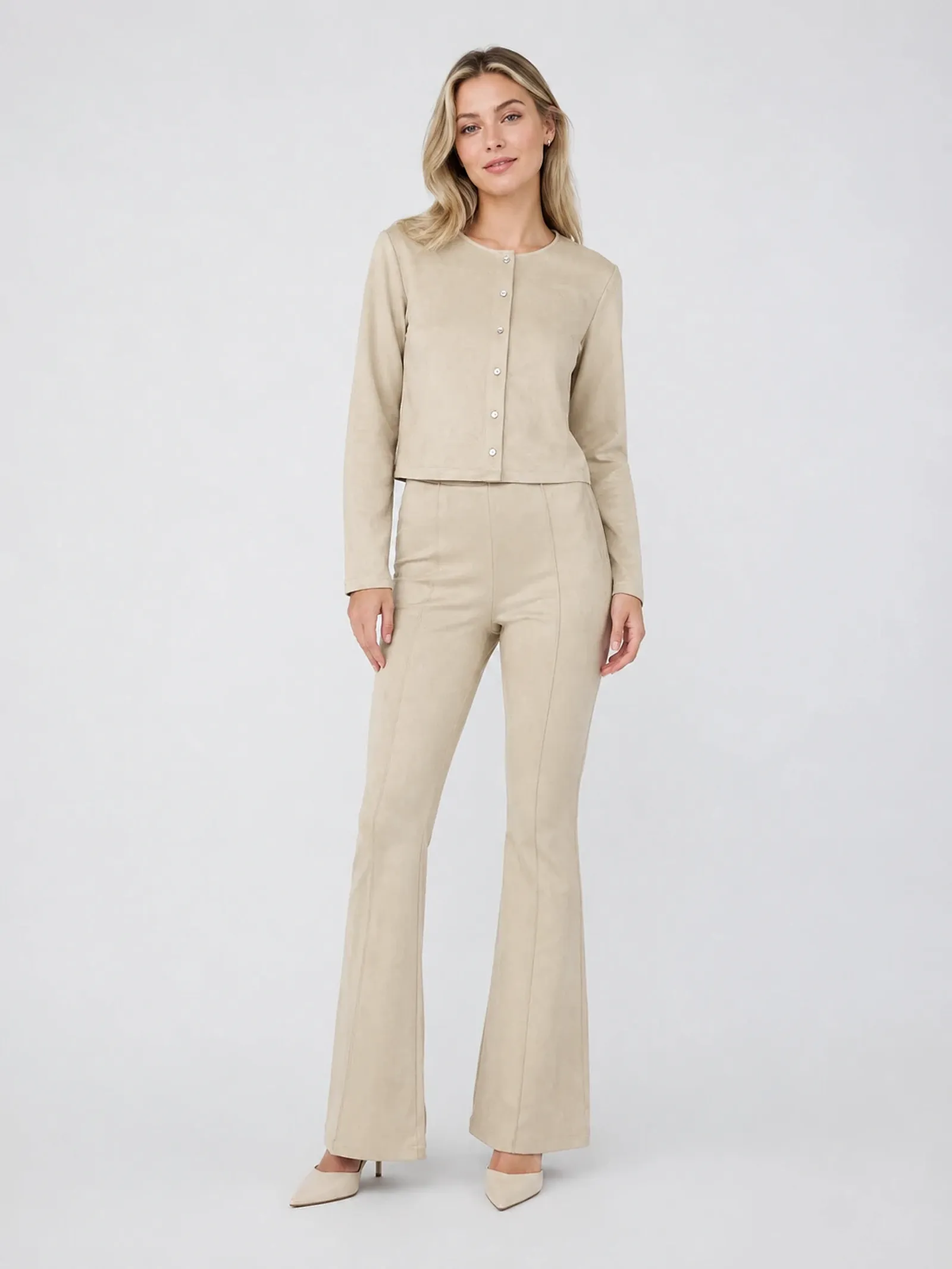
Factory-Developed Women's Cropped Jacket & Flare Pant Set









Fabric, wash, decoration, branding, and sampling — aligned to your program from first
sketch to bulk delivery.
Customization & Development
Product Details
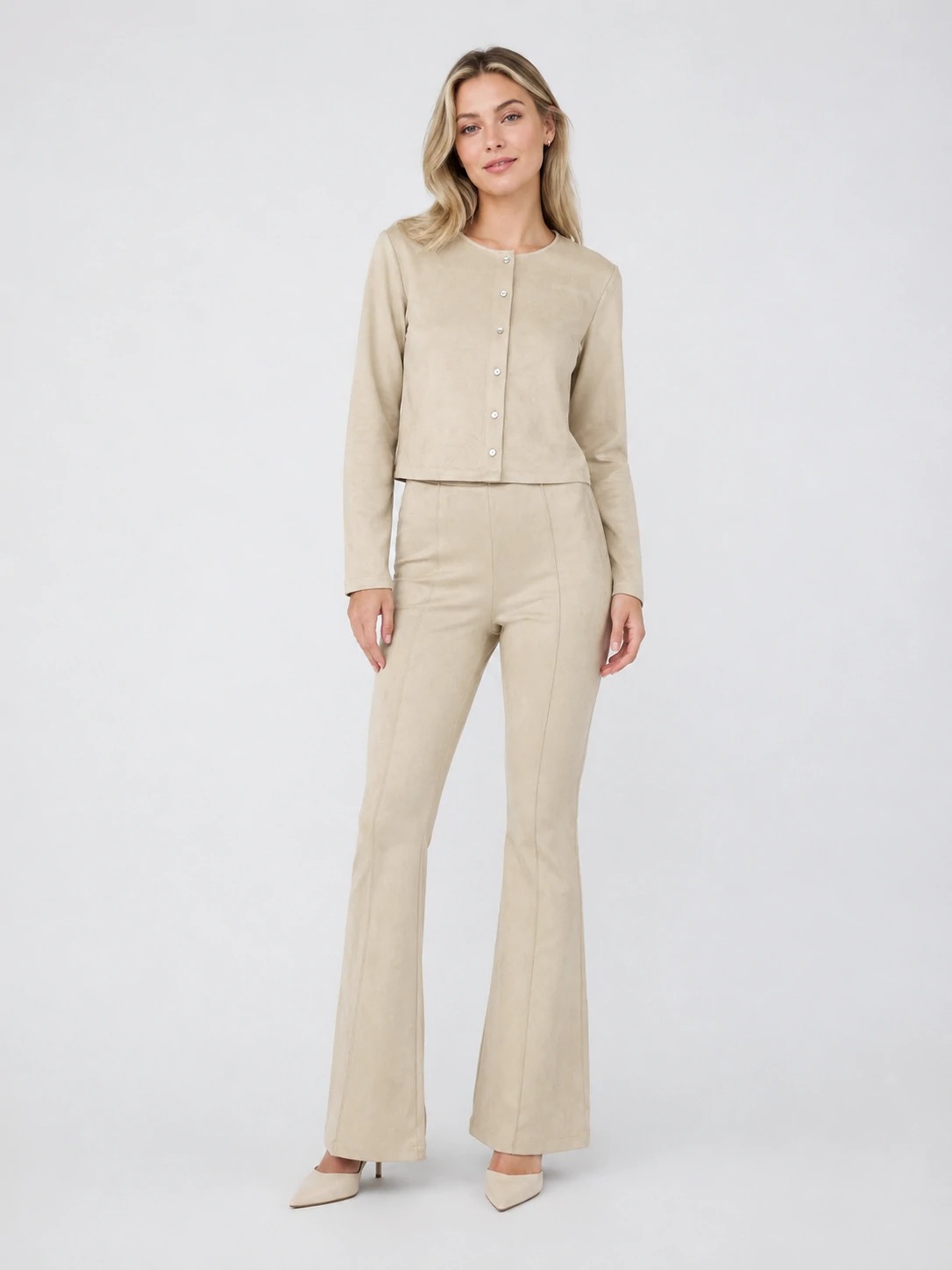
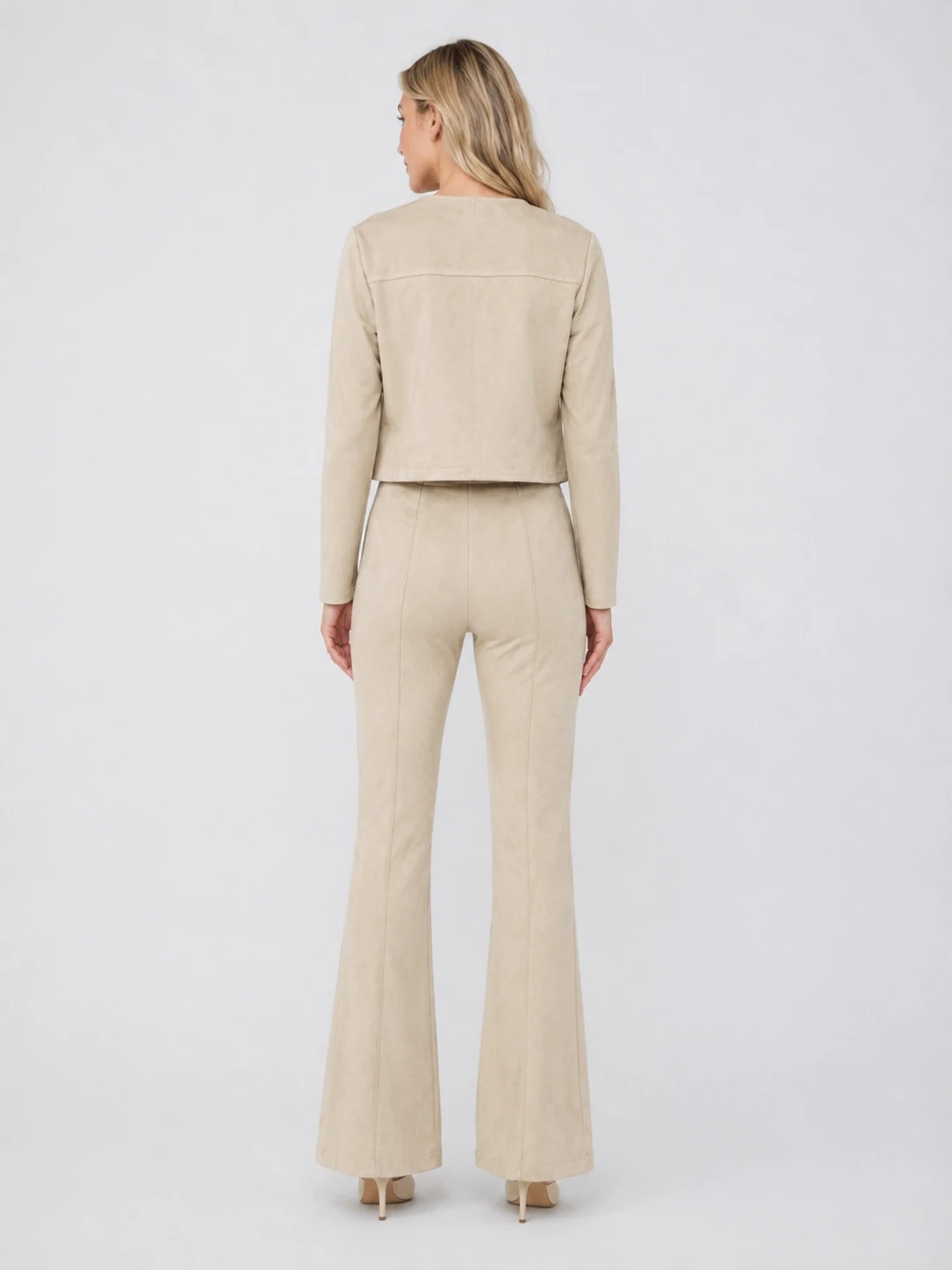
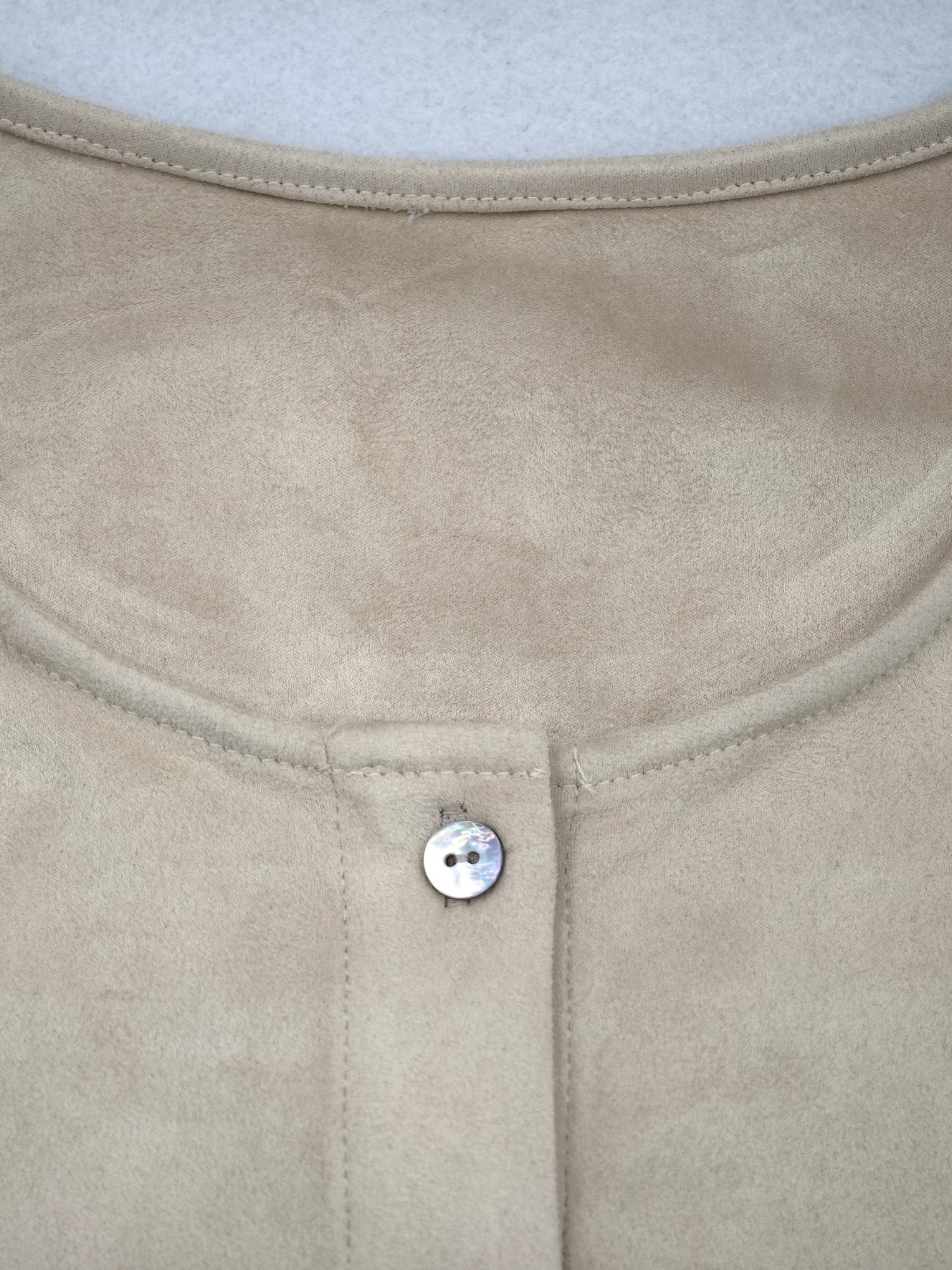
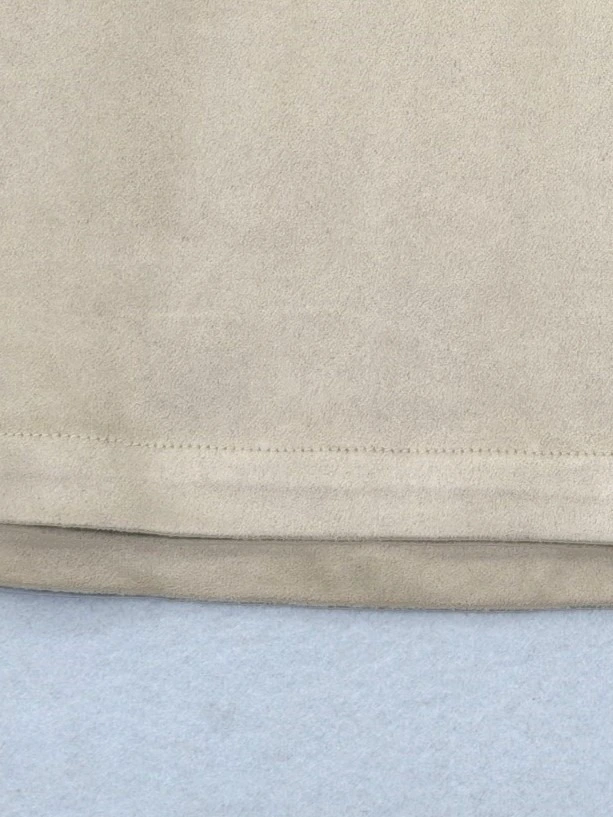
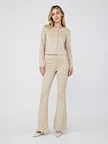
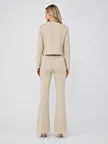
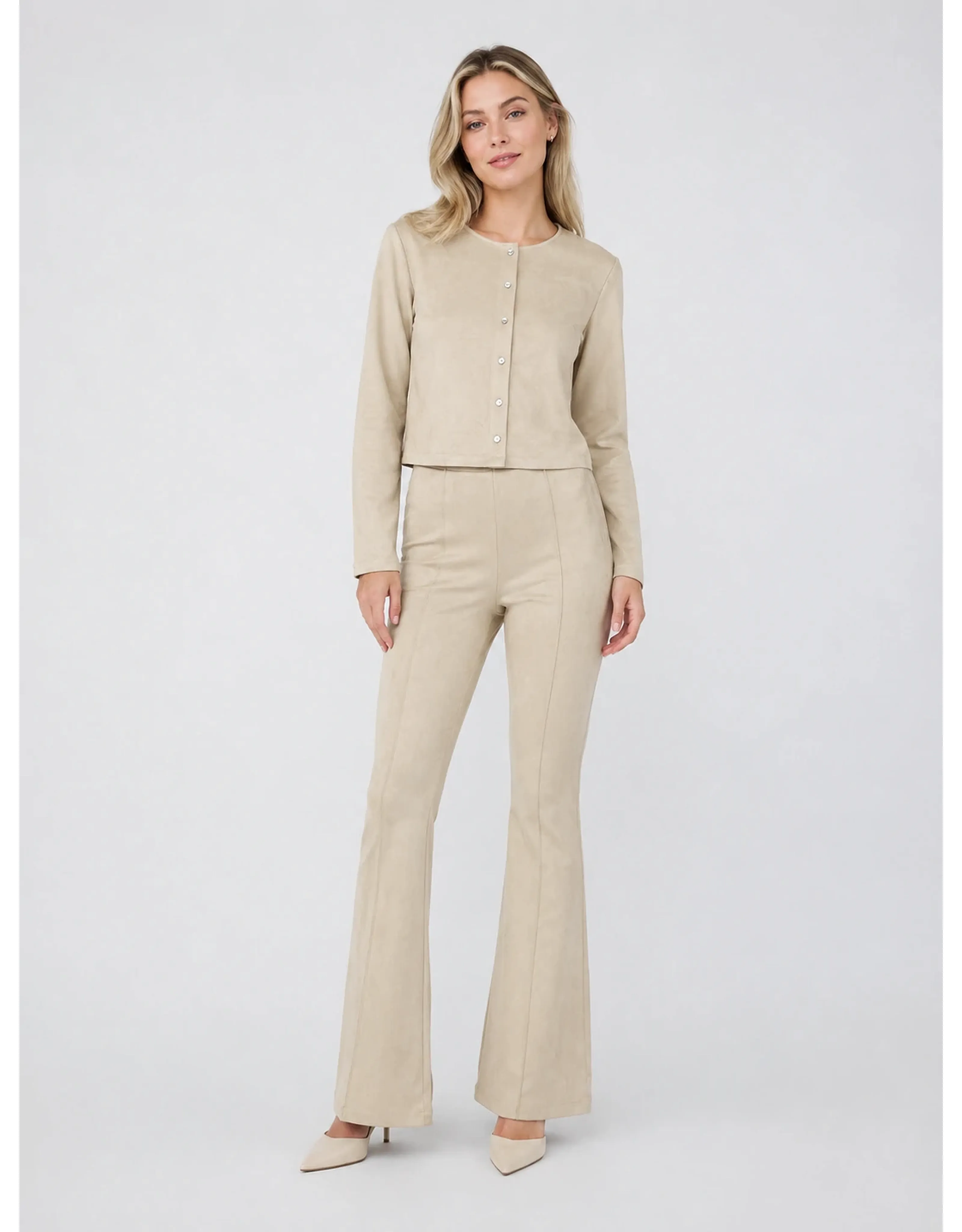
This women’s structured flare pant set pairs a cropped button-front jacket with high-rise flared trousers in the same 350 GSM stretch fabric. The jacket keeps a clean, collarless neckline and straight lower edge, while the trousers use a fitted upper leg and a gradual flare below the knee. Together, the two pieces create a coordinated silhouette for contemporary womenswear, refined casual collections and work-to-evening capsules.
| Main fabric | 350 GSM: 90% polyester, 10% spandex |
|---|---|
| Set components | Cropped long-sleeve jacket and high-rise flared pants |
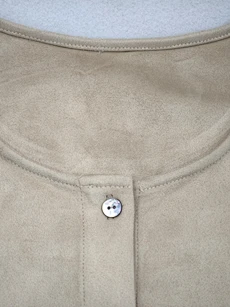
| Jacket details | Round neckline, front button closure, shaped shoulders and straight cropped hem |
| Pant details | High waist, slim upper leg, front vertical seams and full-length flare |
| Suitable for | Contemporary womenswear, commuter, occasion-casual and coordinated set programs |
One Fabric, Two Different Fit Requirements
350 GSM Stretch Construction
The fabric contains 90% polyester and 10% spandex at 350 GSM. Its weight gives both garments a compact, controlled outline, while the spandex content allows movement through the shoulders, elbows, waist and knees. The same material needs to perform differently across the set: the jacket should retain a clean cropped shape, while the trousers require recovery through fitted areas without restricting the flare.
Consistency Across the Matching Set
Because the top and bottom are designed to be worn together, fabric shade, surface appearance and pressing response must remain consistent between both pieces. Cutting direction and batch control are especially important on pale or neutral colors, where small differences can become more visible when the garments meet at the waist.
Button Spacing, Waist Balance and Flare Symmetry
The jacket uses a simple front opening, so button spacing and center-front alignment need to remain even from neckline to hem. Shoulder shape, sleeve pitch and cropped length should be reviewed with the trousers rather than as an isolated garment, since a small change in jacket length can alter the proportion of the complete look.
For the trousers, the front vertical seams help lengthen the leg visually and guide the transition into the flare. Both legs need matching seam placement, knee level and hem width. Sampling and in-line checks should cover waist fit, rise balance, inseam length, flare symmetry and the relationship between the jacket hem and pant waistband before bulk production.
Collection Use Beyond a Single Outfit
Although developed as a matching set, each piece can be merchandised separately. The cropped jacket works over fitted tops, dresses or high-waisted skirts, while the flared trousers can be paired with knitwear, blouses or minimal tanks. This gives fashion labels more flexibility when building coordinated drops, capsule collections or mix-and-match programs from one fabric direction.
Factory Development for Coordinated Womenswear
Matching set development may include:
- Custom colors across both jacket and trouser components
- Adjustments to fabric weight, stretch level and surface finish
- Changes to jacket length, sleeve shape and button specification
- Revisions to rise, inseam, flare width and front seam placement
- Woven labels, care labels, hangtags and coordinated packaging
- Embroidery, tonal branding or other logo applications after review
Development can follow a tech pack, reference sample or coordinated collection brief. Any change to fabric, jacket proportion or pant flare should be checked as a complete look so the two pieces maintain the intended balance.
Coordinating Fit, Color and Bulk Quantities
Before production is scheduled, samples should be reviewed together for shade consistency, jacket length, button alignment, waist fit, trouser rise, seam position and flare balance. Order quantities can be discussed according to fabric availability, color count and trim selection. For an accurate quotation, provide the target quantity per style, size range, preferred colors, branding details and any technical files.