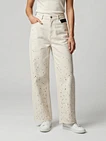


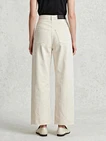


Graduated-Perforation Cotton Jersey Wide-Leg Pants Customized











Fabric, wash, decoration, branding, and sampling — aligned to your program from first
sketch to bulk delivery.
Customization & Development
Product Details
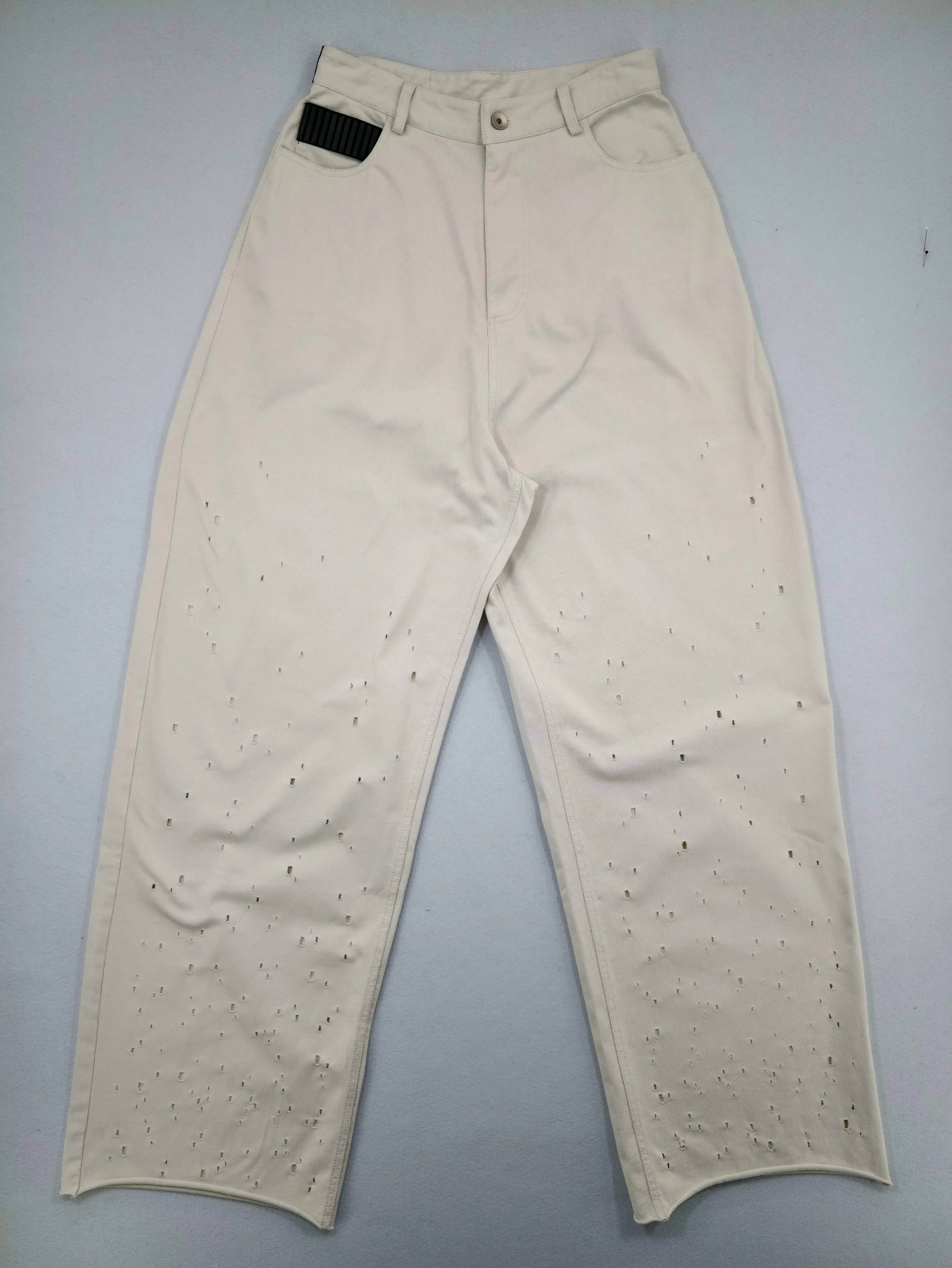
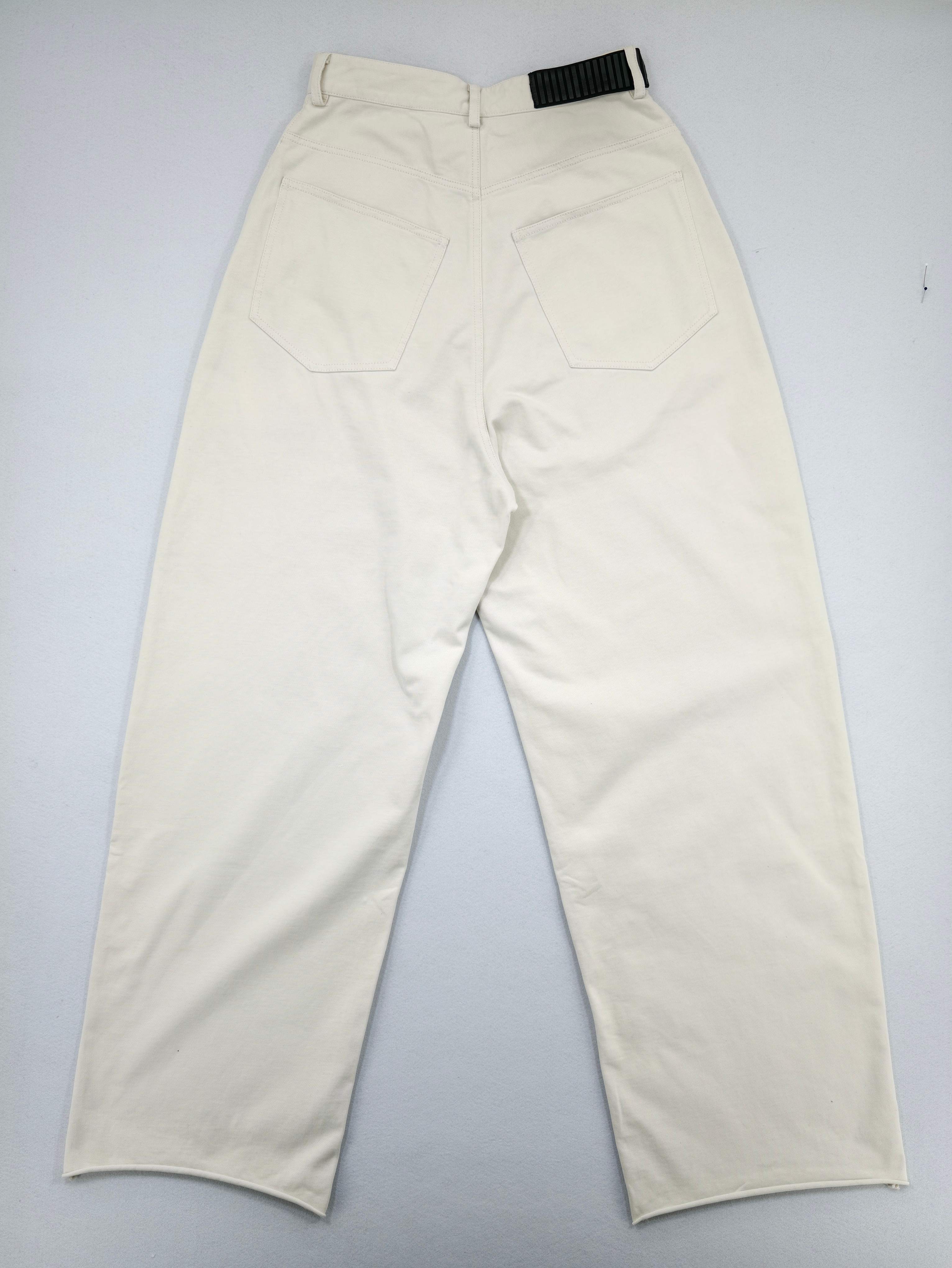
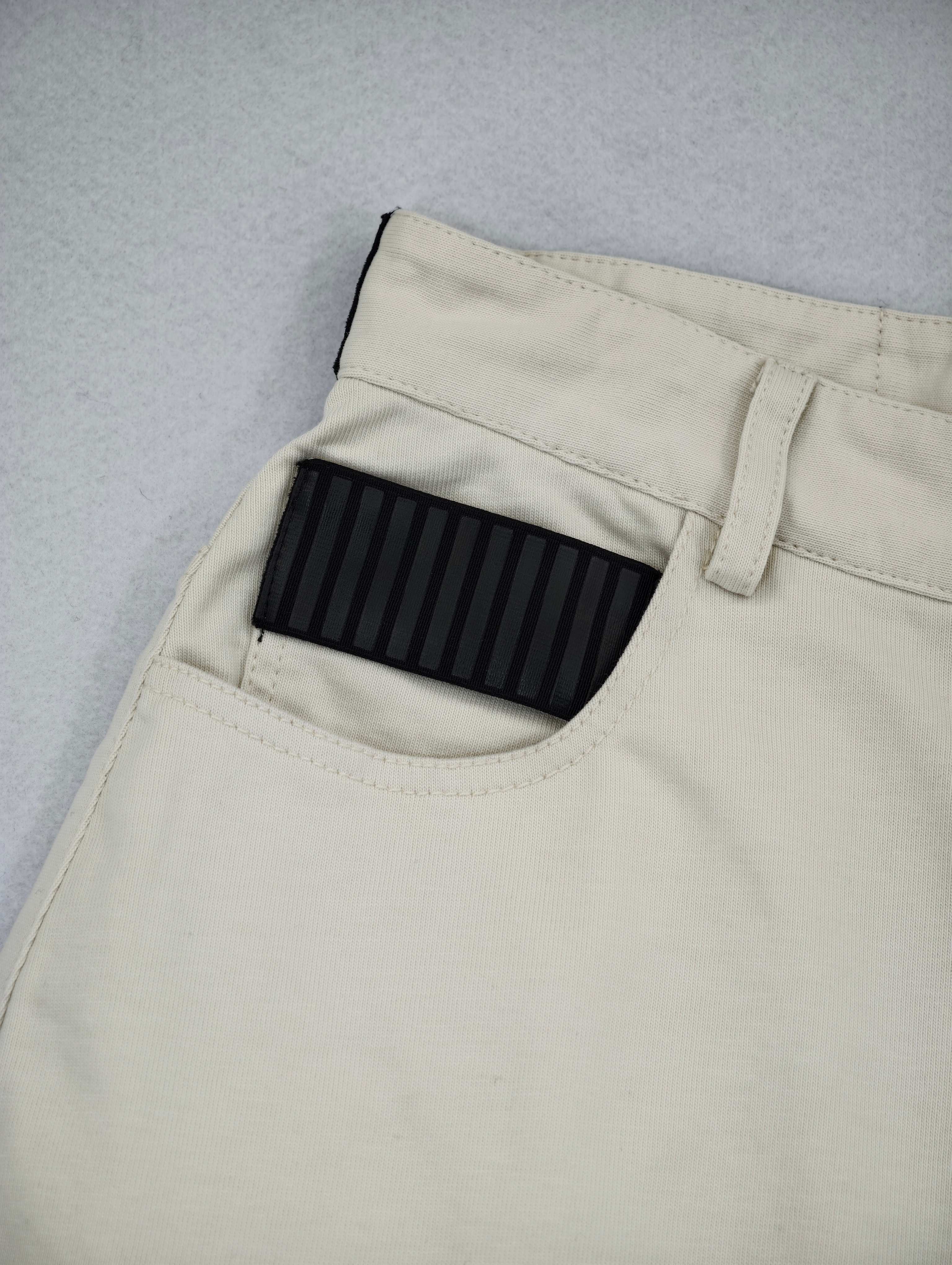
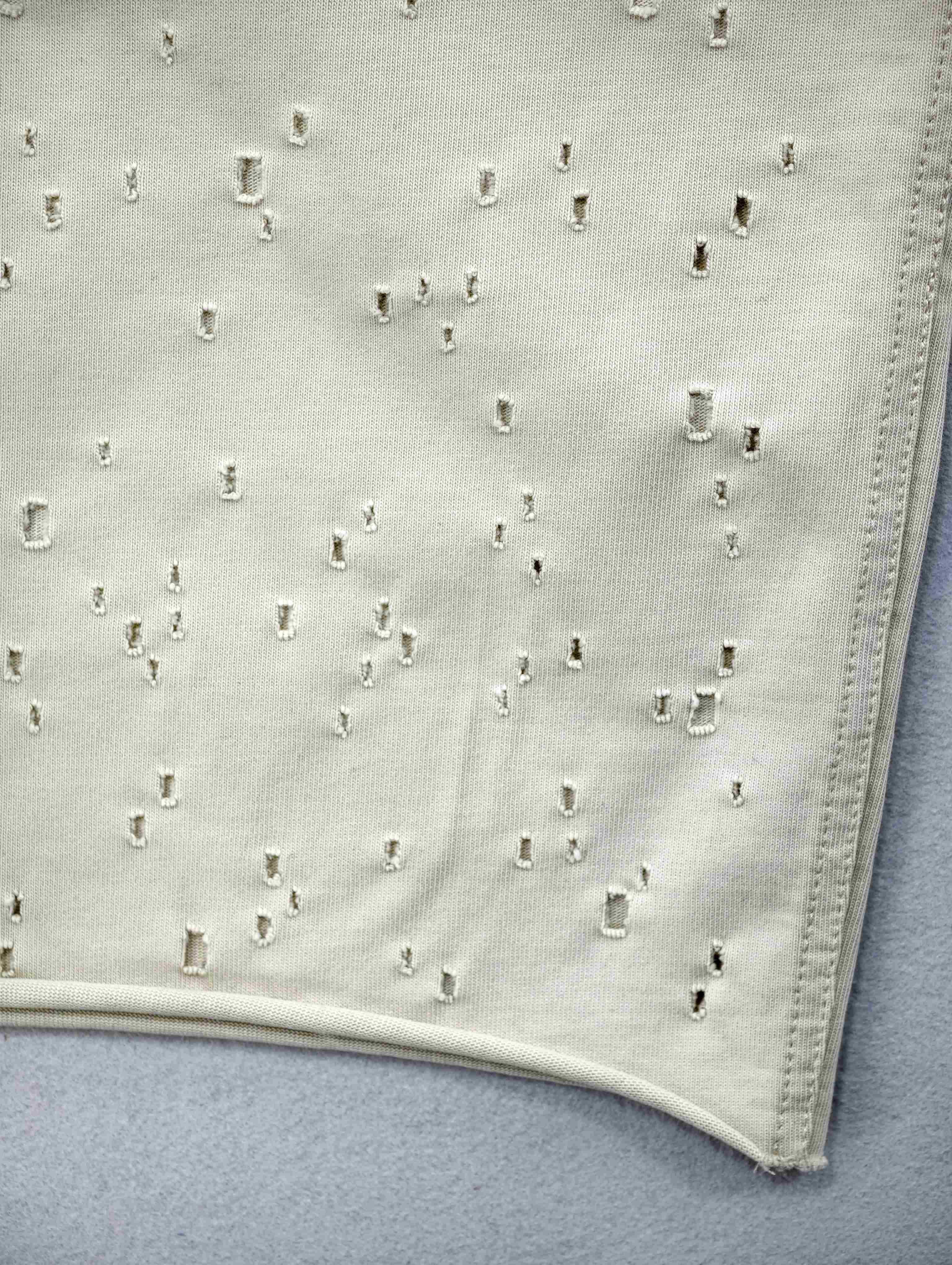
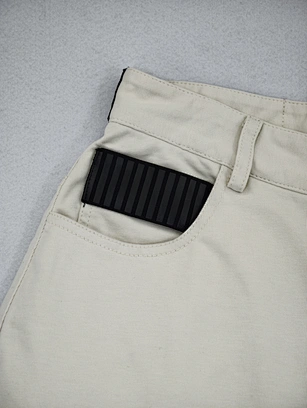
These graduated-perforation cotton jersey wide-leg pants combine a structured jeans-style upper section with the softer movement of a knitted trouser body. Small cut openings begin sparsely around the thighs and increase toward the lower legs, creating a controlled fade effect. The high waist, curved pockets and button-and-zip fly keep the silhouette tailored.
| Main composition | 100% cotton |
|---|---|
| Fabric weight | 300 GSM |
| Fabric structure | Heavyweight cotton jersey with graduated perforation |
| Fit direction | High-waisted full-length wide-leg silhouette |
| Key details | Button-and-zip fly, belt loops, curved pockets and increasing lower-leg cutwork |
300 GSM Cotton Jersey with a Structured Trouser Handfeel
Knitted Comfort in a Tailored Shape
The heavyweight jersey provides more body than standard T-shirt fabric, allowing it to support a fixed waistband and wide leg. Cotton gives a natural handfeel and breathable comfort. With no spandex, fit ease must come from the pattern and mechanical knit stretch.
Relaxation and Knee-Growth Control
Cotton jersey can relax at the knees, seat and hem. Fabric should rest before cutting, with wear tests covering bagging and vertical growth. Final inseam needs approval after laundering and hanging.
Graduated Perforation from Thigh to Hem
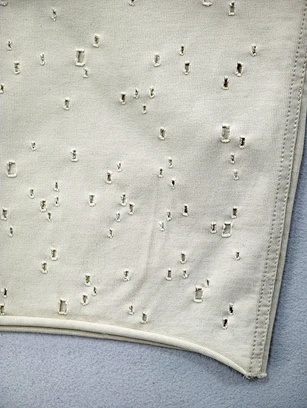
The cutwork is arranged with lower density at the upper leg and gradually closer spacing toward the hem. Hole size, spacing and transition zones must follow an approved placement map. Both legs should maintain balanced distribution.
Cut-Edge Strength and Wash Durability
Preventing Holes from Expanding
Each perforation removes part of the knitted structure, so surrounding loops need stability. Closely spaced openings may join after washing. Testing should cover curling, hole expansion and tearing.
Protecting High-Stress Areas
Perforation should remain clear of crotch seams, pocket corners and other stress points unless reinforcement is added. Enough solid fabric must remain around side seams and hems to preserve strength.
Jeans-Style Waistband, Fly and Pocket Construction
A knitted body combined with a fixed waistband requires stabilization. Button placement, zipper length and belt loops must remain secure without stretching the jersey. Curved pockets should lie flat.
Raw-Look Hem and Full-Length Balance
The lower edge appears lightly rolled or minimally finished, complementing the perforated surface. Hem treatment must be confirmed for wash durability. Both legs should finish equally after relaxation, with consistent pattern endings.
Customization for Perforated Cotton Jersey Pants
Customized pants manufacturing may include:
- Alternative perforation sizes, densities and placement gradients
- Different rises, leg widths and finished inseams
- Contrast pocket insets, hardware and topstitch details
- Clean, rolled or reinforced hem constructions
- Custom labels, hangtags and packaging
Buyer FAQs for Graduated-Perforation Pants
Will the perforated holes become larger after washing?
They may if spacing or stability is insufficient, so wash testing is required.
Does the fabric contain spandex?
No. Wearing ease comes from the jersey structure and the relaxed wide-leg pattern.
Can the perforation layout be customized?
Yes. Hole size, density, distribution and transition height can be developed from approved artwork.
What should be confirmed before manufacturing?
Confirm hole strength, wash growth, waistband stability, pocket shape, leg balance and final inseam.
Validating Hole Expansion Before the Lower-Leg Perforation Map Is Released
Review the sample for waist fit, perforation balance, cut-edge strength, knee growth and post-wash length. For sampling and quotation, provide the quantity, size range, placement artwork, color standard, target inseam, branding details and technical specifications.