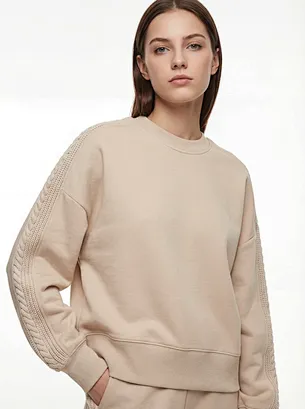

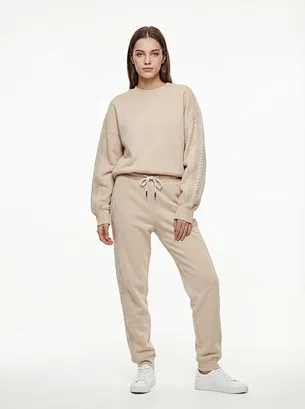
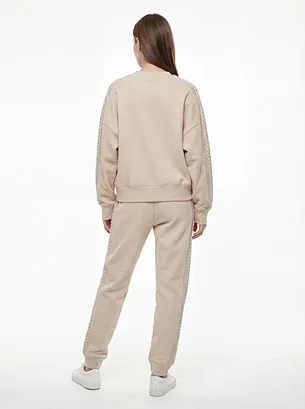
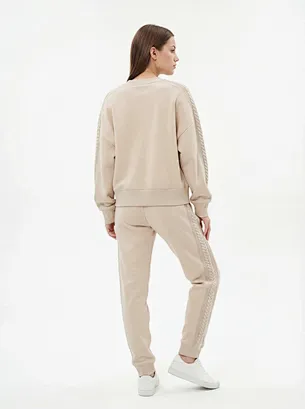
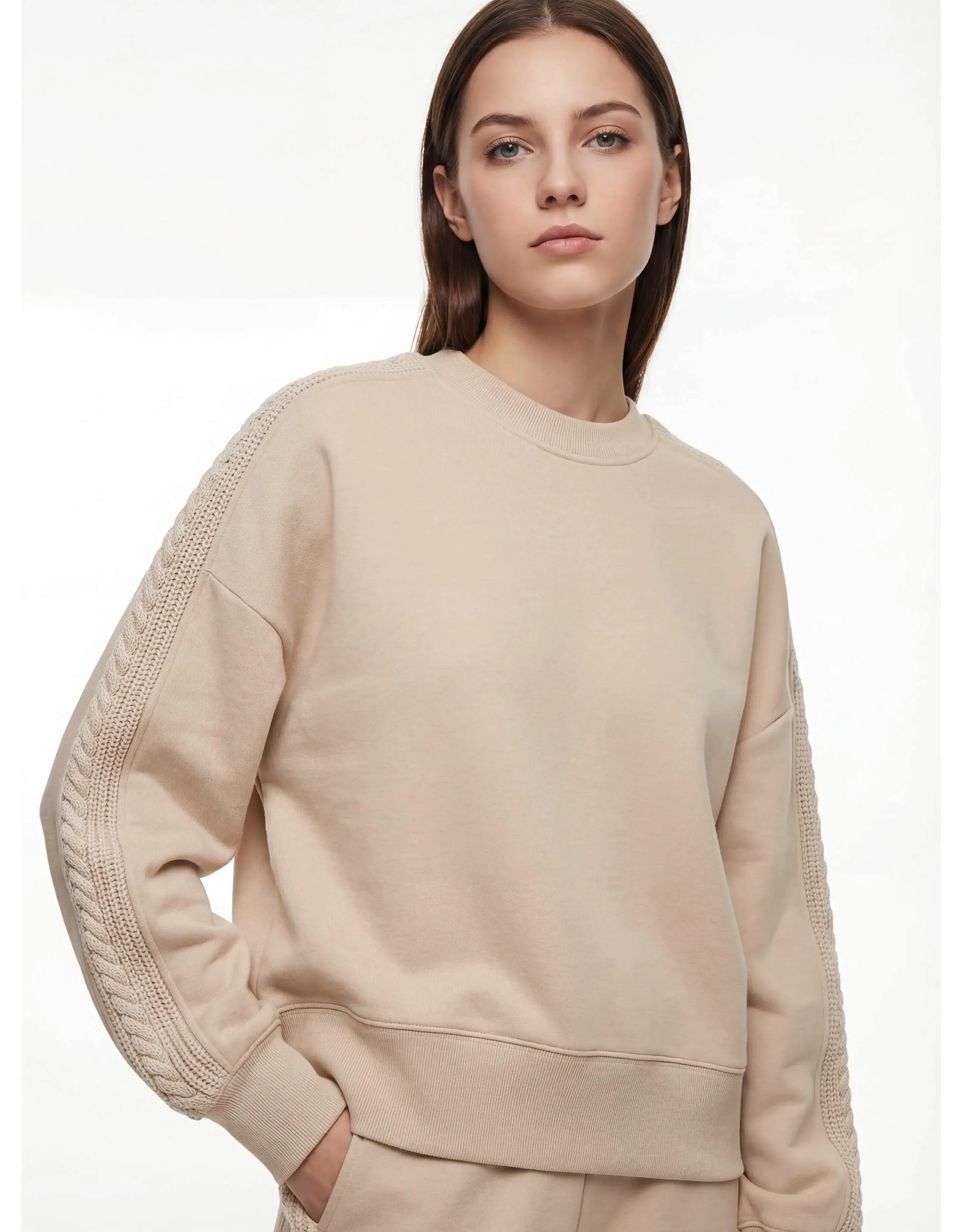
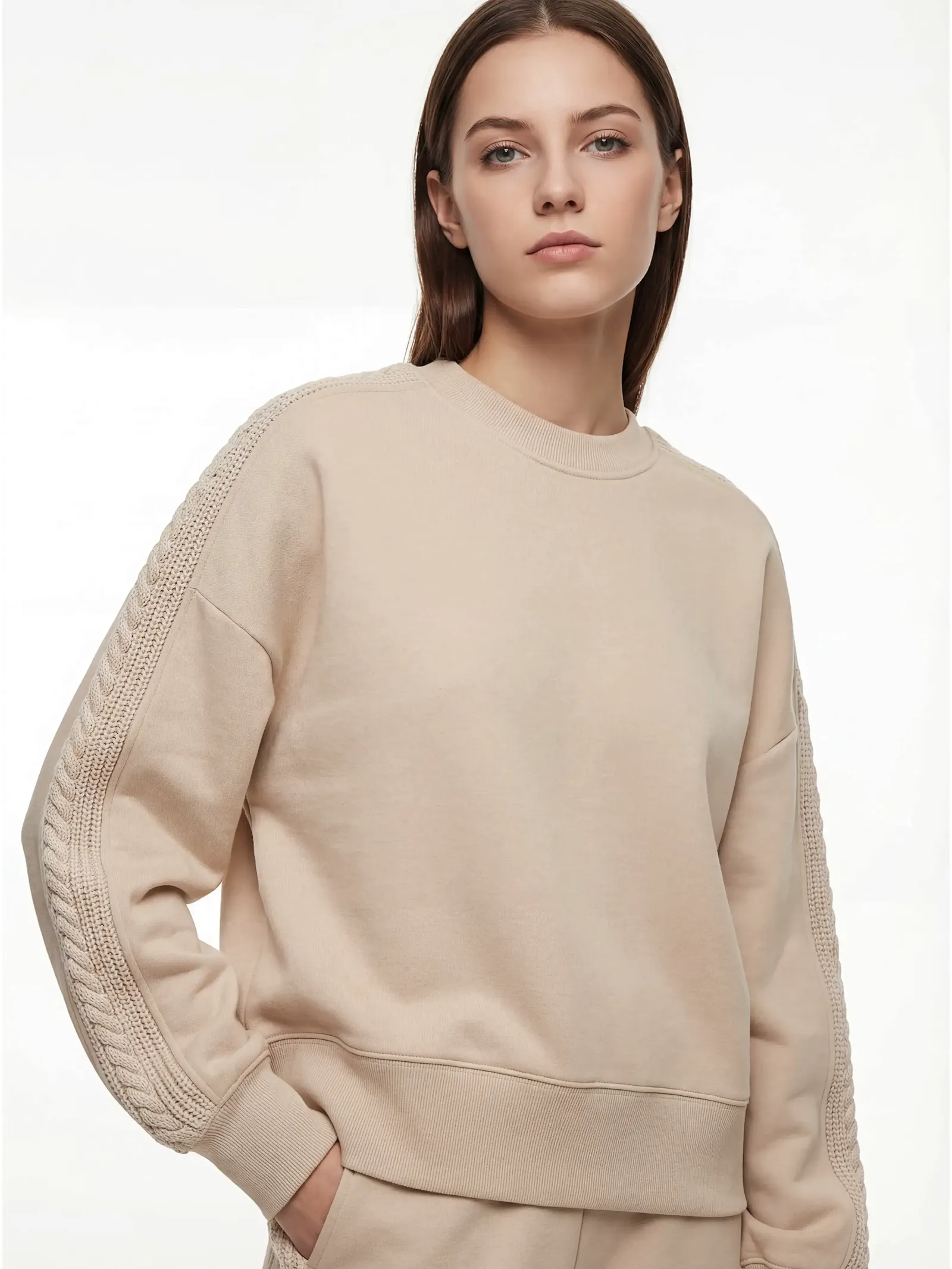
Private Label Cable-Panel Peach-Brushed Fleece Sweatshirt











Fabric, wash, decoration, branding, and sampling — aligned to your program from first
sketch to bulk delivery.
Customization & Development
Product Details
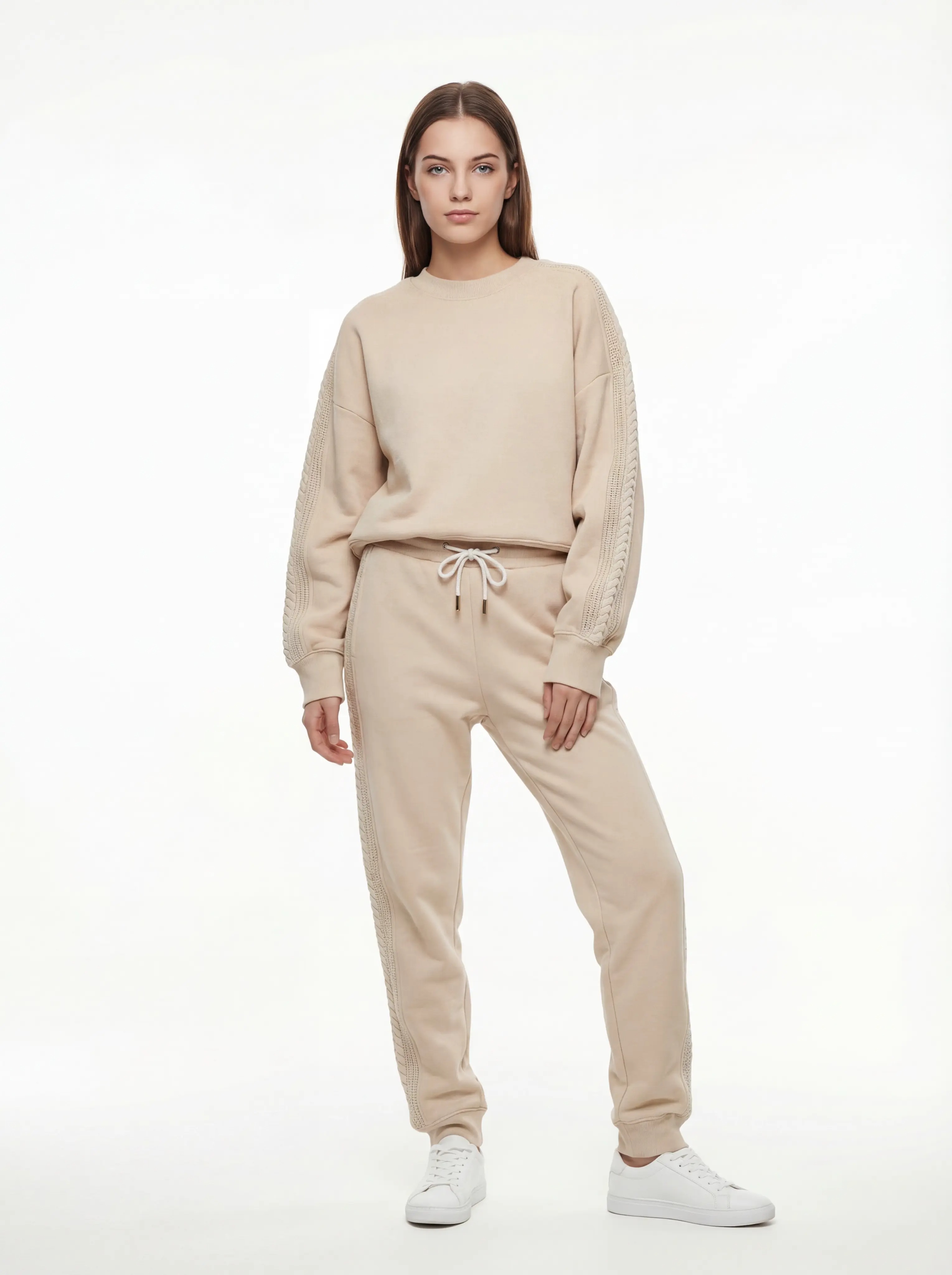
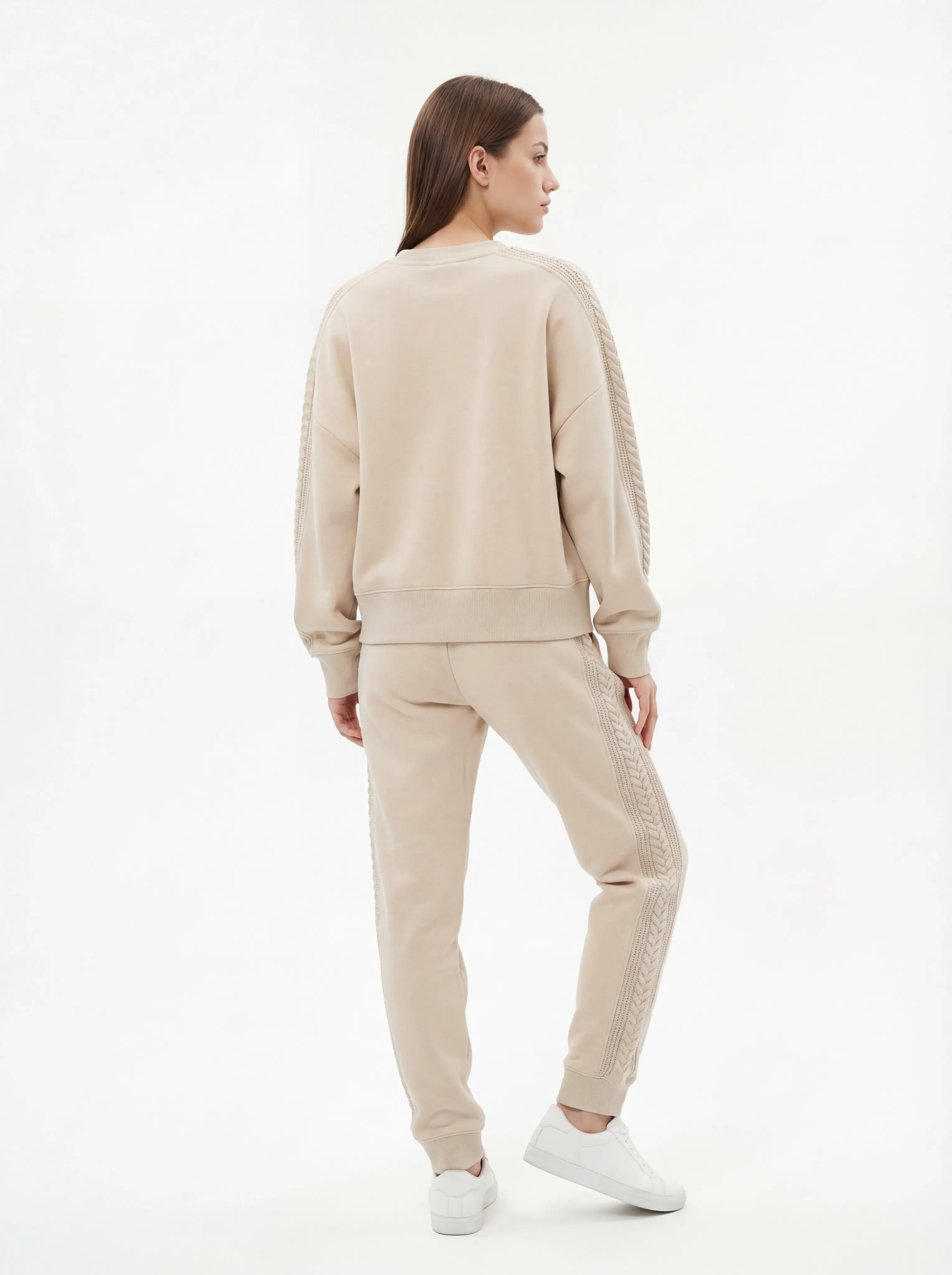
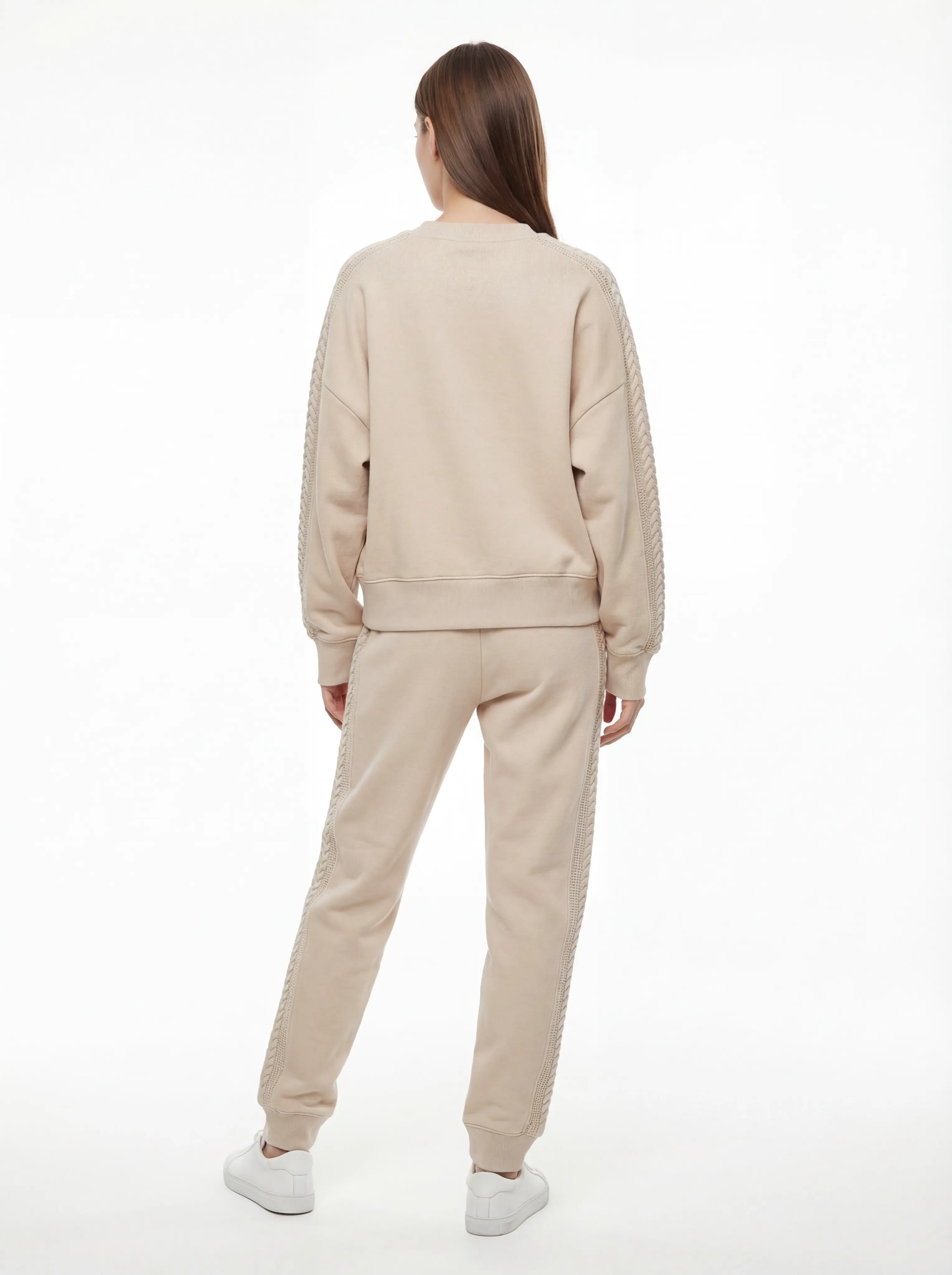
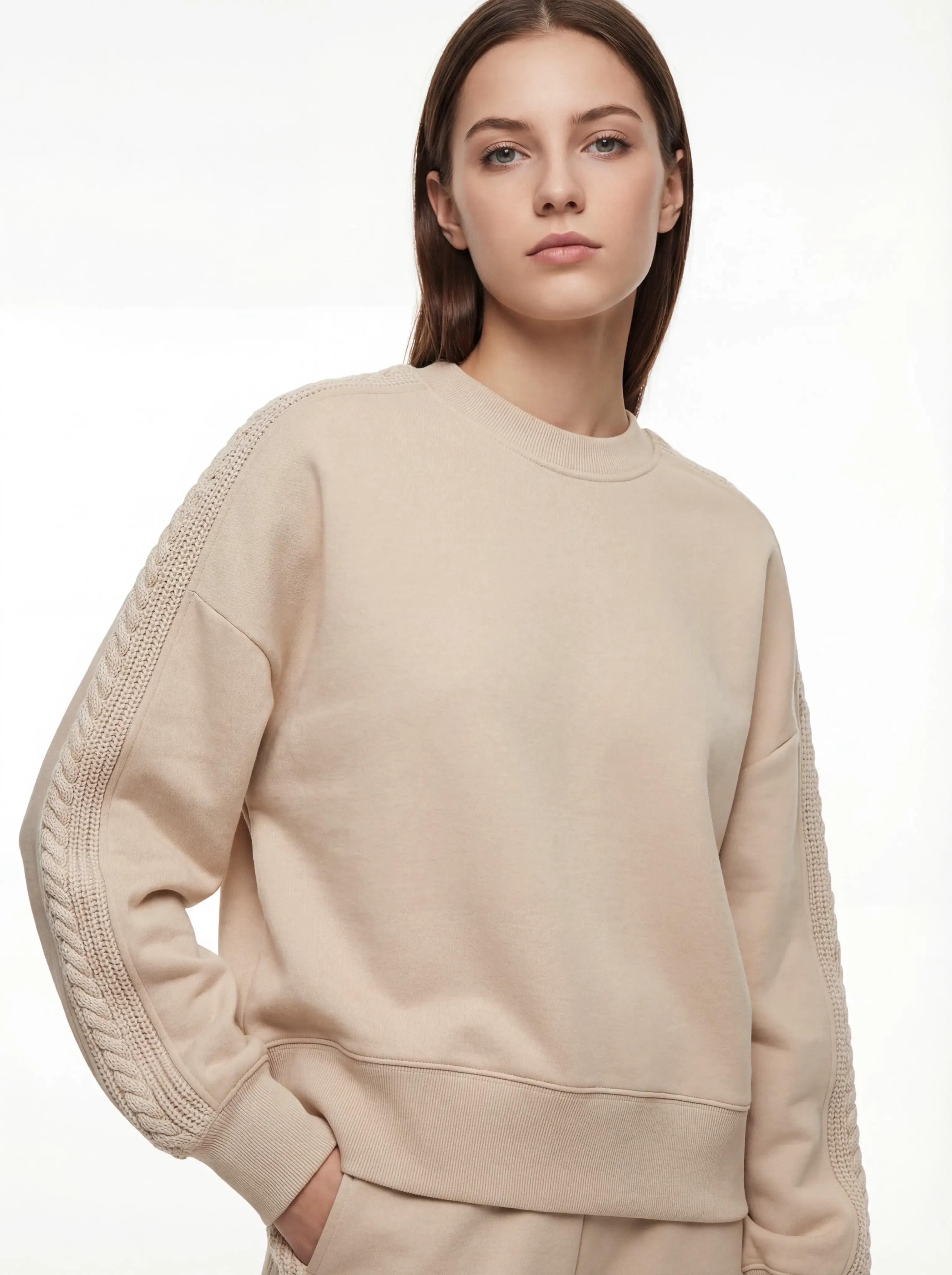
This cable-panel peach-brushed fleece sweatshirt combines a soft cream fleece body with textured knitted inserts running from the shoulders down the sleeves. Dropped shoulders create a relaxed upper shape, while the ribbed crew neck, cuffs and hem keep the silhouette controlled. The mixed-material construction suits premium casualwear and coordinated lounge sets.
| Main composition | 50% cotton, 50% polyester |
|---|---|
| Fabric weight | 350 GSM |
| Main fabric | Peach-brushed fleece |
| Fit direction | Relaxed sweatshirt with dropped shoulders |
| Key details | Cable-knit sleeve panels, ribbed crew neck, cuffs and hem |
Peach-Brushed Fleece with a Compact 350 GSM Body
Soft Surface with Reliable Shape Retention
Cotton gives the sweatshirt a comfortable natural touch, while polyester supports dimensional stability and wash performance. The 350 GSM weight supports the dropped-shoulder shape without excessive rigidity. Brushing should remain even across all panels.
Controlling Nap and Surface Pilling
Peach brushing creates a softer surface, but excessive processing can weaken fibers and increase pilling. The approved standard should define nap level and handfeel. Testing should cover abrasion, pilling and dimensional change.
Cable-Knit Inserts from Shoulder to Cuff
The cable-knit panels form a continuous textured line along the outer sleeves. Panel width, motif repeat and placement should match on both sides. Because the insert and fleece may respond differently, combined wash tests are required before pattern release.
Dropped Shoulder and Sleeve Balance
Preventing the Insert from Pulling the Sleeve
The cable panel may have a different weight and recovery from the fleece. Feed ratio, seam allowance and stitch type must prevent rippling or twisting along the outer sleeve. Shoulder points and sleeve lengths should remain symmetrical after washing.
Protecting the Raised Knit Texture
Heavy pressing can flatten the cable pattern or leave visible impressions on the fleece. Pressing temperature and pressure should be controlled, and texture recovery checked after packing.
Ribbed Neck, Cuffs and Hem Stability
The rib trims should recover without becoming loose or creating excessive gathering. Neck opening, cuff circumference and hem-band ratio need approval. Seam bulk should be reduced where the cable panel meets the cuff.
Fit Consistency for Matching-Set Development
The body should remain relaxed through the chest and waist while the rib hem provides a clean finish. Finished length and shoulder width should coordinate with matching bottoms. Measurements need checking after relaxation and washing.
ODM Options for Cable-Panel Fleece Sweatshirts
ODM sweatshirt development may include:
- Alternative cable motifs, panel widths and knit gauges
- Tonal or contrast fleece and knitted panel combinations
- Adjustments to shoulder width, body length and sleeve volume
- Matching joggers and fleece separates
- Custom labels, hangtags and packaging
Buyer FAQs for Cable-Knit Panel Sweatshirts
Can the cable-knit insert shrink differently?
Yes. The insert and fleece body should complete combined wash testing before production.
Is 350 GSM suitable for cooler seasons?
Yes. The weight and brushed finish provide more warmth than lightweight sweatshirts.
Can the cable design be customized?
Yes. Motif scale, panel width, yarn color and knit structure can be adjusted through sampling.
What should be approved before manufacturing?
Confirm brushing level, panel shrinkage, sleeve symmetry, rib recovery, seam flatness and finished measurements.
Balancing the Cable Insert Before Sleeve Length and Rib Ratios Are Sealed
Review the sample for softness, panel symmetry, shoulder balance, rib recovery and post-wash measurements. For sampling and quotation, provide the quantity, size range, cable reference, color standard, fit requirements, branding details and technical specifications.