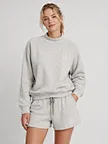
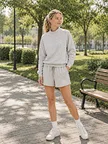
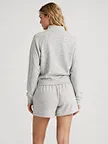
Private Label Tonal-Embroidered Mock-Neck Raglan Sweatshirt









Fabric, wash, decoration, branding, and sampling — aligned to your program from first
sketch to bulk delivery.
Customization & Development
Product Details
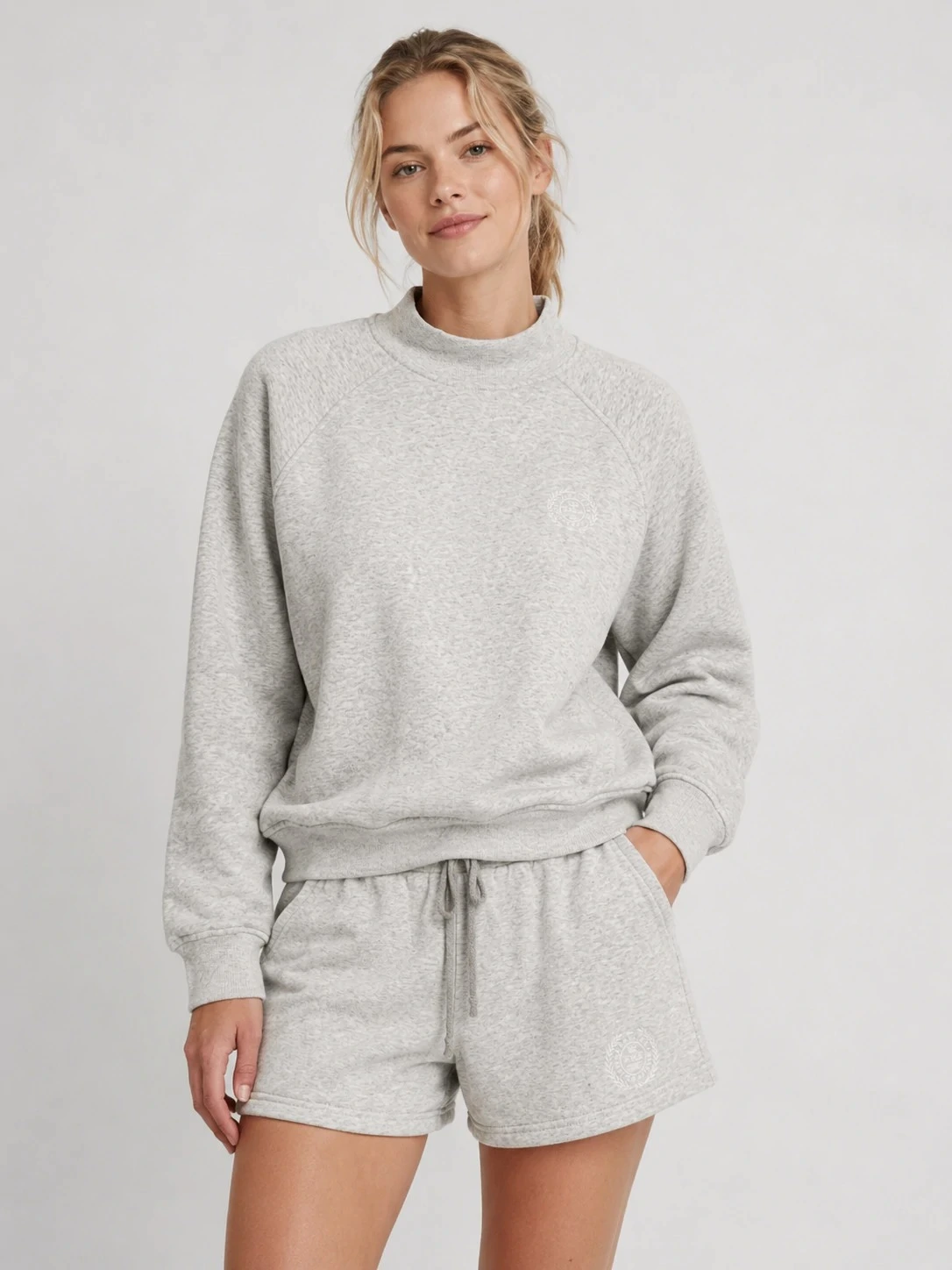
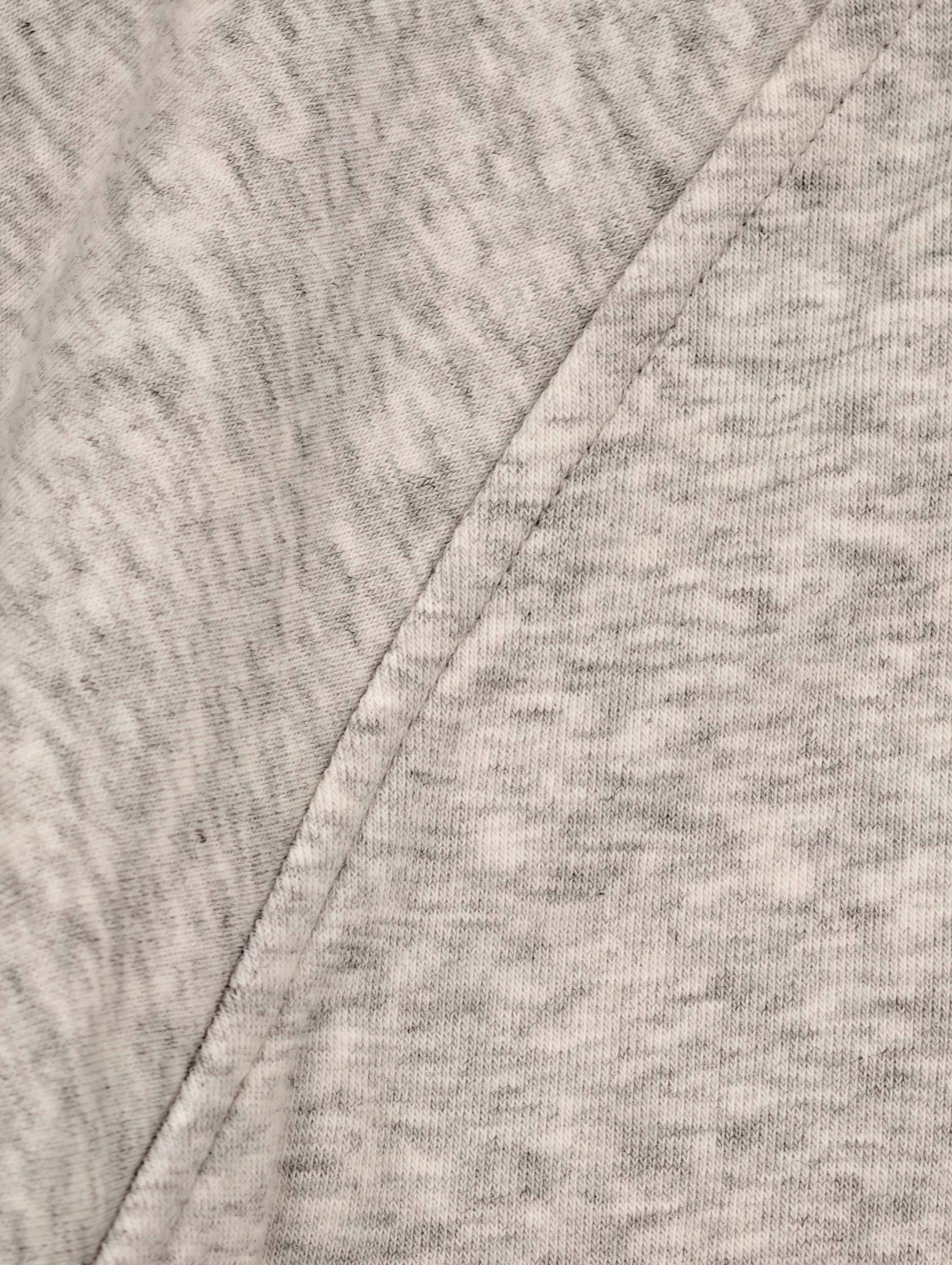
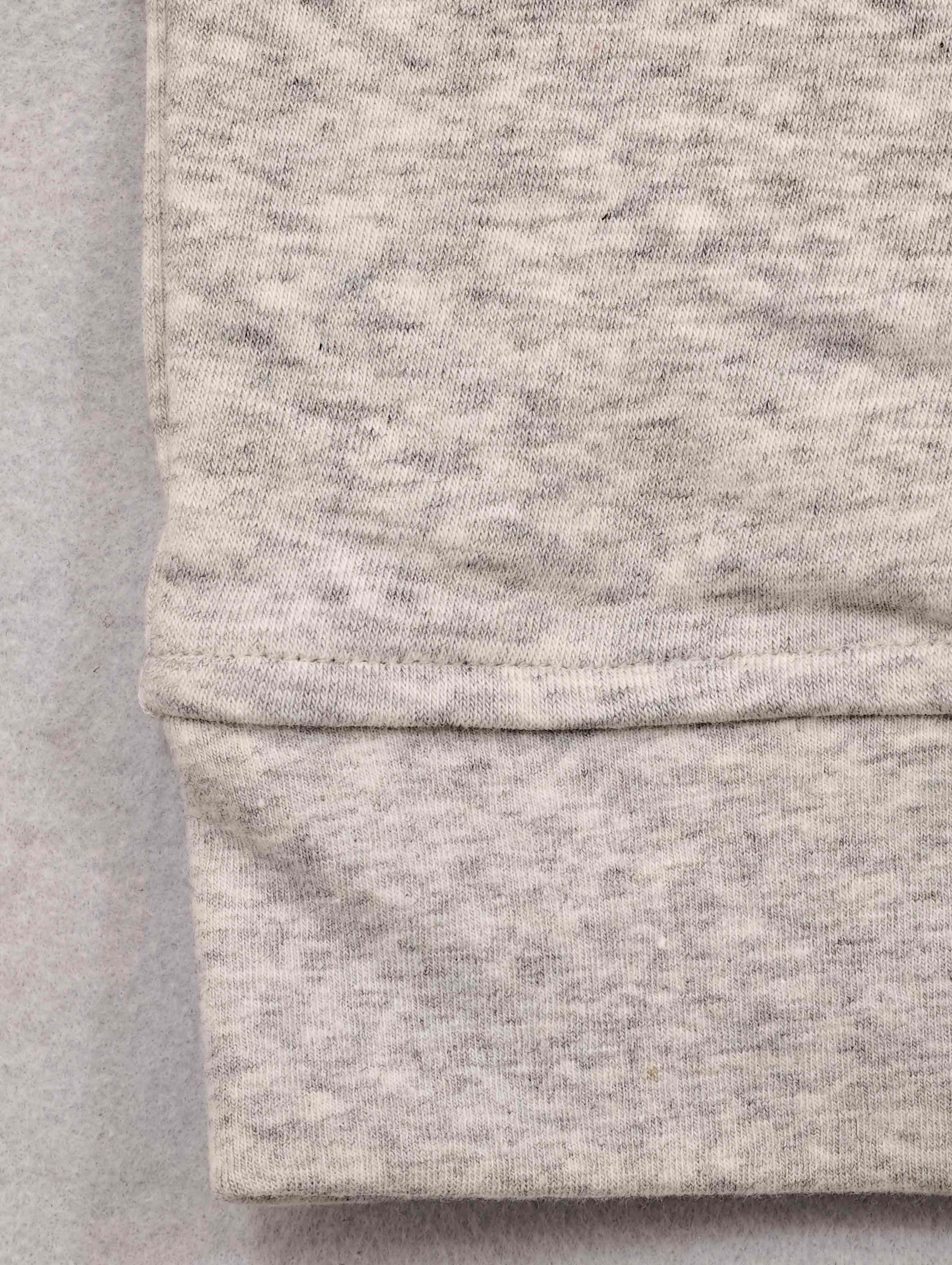
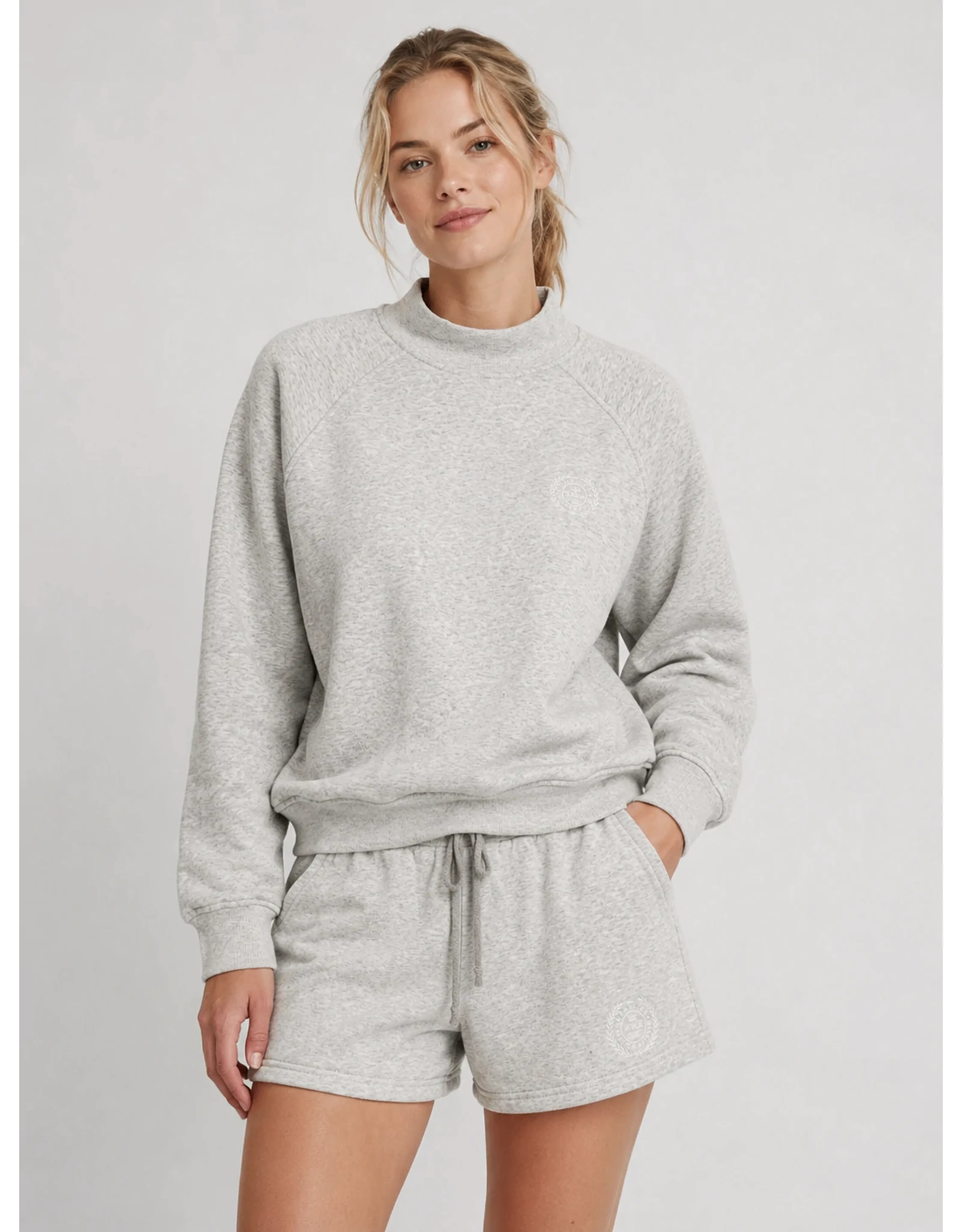
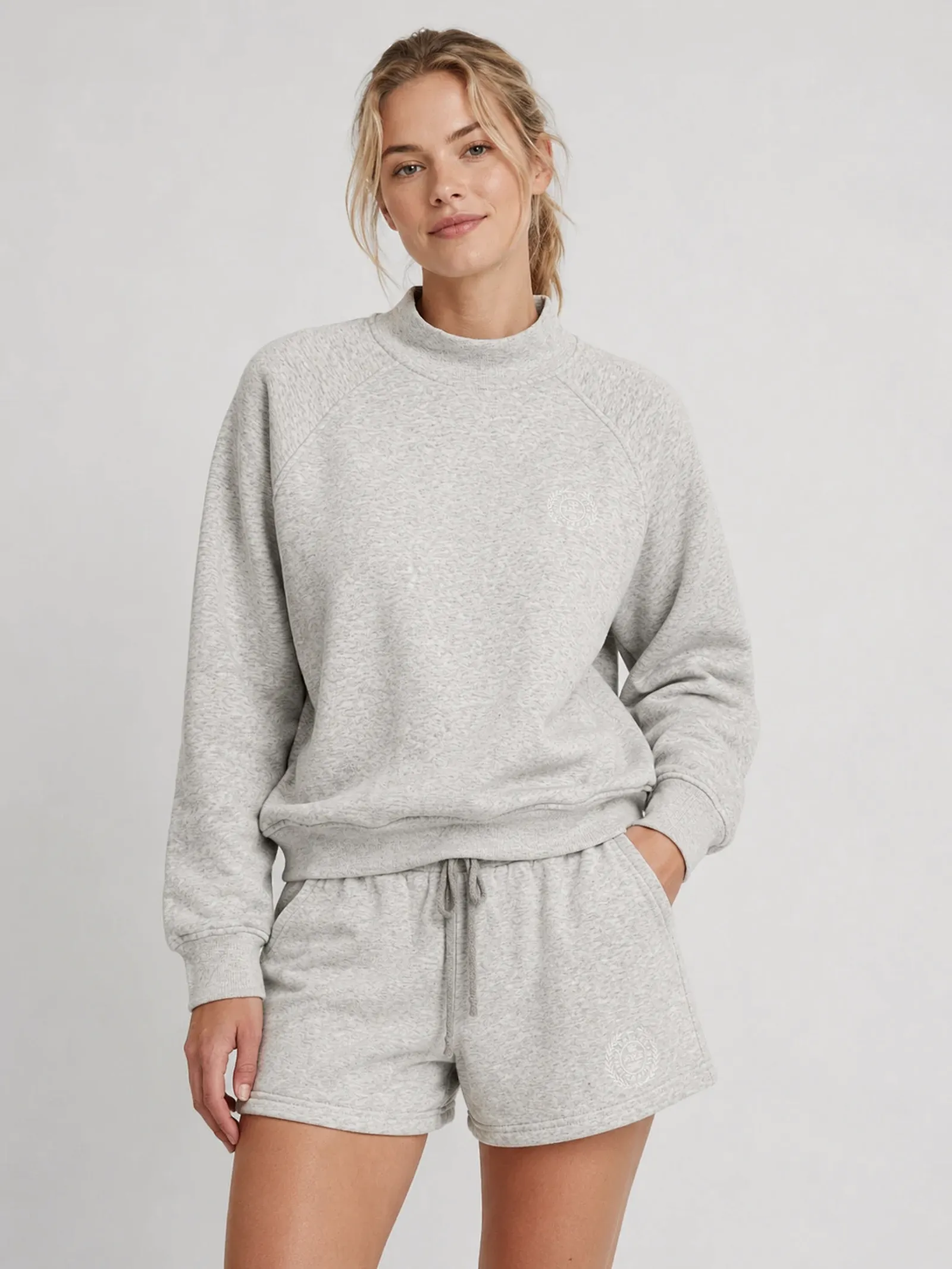
This custom women’s mock-neck sweatshirt combines a softly raised neckline with raglan sleeves, relaxed body volume and tonal crest embroidery at the chest. The 240 GSM cotton-modal knit provides a comfortable, fluid handfeel, while T400 polyester supports recovery through the shoulders and body. Heavier 360 GSM rib trims control the cuffs and lower opening, creating a polished lounge layer for travel, casualwear and coordinated collection programs.
| Main fabric | 60% cotton, 30% modal, 10% T400 polyester |
|---|---|
| Fabric weight | 240 GSM main fabric; 360 GSM rib |
| Fit | Relaxed hip-length silhouette with raglan sleeves |
| Design details | Mock neckline, raglan seams, tonal chest embroidery, rib cuffs and rib hem |
| Suitable for | Elevated loungewear, travel, casualwear, transitional dressing and coordinated sets |
240 GSM Cotton-Modal Knit with T400 Recovery
Soft Surface and Relaxed Body Drape
Cotton gives the sweatshirt a familiar, breathable touch, while modal softens the surface and allows the body to fall naturally from the shoulders. The 240 GSM weight provides comfortable coverage without producing the bulk of a conventional heavyweight fleece sweatshirt.
Recovery Through Wear and Laundering
T400 polyester helps the fabric recover after sitting, stretching and repeated movement. Shrinkage, skew and dimensional stability should be checked before bulk grading so the body length, sleeve length and neckline shape remain consistent after laundering.
Mock Neckline and Raglan Sleeve Geometry
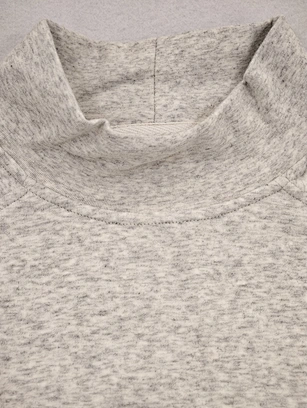
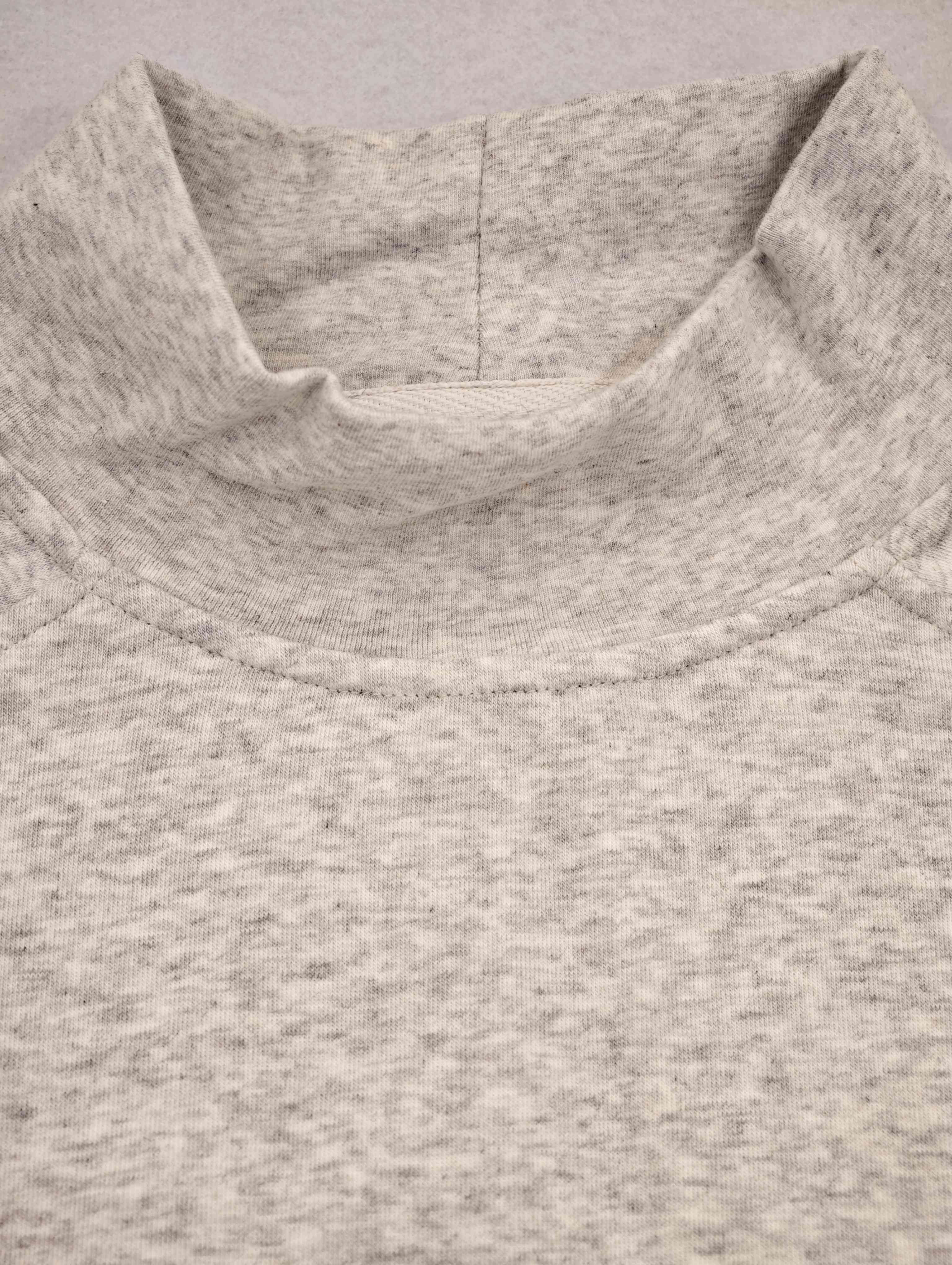
The raised neckline provides more coverage than a crew neck while remaining softer and less restrictive than a high funnel collar. Neck height, opening circumference and seam extension should be approved together so the neckline sits smoothly without collapsing, stretching outward or pressing against the wearer.
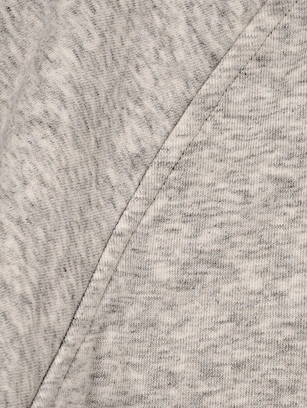
Raglan seams run from the neckline toward the underarm, allowing comfortable shoulder movement and creating a cleaner transition through the upper body. Both seam lines should remain symmetrical, while sleeve pitch and armhole depth should be checked to prevent twisting around the elbow and cuff.
Tonal Crest Embroidery and Textured Surface Handling
A small tonal crest motif is positioned on the upper chest, adding understated branding without introducing strong color contrast. Artwork size, stitch density, backing and thread shade should be tested on the actual fabric so the embroidery remains clear without creating puckering or stiffness.
The image shows a tonal textured surface, but the exact fabric technique should be confirmed with the selected material source. Surface direction and shade consistency require checking before marker placement, particularly when front, back and sleeve panels are cut separately.
360 GSM Rib Cuffs and Lower-Hem Control
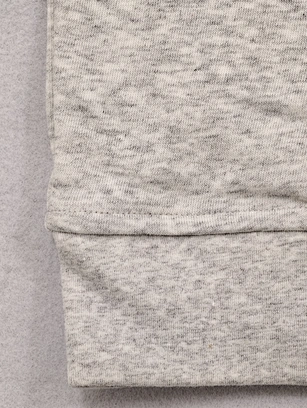
The heavier rib contains 6% spandex for stronger extension and recovery at the wrists and lower opening. Cuff circumference, rib height and attachment ratio should be approved together so sleeve gathering remains even without creating excessive pressure.
The rib hem controls the relaxed body volume and creates a defined stopping point at the hip. Balanced tension across the front, side seams and back helps the lower edge remain level rather than twisting or riding upward after washing.
Coordinated Lounge and Travel Collection Use
The light-heather-grey sweatshirt can be paired with matching embroidered shorts, wide-leg pants, a knit skirt or a zip jacket using the same main fabric and rib quality. Body fabric, rib, sewing thread and embroidery thread should be approved under one color standard to reduce visible shade differences within matching sets.
Custom Options for Private Label Programs
Private label mock-neck sweatshirt development may include:
- Alternative cotton-modal blends, weights and surface finishes
- Custom neckline heights, opening widths and collar constructions
- Adjustments to raglan shape, sleeve volume and body length
- Rib cuffs, elasticated openings or self-fabric trim options
- Embroidery, appliqué, heat transfer or tonal logo applications
- Matching bottoms, care labels, hangtags and branded packaging
Sample approval should confirm the neckline comfort, raglan alignment, embroidery stability, sleeve balance, rib recovery and post-wash measurements before bulk cutting begins.
Frequently Asked Questions
Can the mock neckline be made lower?
Yes. Neckline height, circumference and seam construction can be adjusted during pattern and sample development.
Can the tonal embroidery be replaced with another logo technique?
Yes. The chest detail can use embroidery, appliqué, heat transfer, flock printing or a woven patch according to the approved artwork.
Is the tonal surface created by printing?
The image confirms a textured tonal appearance, but the exact knitting or finishing technique should be verified with the selected fabric supplier.
What should be approved before manufacturing?
Confirm fabric handfeel, surface direction, neckline shape, raglan balance, embroidery quality, rib recovery, shrinkage and finished measurements.
Approve Neckline Height Before Raglan Fit and Bulk Release
Review the sample for neckline comfort, raglan symmetry, shoulder movement, sleeve length, embroidery placement, cuff recovery and lower-hem balance. For sampling and quotation, provide the target quantity, size range, preferred fit, neckline requirements, logo artwork, color standard, branding details and any available technical files.