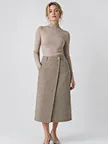
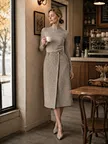
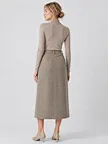
OEM Women's Wool-Blend Wrap Midi Skirt











Fabric, wash, decoration, branding, and sampling — aligned to your program from first
sketch to bulk delivery.
Customization & Development
Product Details
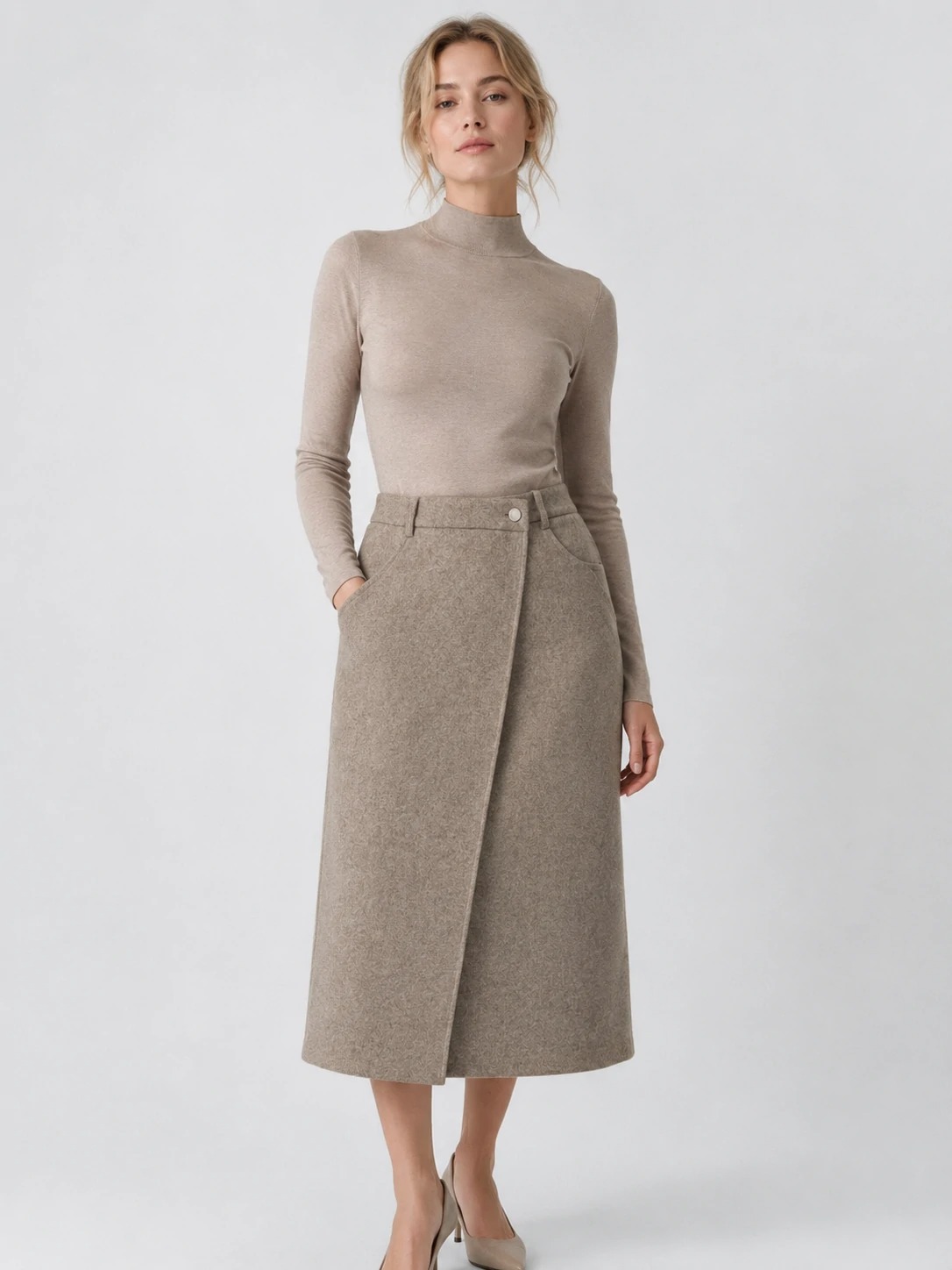
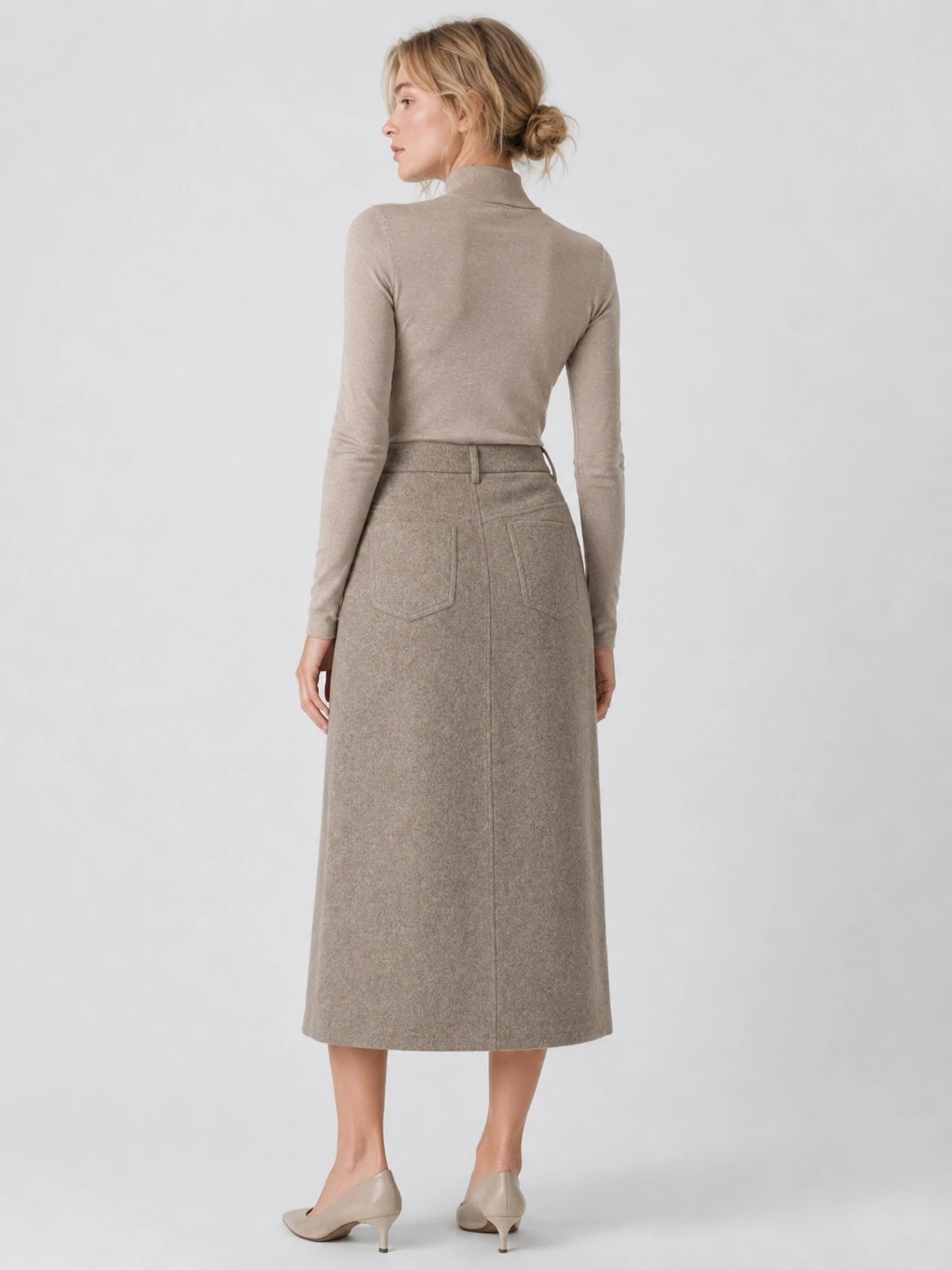
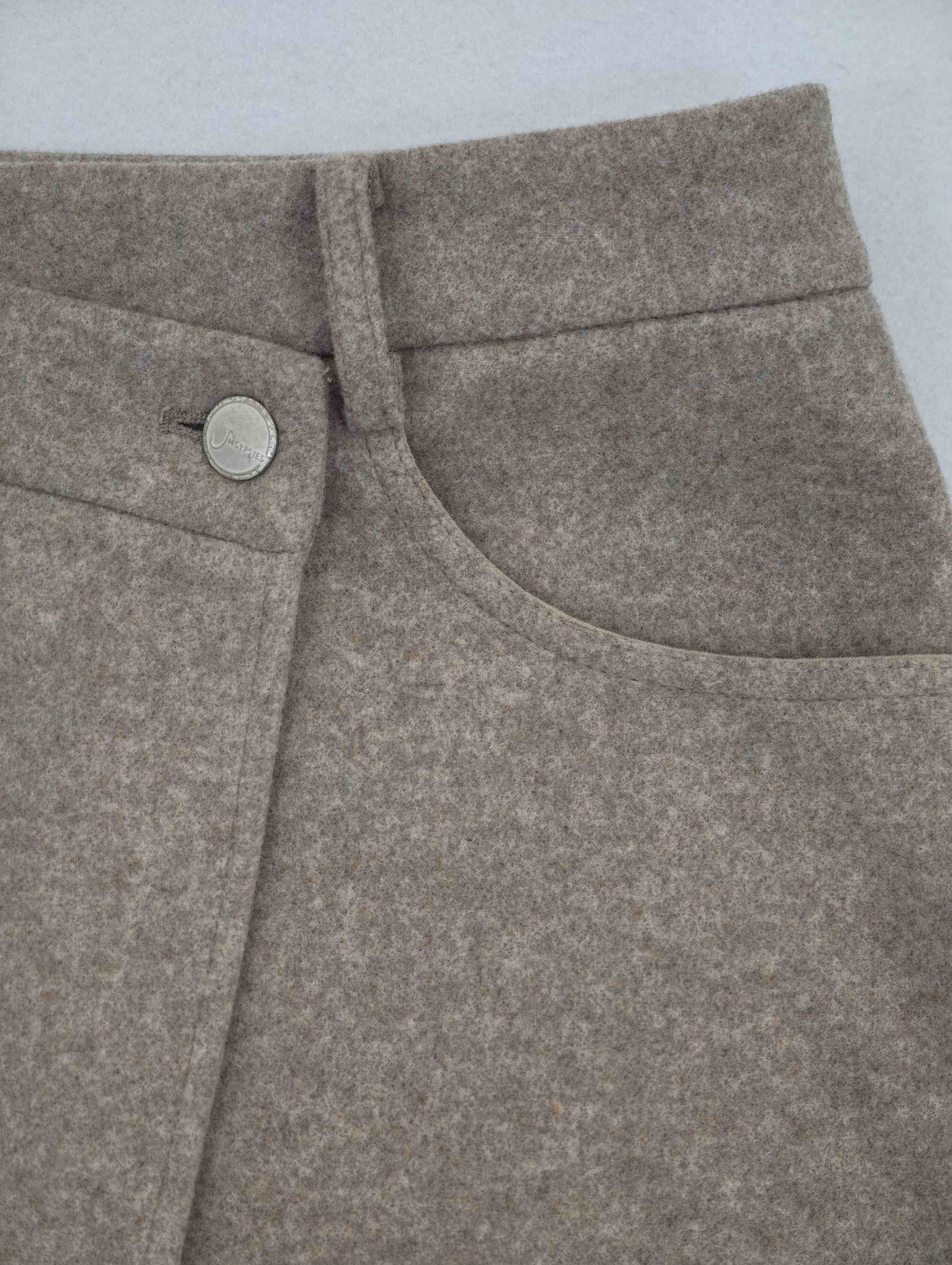
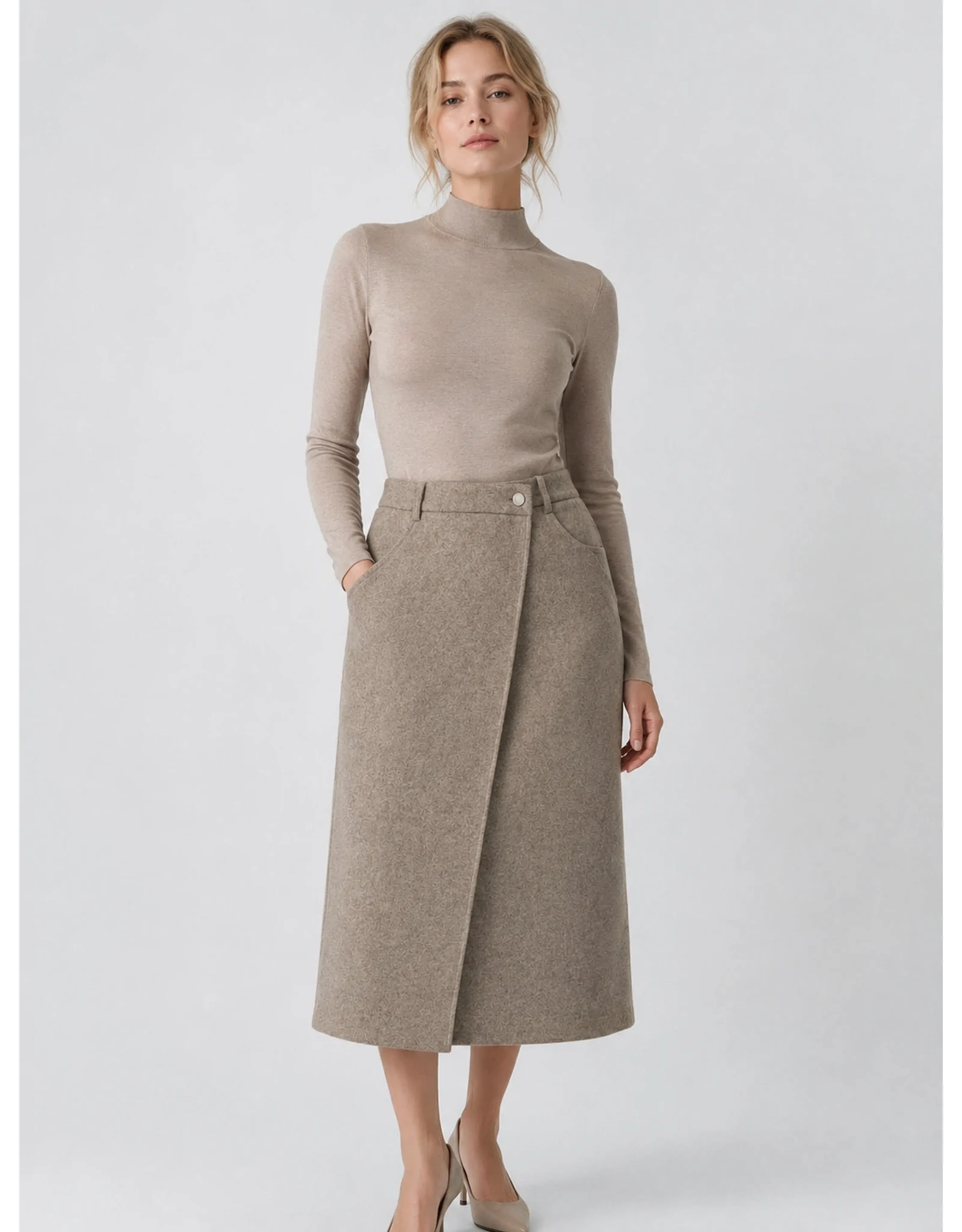
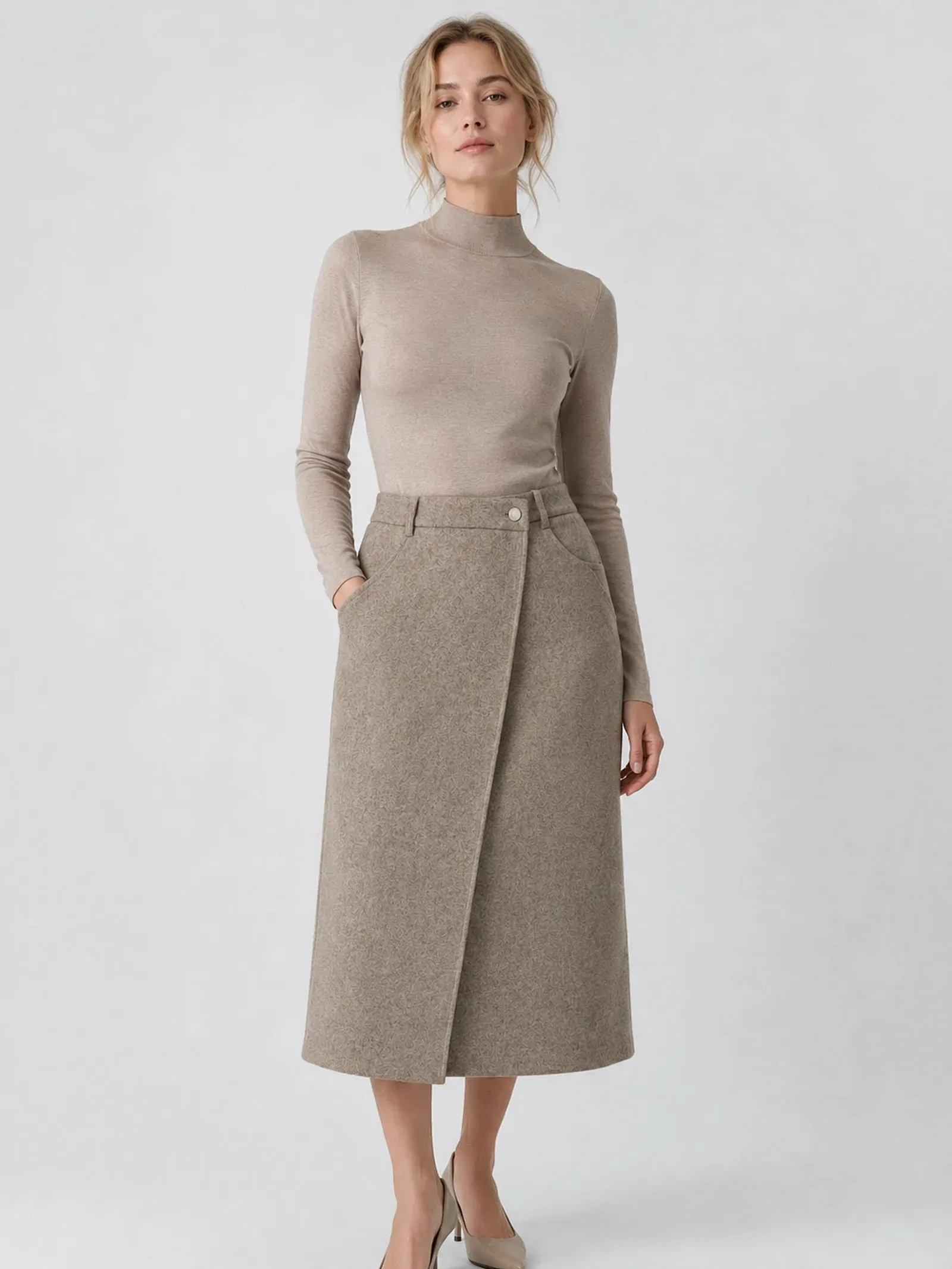
This women’s wool-blend wrap midi skirt combines a clean A-line silhouette with an asymmetric front panel and a structured high waist. The overlapping front creates the look of a wrap skirt while keeping the shape polished enough for commuter, casual and modern lifestyle collections. Developed for apparel labels that need a refined bottom with practical styling flexibility, the skirt works well with fine-knit tops, blouses and lightweight outerwear.
| Main fabric | 160 GSM: 65.3% polyester, 15.4% rayon, 8.9% nylon, 6.2% acrylic, 4.2% sheep wool |
|---|---|
| Fit | High-waisted A-line midi silhouette |
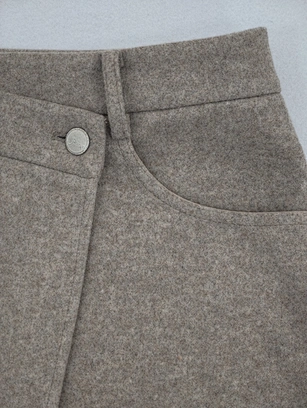
| Waist & closure | Structured waistband, belt loops and asymmetric front button closure |
| Design details | Overlapping front panel, angled side pockets and clean long-line shape |
| Suitable for | Commuter, casualwear, contemporary womenswear and OEM skirt collections |
Lightweight Wool Blend with a Clean Fall
160 GSM Multi-Fiber Construction
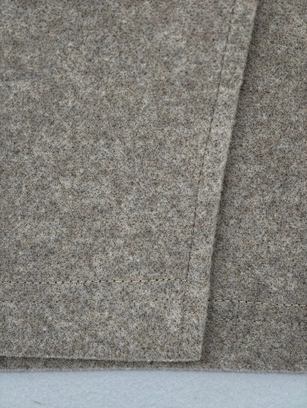
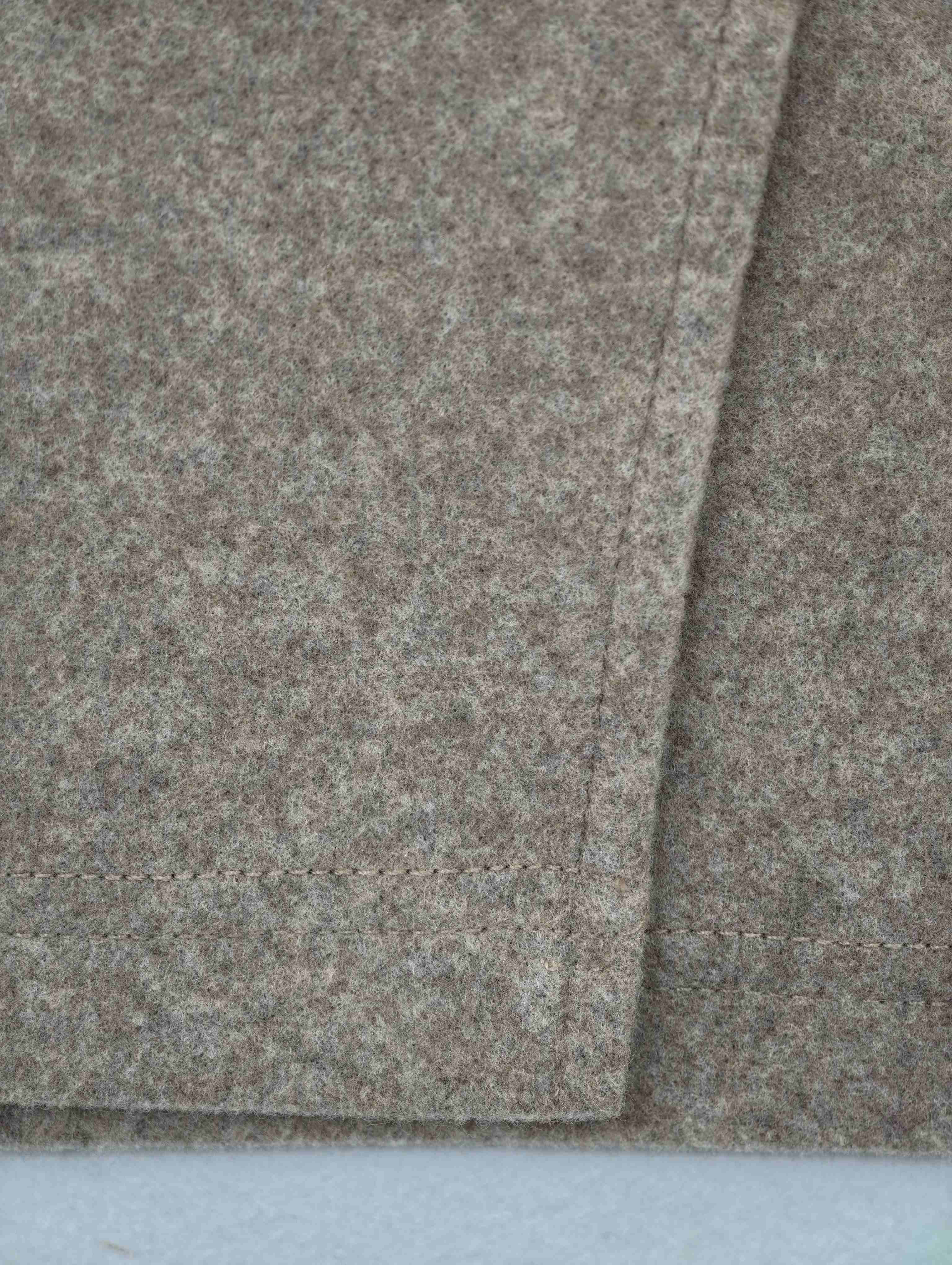
The main fabric contains 65.3% polyester, 15.4% rayon, 8.9% nylon, 6.2% acrylic and 4.2% sheep wool at 160 GSM. Polyester supports dimensional stability, while rayon softens the drape and helps the long skirt fall more naturally. Nylon and acrylic contribute resilience, and the wool content adds a lightly warm, softly textured surface without turning the garment into a heavy winter skirt.
Balance Between Structure and Movement
The fabric needs enough body to keep the wrap front and A-line shape defined, but it should still move cleanly when worn. At this weight, the skirt is better positioned as a transitional or indoor-season piece rather than dense cold-weather outerwear. Pressing control is important because excessive heat can flatten the surface or leave unwanted impressions along the overlapping front and pocket edges.
Wrap Coverage, Waist Fit and Front Alignment
The most important construction point is the amount of overlap through the front panel. It needs sufficient coverage for movement and sitting while maintaining the intended asymmetric line. The button position, waistband extension and inner securing points should be checked together so the front does not shift, open or pull away from the body.
Waistband stability, belt-loop placement and pocket symmetry also affect the finished appearance. During sampling and in-line inspection, checks should cover front-panel alignment, side-seam balance, hem level and the way the skirt hangs from the waist. These controls help the approved silhouette remain consistent through bulk production.
Designed for Refined Everyday Collections
The midi length and neutral texture make this style suitable for commuter, smart-casual and contemporary womenswear ranges. It can be coordinated with fitted knit tops, tucked blouses or cropped jackets without competing with the upper garment. The wrap-front effect gives the skirt a stronger design identity than a basic A-line style while remaining adaptable across muted, earthy and seasonal color palettes.
OEM Adjustments for Brand Development
OEM women’s skirt development may include:
- Custom fabric colors and alternative wool-blend directions
- Adjustments to skirt length, flare and front-panel overlap
- Alternative waistband height, belt-loop placement and button finishes
- Revisions to pocket shape, opening angle or internal construction
- Woven labels, care labels, hangtags and branded packaging
- Measurement grading for different markets and target fits
Development can follow a tech pack, reference garment or updated fit brief. Changes to fabric weight, front overlap or waist construction should be reviewed in a new sample because each adjustment can affect drape, coverage and balance.
Sampling and Order Review
Sampling is used to confirm waist fit, front coverage, button position, pocket placement, hem balance and overall drape before production. Order quantities can be discussed according to fabric availability, custom color requirements and trim selection. For an accurate quotation, provide the target quantity, size range, preferred colors, branding details and any reference measurements or technical files.