


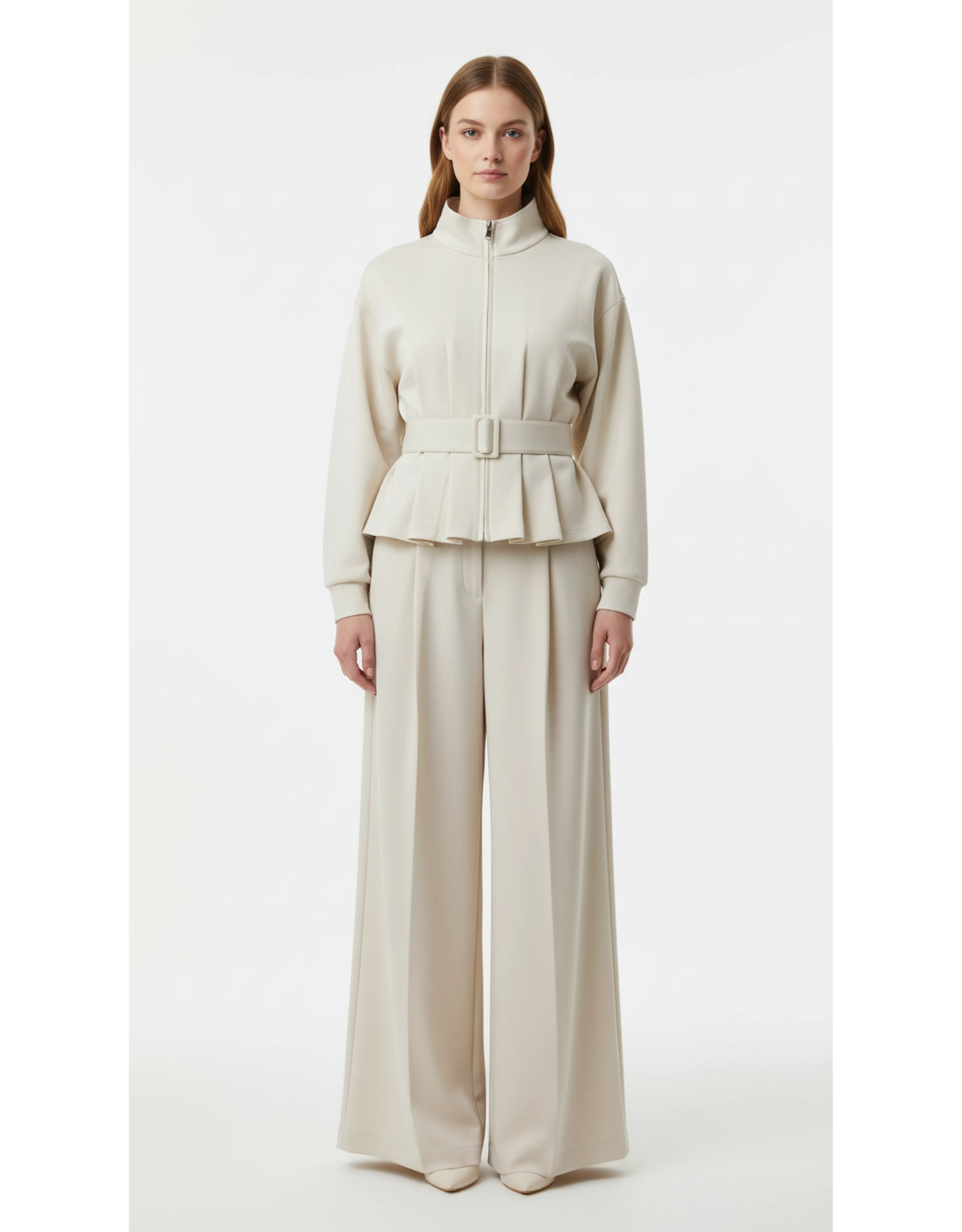
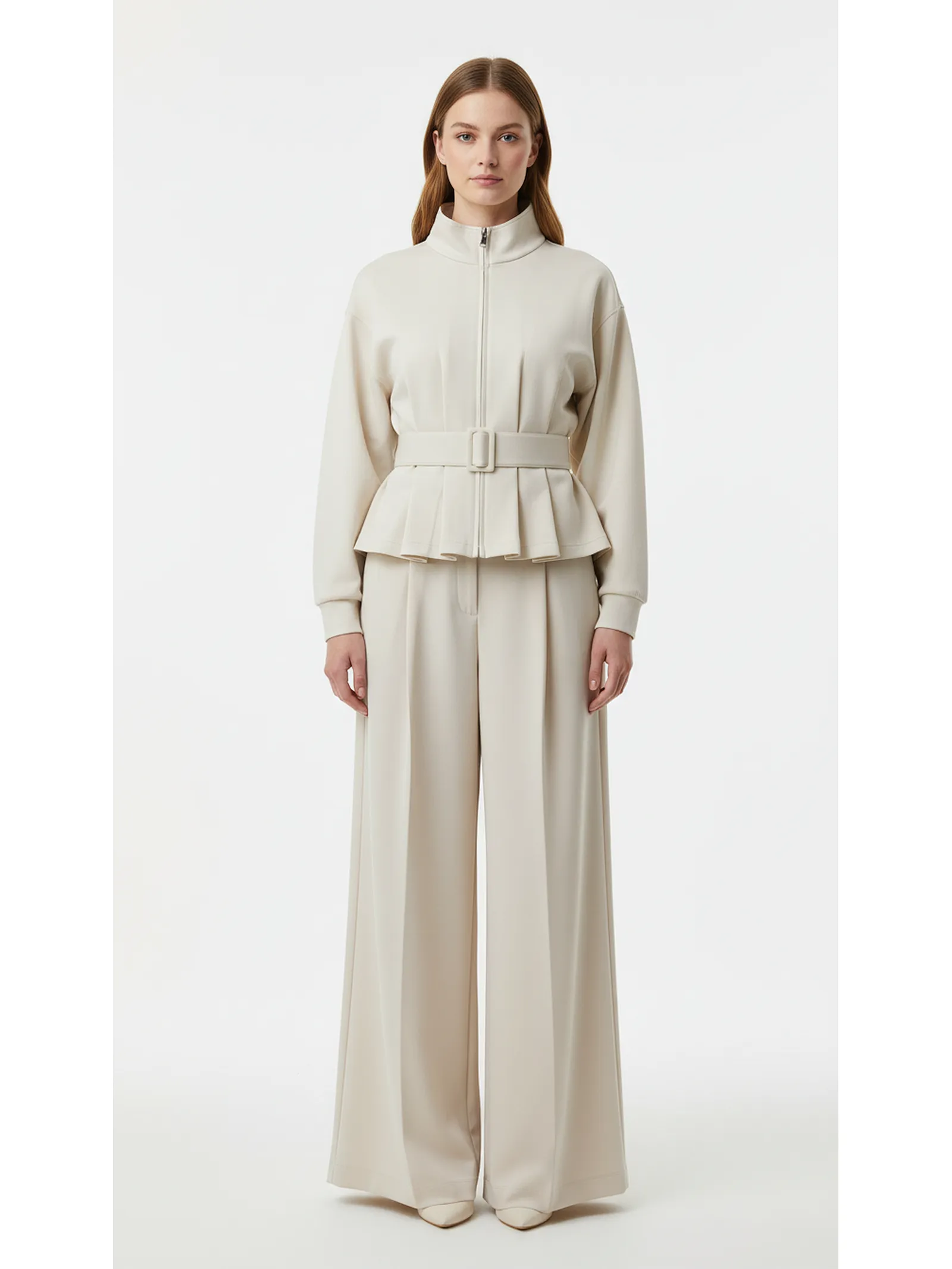
Private Label Deep-Pleat Rayon Blend Wide-Leg Pants











Fabric, wash, decoration, branding, and sampling — aligned to your program from first
sketch to bulk delivery.
Customization & Development
Product Details
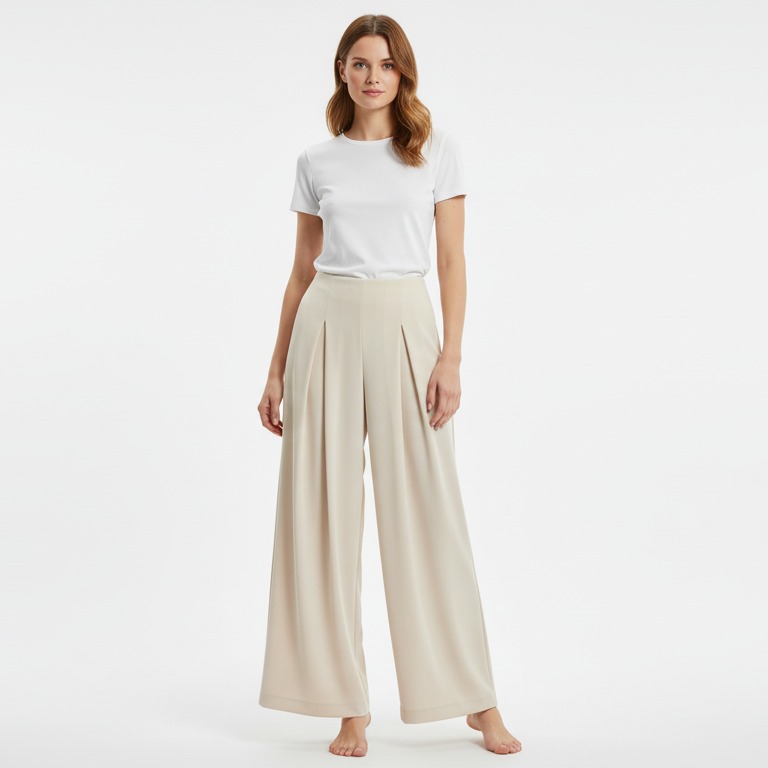
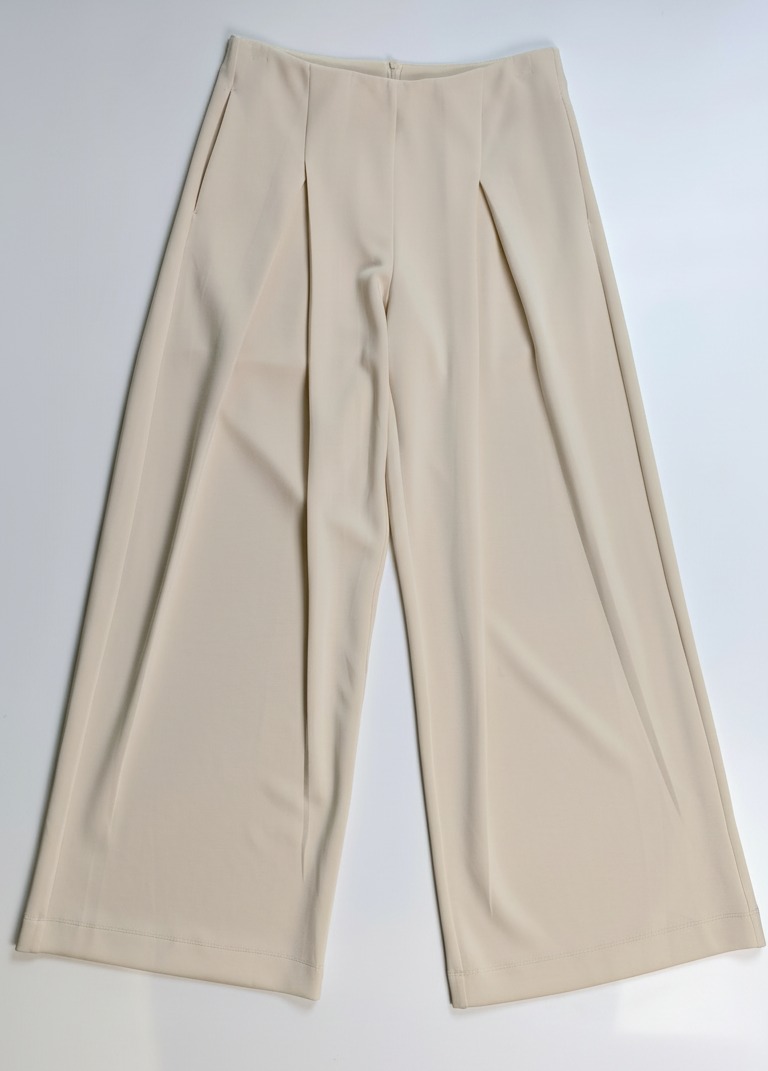
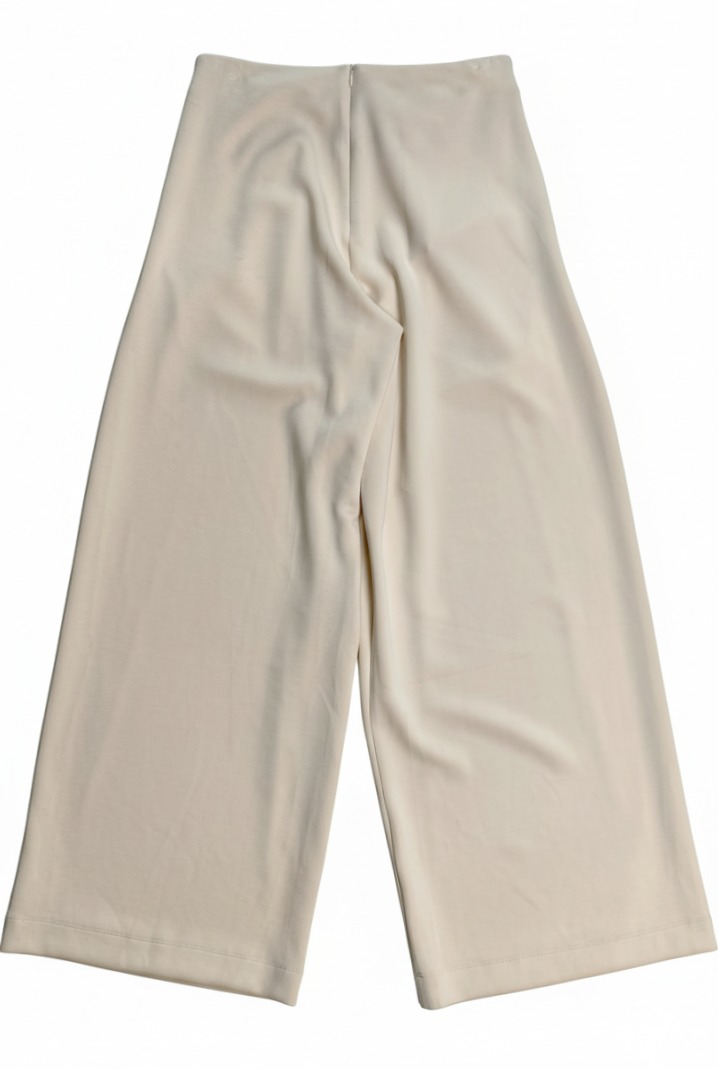
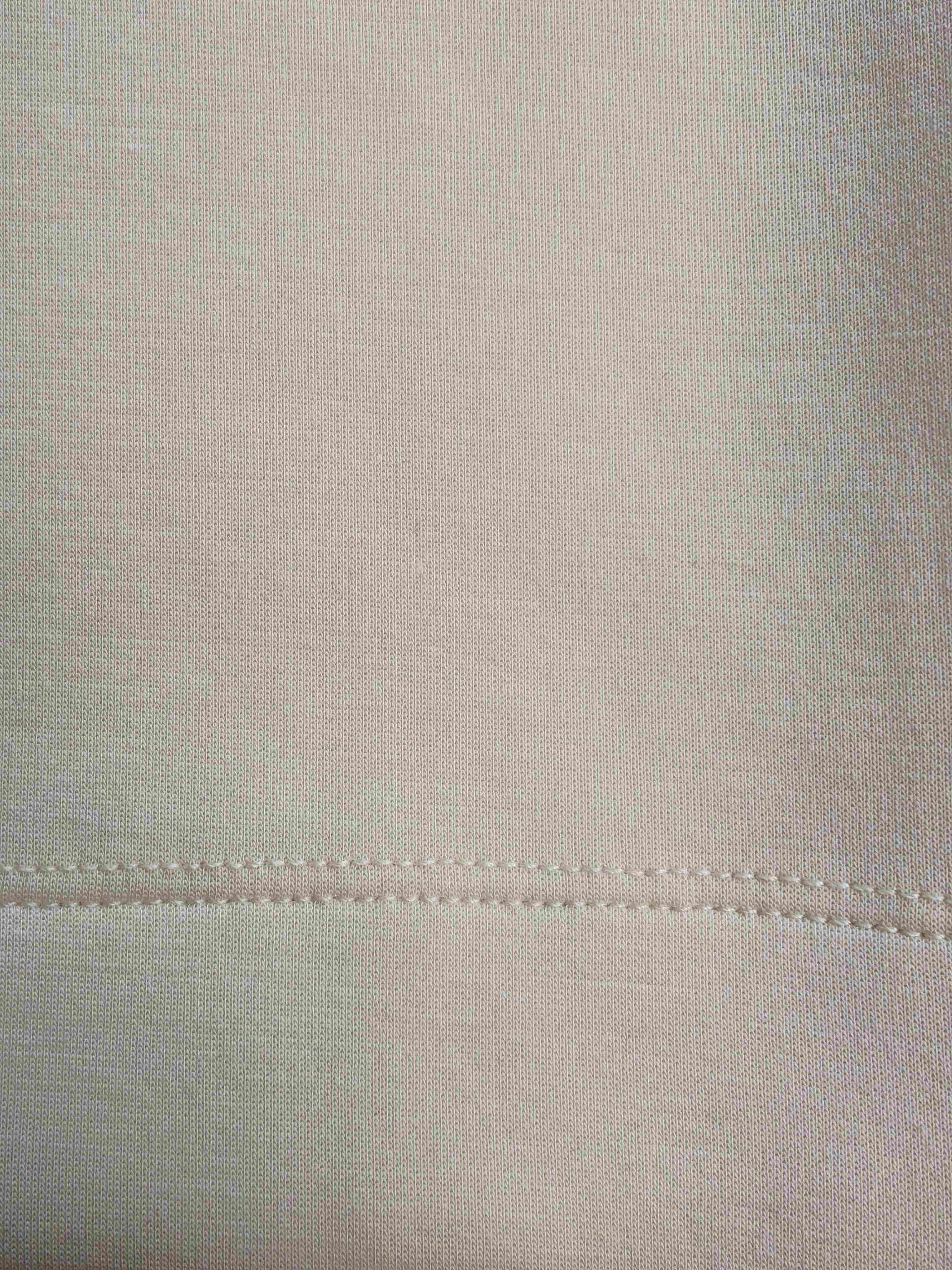
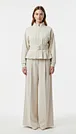
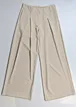
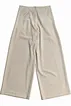
These deep-pleat rayon blend wide-leg pants combine a clean high-rise waistband with structured front pleats and a fluid full-length silhouette. The ivory shade keeps the style refined and versatile, while the generous leg volume creates movement without relying on a heavy fabric. This direction suits elevated loungewear, travel capsules, contemporary casualwear and coordinated knit collections.
| Main composition | 48% rayon, 48% polyester, 4% spandex |
|---|---|
| Fabric weight | 260 GSM |
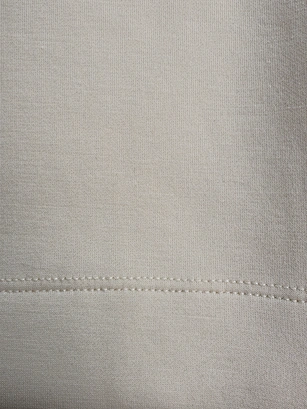
| Fabric structure | Smooth rayon-polyester stretch knit |
| Fit direction | High-rise full-length wide-leg silhouette |
| Key details | Clean waistband, deep front pleats, fluid legs and broad hem openings |
260 GSM Stretch Knit with Fluid Trouser Drape
Rayon Softness with Polyester Control
Rayon supports a smooth handfeel and soft vertical movement, while polyester improves dimensional stability and helps the pleats retain a cleaner line. At 260 GSM, the fabric has enough substance to avoid a thin appearance while remaining lighter and more fluid than fleece or heavy scuba.
Four Percent Spandex for Comfortable Movement
The 4% spandex content adds flexibility through the waist, hips and knees. Recovery, seat growth and knee bagging should be reviewed through wear testing. Stitch types need sufficient extension so the garment moves comfortably without broken seams.
High-Rise Waist and Clean Upper Fit
The waistband should sit smoothly without gaping, rolling or creating excess pressure. Waist height, internal support and closure direction require on-body approval. The transition into the pleated front should remain controlled so the upper hip does not appear bulky.
Deep Front Pleats and Volume Distribution
Keeping Both Pleats Symmetrical
The front pleats create the defining structure of the style and release volume into each leg. Pleat depth, fold direction and placement must match on both sides. Uneven pressing or stitching can cause one leg to open more than the other.
Controlling Bulk at the Waist
Pleats should remain flat at the waistband before opening gradually below the hip. Seam allowances and fold thickness need careful control so the front waist stays clean and comfortable.
Wide-Leg Balance and Finished Length
Both legs should hang evenly from the hip and maintain a consistent width toward the hem. Fabric panels need relaxation before cutting, and hanging and wash tests should confirm the final inseam. Hem depth and stitch tension must prevent tunnelling or uneven lower edges.
Opacity and Shade Consistency in Ivory
Light colors require opacity checks under daylight, showroom lighting and direct photography. Fabric density, seam allowances and undergarment visibility should be reviewed during fitting. Bulk inspection should also monitor shade consistency, surface shine and marking around pressed pleats.
ODM Options for Pleated Wide-Leg Pants
ODM pants development may include:
- Alternative rises, pleat depths and finished inseams
- Single pleats, double pleats or clean front panels
- Side pockets, concealed pockets or pocket-free styling
- Matching tops, jackets and coordinated knit separates
- Custom labels, hangtags and packaging
Buyer FAQs for Rayon Blend Pleated Pants
Does the fabric have stretch?
Yes. The 4% spandex content provides flexibility through the waist, hips and knees.
Can the pleat depth be adjusted?
Yes. Pleat depth, fold direction and position can be revised during pattern development.
Is opacity testing necessary?
Yes. Ivory shades should be checked under several lighting conditions before bulk approval.
What should be approved before manufacturing?
Confirm waistband fit, pleat symmetry, hip volume, opacity, hem level and finished inseam.
Confirming Pleat Release Before Waist Construction and Final Inseam Are Approved
Review the sample for waist fit, pleat balance, hip volume, leg drape, opacity and post-wash measurements. For sampling and quotation, provide the quantity, size range, target inseam, pleat reference, color standard, branding details and technical specifications.