

Garment Dyeing vs Fabric Dyeing: Which Is Better for Your Clothing Line?
Garment dyeing vs fabric dyeing is not simply a question of when color is added. For washed cotton T-shirts and sweatshirts, garment dyeing may be the better starting point. For clean solid-color collections, coordinated sets and many performance fabrics, fabric dyeing is often more practical. Neither method is automatically cheaper or more colorfast.
The right decision depends on your fabric composition, target appearance, color quantities, sewing components and the checks needed before bulk production. This guide compares the methods from the perspective of apparel brands choosing a dyeing route for a real collection.
Article Overview
- Garment Dyeing vs Fabric Dyeing: What's the Difference?
- Which Dyeing Method Should Your Clothing Line Choose?
- Which Method Costs More? MOQ, Lead Time and Reorders
- How Do Garment Dyeing and Fabric Dyeing Work?
- How Do Color, Handfeel and Fabric Type Affect the Result?
- Will Dyeing Affect Shrinkage, Fit, Threads and Trims?
- What Must Be Approved Before Bulk Dyeing?
- What Can Go Wrong During Dyeing?
- Is Garment Dyeing or Fabric Dyeing More Sustainable?
- What Should You Ask Your Manufacturer Before Choosing?
- Frequently Asked Questions
Garment Dyeing vs Fabric Dyeing: What's the Difference?
The clearest distinction is the production stage at which color is added. With fabric dyeing, the mill can inspect and finish colored fabric before the garment is assembled. With garment dyeing, the completed product—including seams, rib panels and compatible components—passes through the wet process together.
| Factor | Garment Dyeing | Fabric Dyeing (Piece Dyeing) |
|---|---|---|
| When color is added | After cutting and sewing | After fabric formation, before cutting |
| Typical appearance | Can create washed depth, seam character and tonal variation | Often chosen for a cleaner, more uniform solid-color surface |
| Color approval | Lab color direction plus a fully processed garment | Lab dip, bulk fabric shade and finished fabric specifications |
| Dimensional control | Fit and measurements must be validated after garment dyeing | Fabric stability can be checked before cutting and sewing |
| Threads and trims | Must tolerate and respond appropriately to the dye bath | Usually selected and assembled after the fabric is dyed |
| Color allocation | Some dye-ready garments can be allocated to colors later | Fabric color quantities are normally committed earlier |
| Common applications | Cotton tees, sweatshirts, hoodies and selected casualwear | Uniform basics, structured garments, coordinated sets and many performance fabrics |
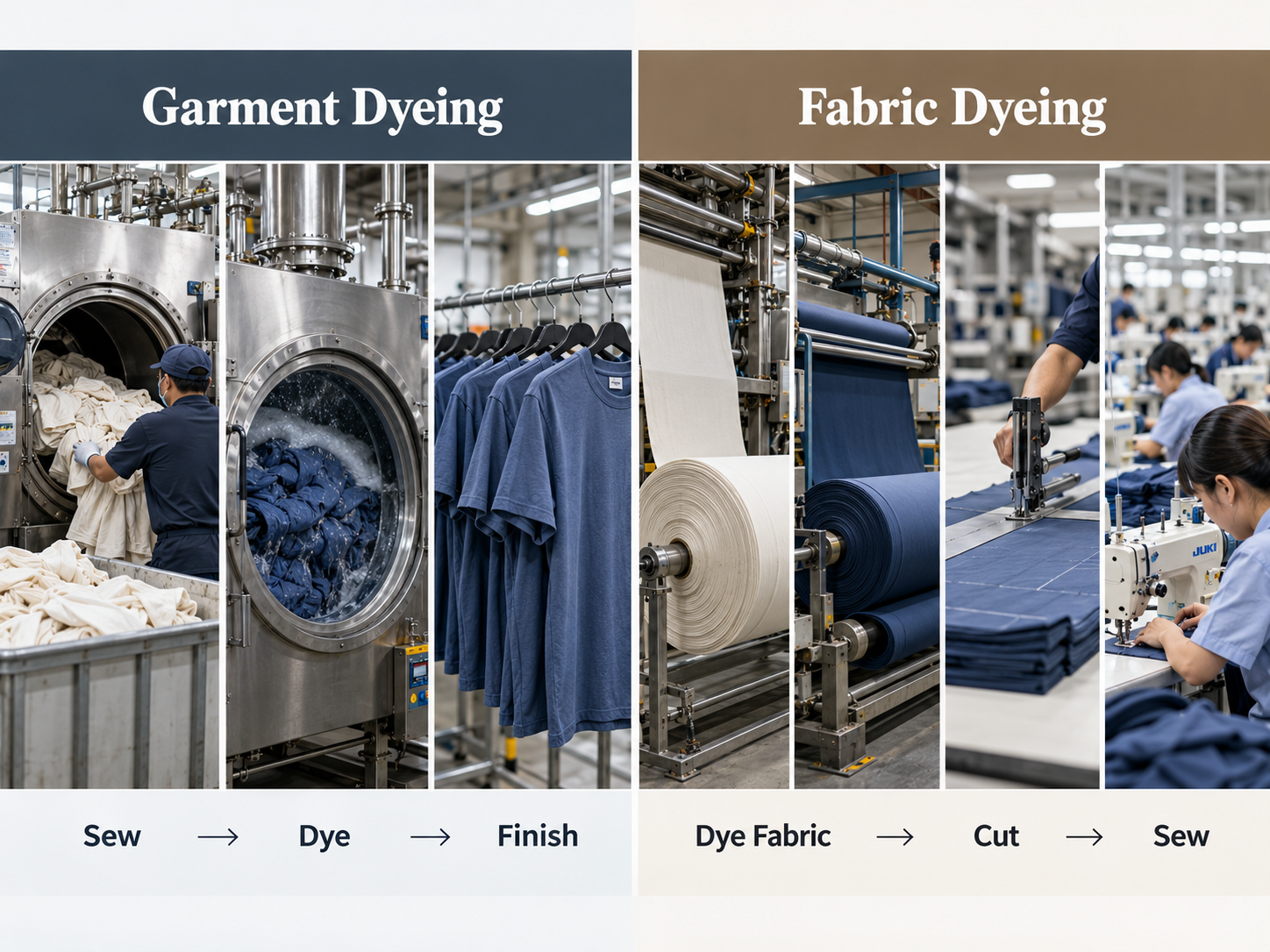
garment-dyeing-vs-fabric-dyeing-comparison
Buyer takeaway: Choose the route according to the approved finished product, not just the desired Pantone shade. A garment that needs a controlled vintage effect requires a different approval standard from a uniform-color matching set.
Which Dyeing Method Should Your Clothing Line Choose?
Start with the product and the result you need—not a general claim that one dyeing method is better. The recommendations below are starting points; confirm them through fabric and garment trials.
| Product or Sourcing Priority | Better Starting Point | What the Buyer Should Confirm |
|---|---|---|
| Washed cotton T-shirts and sweatshirts | Garment dyeing | Approved finish, seam appearance, post-dye fit and shrinkage |
| Clean solid-color basics or matching sets | Fabric dyeing | Shade matching between fabrics, dye-lot control and fabric stability |
| Polyester/elastane activewear | Fabric dyeing in many programs | Fiber-specific dyeing, heat setting, stretch recovery and colorfastness |
| Several colors from one approved cotton garment base | Garment dyeing may offer flexibility | Minimum dye batch per color and final size consistency |
| Repeat orders with a tightly controlled shade | Fabric dyeing is often easier to plan | Approved color standard, lot variation and reorder consistency |
When to Choose Garment Dyeing: Washed Cotton and Vintage Effects
A cotton streetwear T-shirt or relaxed sweatshirt may be developed around a washed appearance, tonal seam character and a softer visual finish. In that case, a full garment-dye trial helps establish the correct look and final fit before bulk production.
When to Choose Fabric Dyeing: Clean Colors and Matching Sets
A clean-color casualwear range, structured shirt or coordinated matching set often benefits from fabric shade and dimensional control before cutting. The factory can assess each fabric quality and manage differences between dye lots before the garment is assembled.
What About Activewear and Blended Fabrics?
For polyester/elastane activewear, a fabric-dyeing route is frequently more practical because color and heat-setting requirements need to be coordinated with fabric performance. Cotton/polyester fleece may need a different decision: a heathered garment-dye appearance can be desirable, but a solid matching shade across both fibers requires a more involved color strategy.
A matching set made from two different fabric constructions also needs its own color-matching plan, even when both materials use the same dyeing route. The goal is to approve how the products look together, not simply to approve each fabric in isolation.
These decisions work best when fabric development, sampling and bulk-production requirements are coordinated through a defined garment development and manufacturing process.
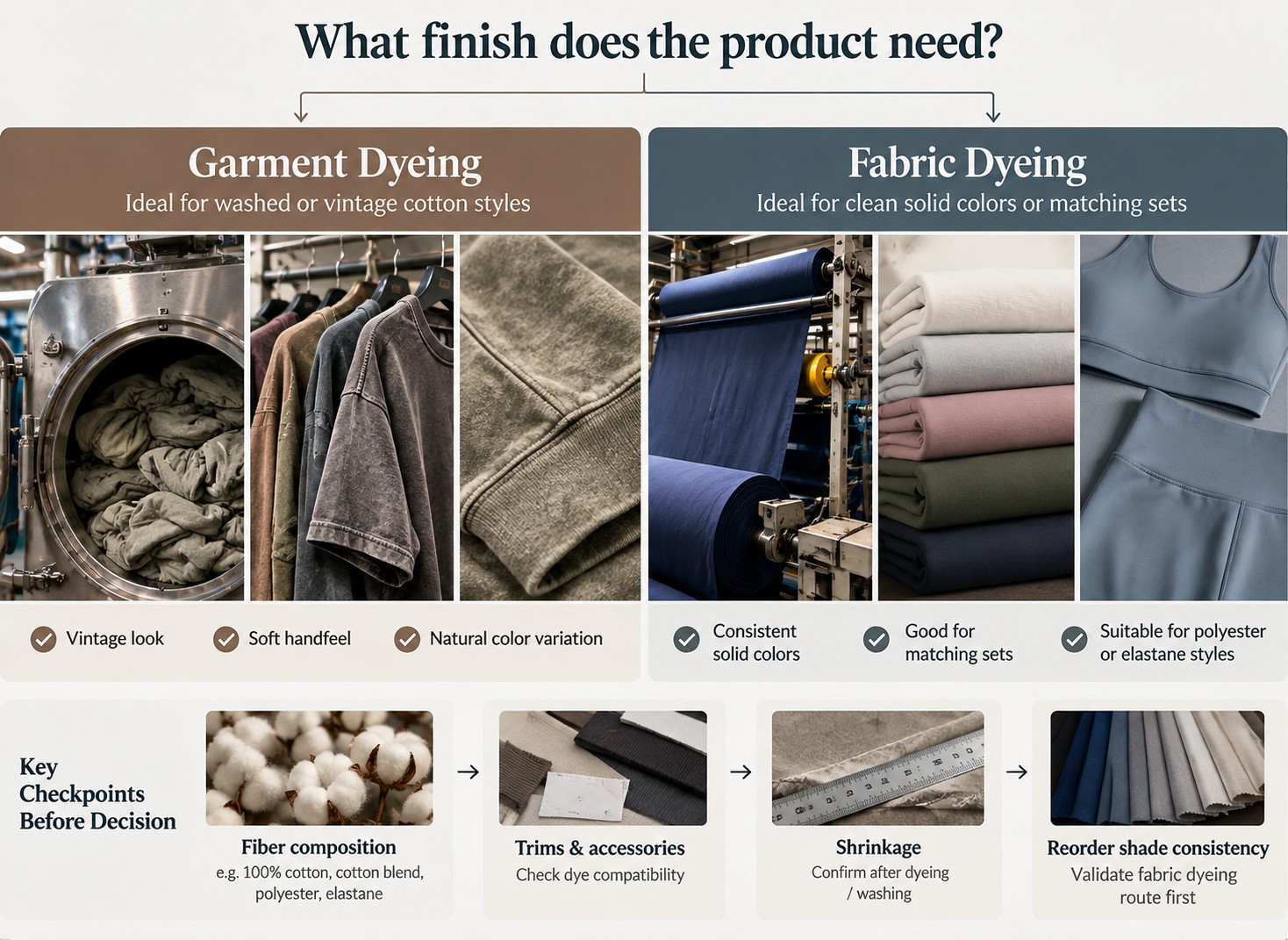
choose-garment-dyeing-or-fabric-dyeing-decision-guide
Which Method Costs More? MOQ, Lead Time and Reorders
It is tempting to say garment dyeing always has a lower MOQ or that piece dyeing is always cheaper. Neither statement is dependable without a real order brief. Dyeing minimums depend on machine capacity, load efficiency, available dye-ready fabric, color depth, number of colorways and the factory's production plan.
Can Garment Dyeing Make Color Allocation More Flexible?
If one dye-ready garment base is approved for several colors, a brand may be able to sew a common undyed quantity and divide it into color batches later. This can help when color demand is uncertain. But each color still has a dye-batch minimum, and every batch requires shade and finished-garment control.
Is Fabric Dyeing Easier to Plan for Repeat Orders?
For established colorways and larger planned runs, piece dyeing may make material planning and repeat shade control more straightforward. The brand commits fabric quantities by color earlier, and minimum dye-lot quantities can affect how many colorways are economical.
What Should a Dyeing Quotation Include?
- Minimum fabric or dye-ready garment quantity per style and color
- Minimum dye-machine load and any small-batch surcharge
- Dyeing, washing, drying and finishing charges
- Sample trials, color approvals and testing costs
- Expected processing loss, rework allowance and inspection requirements
- Lead time for the first order versus a repeat order
For reorders, preserve the approved physical color standard, processing details and a representative finished garment. The original dye recipe alone does not guarantee the same appearance when fabric lots, machines or finishing conditions change.
How Do Garment Dyeing and Fabric Dyeing Work?
Garment Dyeing: Sew First, Dye Later
A garment-dye program starts with fabric and components prepared for the selected wet process. The dye-ready garment is sewn, processed in a garment dyeing machine, rinsed or washed as required, extracted, dried and finished. Color, surface appearance and final measurements are evaluated after this processing.
Preparation matters. Residual oils, uneven absorbency or incompatible finishes can affect dye penetration and leveling. A standard white garment is not automatically suitable for garment dyeing; the fabric, construction, sewing thread and trims need to be considered from the development stage.
Fabric Dyeing: Color and Finish the Fabric Before Sewing
In piece dyeing, knitted or woven fabric is prepared, dyed to the approved shade, washed and finished before being released for garment cutting. Depending on the fabric, finishing may include drying, heat setting, relaxation or compaction. The factory can then inspect shade, usable width, weight, surface quality and dimensional stability before making garments.
This creates an earlier checkpoint for material problems, but it does not eliminate dye-lot differences. Rolls from different lots still need identification and appropriate shade control during spreading and cutting.
Garment Dye Route
- Prepare dye-ready fabric and components
- Cut and sew the garment
- Approve a garment-dye trial
- Dye, wash, dry and finish
- Check final shade, fit and measurements
Fabric Dye Route
- Prepare the knitted or woven fabric
- Develop and approve a lab dip
- Dye and finish bulk fabric
- Inspect and release fabric for cutting
- Cut, sew and inspect finished garments
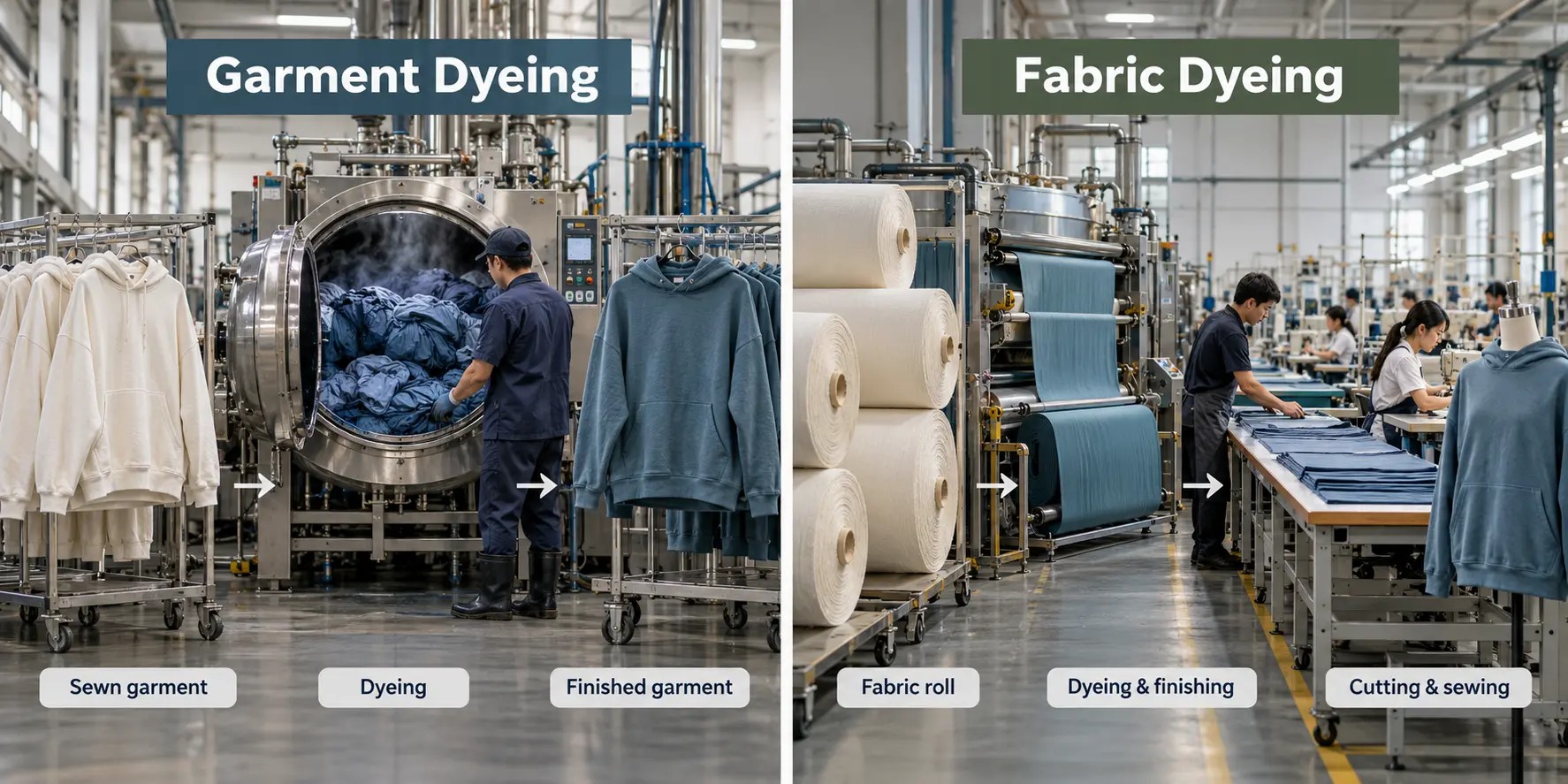
garment-dyeing-vs-fabric-dyeing-production-process
One technical distinction is often missed: garment dyeing and piece dyeing describe when coloration happens. Reactive, direct, sulfur and disperse dyes describe colorant systems selected according to fiber and performance requirements. Pigment coloration is different again because pigments generally need a binder rather than forming a dye-fiber bond.
How Do Color, Handfeel and Fabric Type Affect the Result?
Garment dyeing is frequently used when the design calls for an already-worn character: softened edges, tonal differences around seams, or a slightly relaxed surface. The effect is influenced by dye chemistry, garment construction and subsequent washing or finishing. It is not a rule that every garment-dyed item must look faded or uneven; a well-controlled reactive garment dye can be comparatively even.
Fabric dyeing is often preferred for clean solid colors, especially where panels, sizes or repeat orders need to look closely coordinated. The fabric can be approved and sorted before sewing, although color differences can still appear between dye lots, rolls or fabric qualities.
Does Garment Dyeing Always Make Clothing Softer?
No. A soft handfeel may result from enzyme washing, mechanical action, softeners or other finishing steps associated with a garment-dye program. A piece-dyed fabric can also be engineered to feel soft through its fiber, knitting construction and finishing. Handfeel should be approved on the finished, washed sample, not assumed from the dyeing label.
Why Can the Same Color Look Different?
Fiber composition, fabric structure, absorbency, dye recipe, lighting and finishing all affect perceived shade. A cotton jersey body and a different rib construction may not look identical after garment dyeing. Even with fabric dyeing, two separately dyed fabrics in a matching set may need separate color approval and a defined acceptable shade range.
Which Fabrics Work Best With Each Dyeing Method?
Fiber content should be confirmed before choosing a dyeing route. Cotton and other cellulosic fibers respond differently from polyester, nylon and elastane. Blended fabrics may require different dye systems or intentionally produce a heathered result when only one fiber component takes up color.
| Fabric Type | Garment Dyeing Considerations | Fabric Dyeing Considerations |
|---|---|---|
| 100% cotton | Common option for tees, French terry and fleece; validate shrinkage and seams | Widely used for consistent solid-color programs; confirm residual shrinkage |
| Linen and cellulosic blends | Possible with suitable preparation; wrinkles, dimensional change and components require trials | Useful when a controlled fabric shade and finish are needed before sewing |
| Viscose, rayon and modal | Requires careful wet-processing trials because fabric strength, drape and size may change | Allows finishing and stability checks before cutting |
| Cotton/polyester blends | Cotton-only dyeing may leave polyester lighter, creating a heathered effect; solid shades need a validated route | Can use fiber-appropriate dyeing systems to target a more unified shade |
| Polyester/elastane activewear | Specialized processing may be possible, but heat, stretch recovery and trim compatibility are major constraints | Often the more practical route for controlled color and performance finishing |
For polyester, disperse dyeing typically requires conditions very different from those used for cotton-reactive dyeing. Elastane and some garment components may not tolerate those conditions. That is why a polyester-rich activewear style should not be moved into a standard cotton garment-dye program without technical validation.
Buyer takeaway: Share the full fiber composition, GSM, fabric structure and any special finishes before requesting a dye method. “Cotton blend” is not enough information to predict color uptake, shrinkage or finished appearance.
Will Dyeing Affect Shrinkage, Fit, Threads and Trims?
Both dyeing routes involve wet processing, so both can influence dimensions. The important difference is when the dimensional change happens relative to garment construction.
Why Garment Dyeing Needs a Finished-Garment Fit Approval
With garment dyeing, the body, sleeves, rib and seams are already assembled when they encounter moisture, heat and mechanical action. Components may shrink at different rates. A garment that measures correctly before dyeing can finish with a shorter body, tighter opening, puckered seams or changed overall proportions.
Pattern allowances must therefore come from actual fabric and garment trials. Applying one fixed shrinkage percentage to every cotton garment is unreliable: knit density, yarn, finishing history and processing conditions all matter. Final measurement specifications should refer to the post-dye, post-finish garment.
What Changes With Fabric Dyeing?
Fabric dyeing allows the material to be finished and tested before cutting. Relaxation and compaction can reduce residual shrinkage in suitable knits, helping the factory work with more stable material. However, the finished garment still needs laundering tests because sewing, pressing and consumer care can introduce further dimensional changes.
For either route, approve body length, chest width, sleeve length, hem opening and any fit-critical measurements after the specified care cycle. Pay particular attention to knitted garments, where twisting and skew can be as important as lengthwise shrinkage.
How Do Sewing Threads, Ribs, Trims and Prints React?
A garment-dyed style is a complete assembly entering a chemical and mechanical process. This makes construction planning part of the dyeing decision.
- Sewing thread: polyester thread generally will not take up a cotton-reactive dye like cotton fabric. The result may be visible contrast stitching, intentional or otherwise. Thread type and strength must also be tested.
- Rib and elastic: cuffs, waistbands and stretch components may respond differently in color or shrinkage from the body fabric.
- Zippers, buttons and metal trims: check heat, chemistry, corrosion, staining and mechanical durability before dyeing.
- Labels and drawcords: woven labels, printed care labels and cords can change shade, bleed or distort; some branding components are better attached after dyeing.
- Prints and embroidery: confirm whether decoration should happen before or after the wet process. Heat transfers, specialty prints and some threads may not survive garment dyeing unchanged.
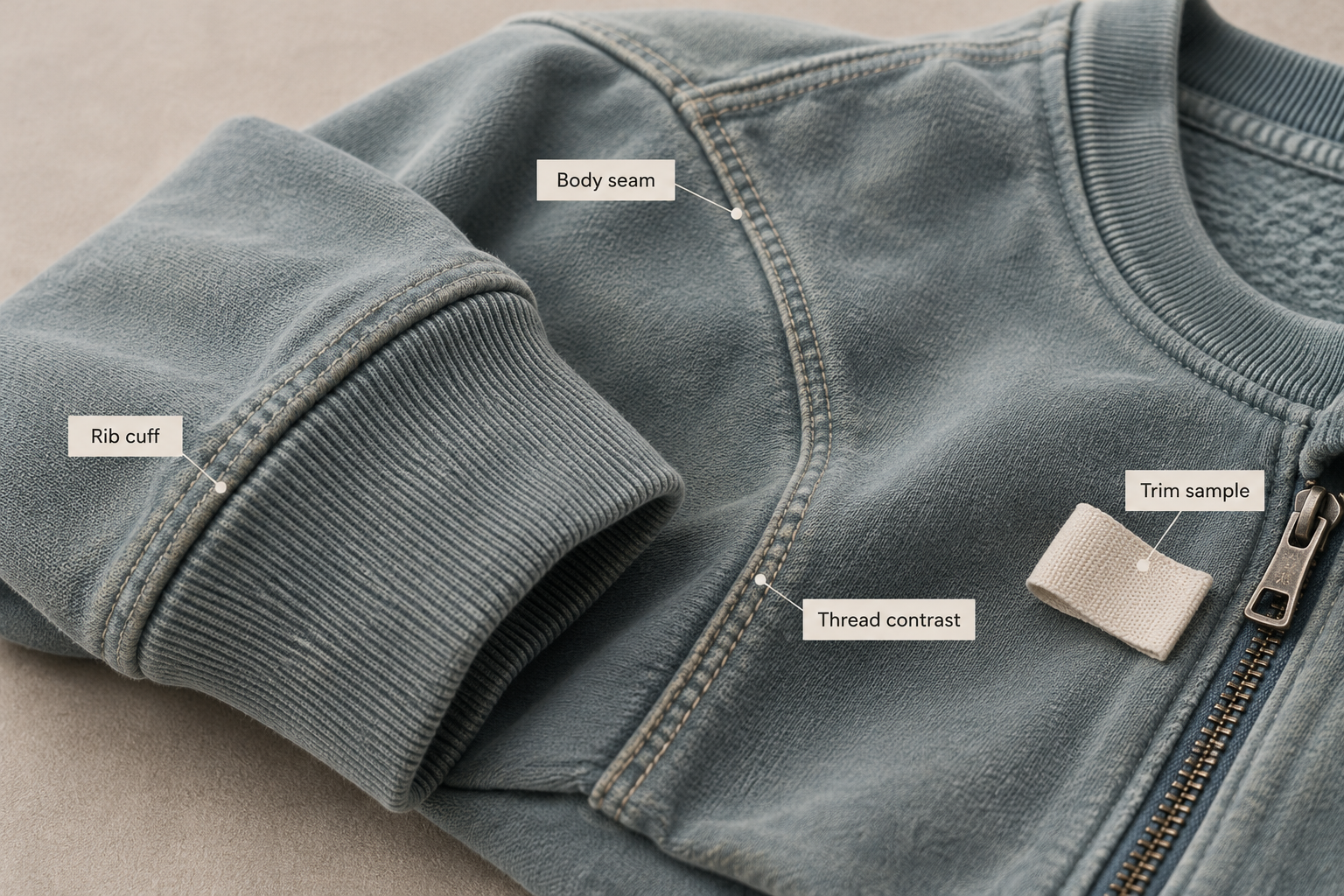
garment-dyeing-thread-rib-trim-compatibility
Piece-dyed fabric reduces many of these constraints because the factory normally selects and adds components after the fabric color is established. Even then, shade matching between fabric, rib, thread and trims should be confirmed under agreed lighting.
What Must Be Approved Before Bulk Dyeing?
A lab dip is a useful starting point, not the entire approval process. The dyehouse may match a color on a small fabric sample, but the final garment can still differ because of construction, washing, drying and finishing.
For Fabric-Dyed Orders: Approve the Fabric Before Cutting
- Confirm the substrate: fiber content, fabric construction, GSM and pretreatment.
- Approve the lab dip: compare the target shade under agreed light sources and on the intended material.
- Check the first bulk lot: inspect color, dye uniformity, fabric width, weight, surface defects and dimensional stability.
- Control roll allocation: identify dye lots and avoid uncontrolled mixing of visibly different shades within garments or sets.
- Verify finished garments: assess appearance, measurements and care performance after sewing.
For Garment-Dyed Orders: Approve the Finished Garment
- Approve the dye-ready construction: body fabric, rib, sewing thread, labels, trims and decoration sequence.
- Run a representative dye trial: use the intended process on a fully sewn garment, not only a loose swatch.
- Check finished measurements: confirm size changes, seam appearance, twisting and fit after processing.
- Set an appearance standard: define acceptable seam character, shade range, handfeel and any intentional variation.
- Release bulk dyeing against the approved garment: compare subsequent lots and retain traceability.
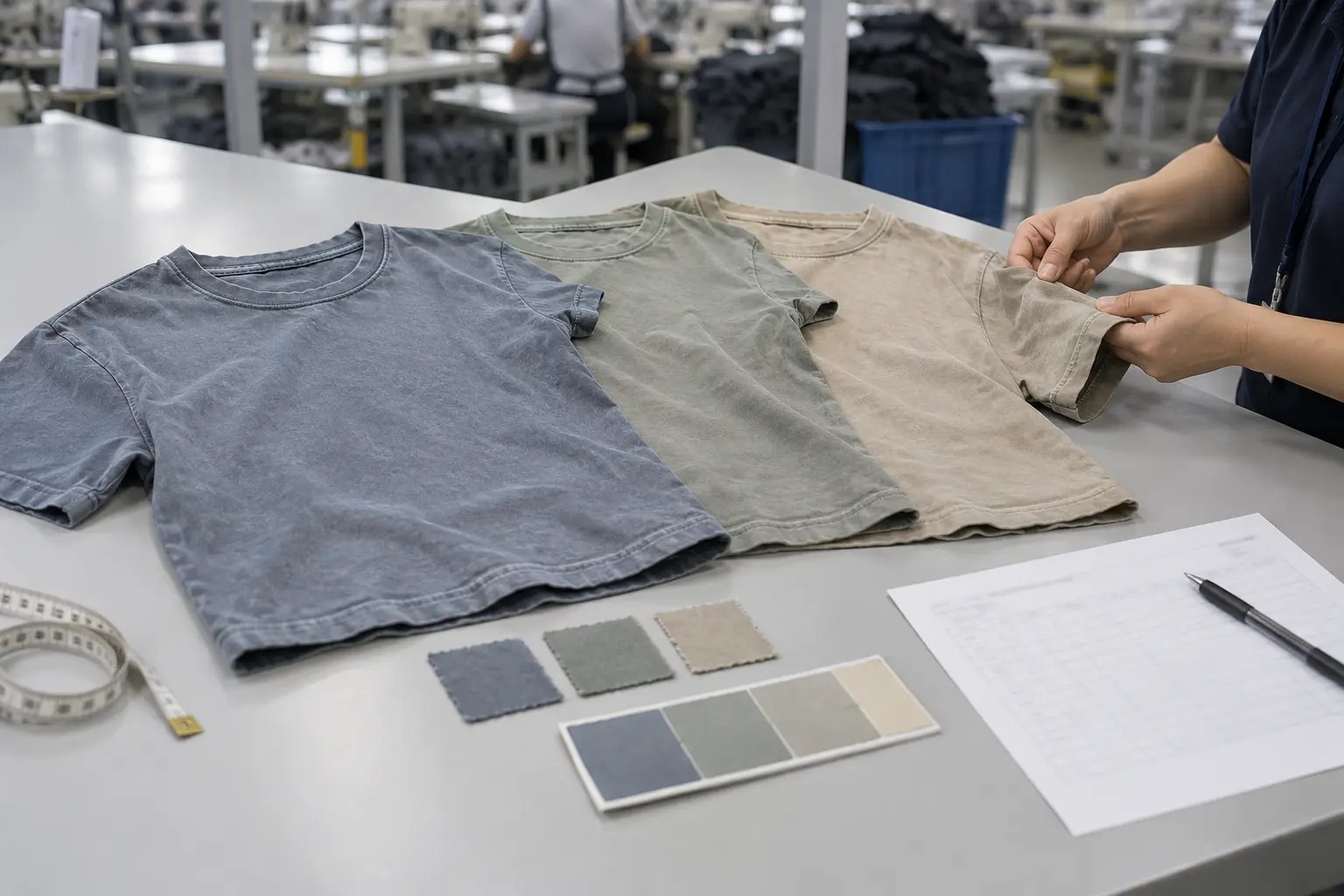
apparel-dyeing-color-approval-bulk-quality-control
Testing should match the product and market requirements. Relevant methods may include AATCC TM61 for accelerated laundering colorfastness, AATCC TM8 for crocking (color transfer by rubbing), AATCC TM135 for fabric dimensional change and AATCC TM150 for garment dimensional change. The brand and supplier should agree on the required methods and pass criteria before production, rather than assuming one universal acceptable grade.
For more information about how material shade, shrinkage and finishing are managed during development, see Ambition Garment's fabric sourcing, dyeing and finishing capabilities.
What Can Go Wrong During Dyeing?
When a dyeing problem appears, the visible defect is only the starting point. Corrective action depends on whether the cause lies in material preparation, chemistry, equipment loading, garment construction or post-dye finishing.
| Observed Problem | Possible Causes | What to Check |
|---|---|---|
| Patchy or uneven shade | Uneven pretreatment, absorbency or dye circulation | Scouring records, fabric preparation, machine loading and process parameters |
| White or contrasting seams | Thread fiber does not absorb the selected dye | Thread composition and a full-garment trial |
| Puckered seams or changed fit | Different shrinkage behavior among body fabric, rib and thread | Component compatibility and measurements before and after processing |
| Shade variation between lots | Changes in substrate, recipe, water, time or temperature | Approved shade standard, lot records and bulk shade range |
| Color transfer after washing | Insufficient fixation or removal of unfixed colorant | Wash-off conditions and laundering/rubbing fastness results |
| Twisting or skewed knit panels | Fabric construction and residual processing stresses | Fabric stability, finishing route and garment wash tests |
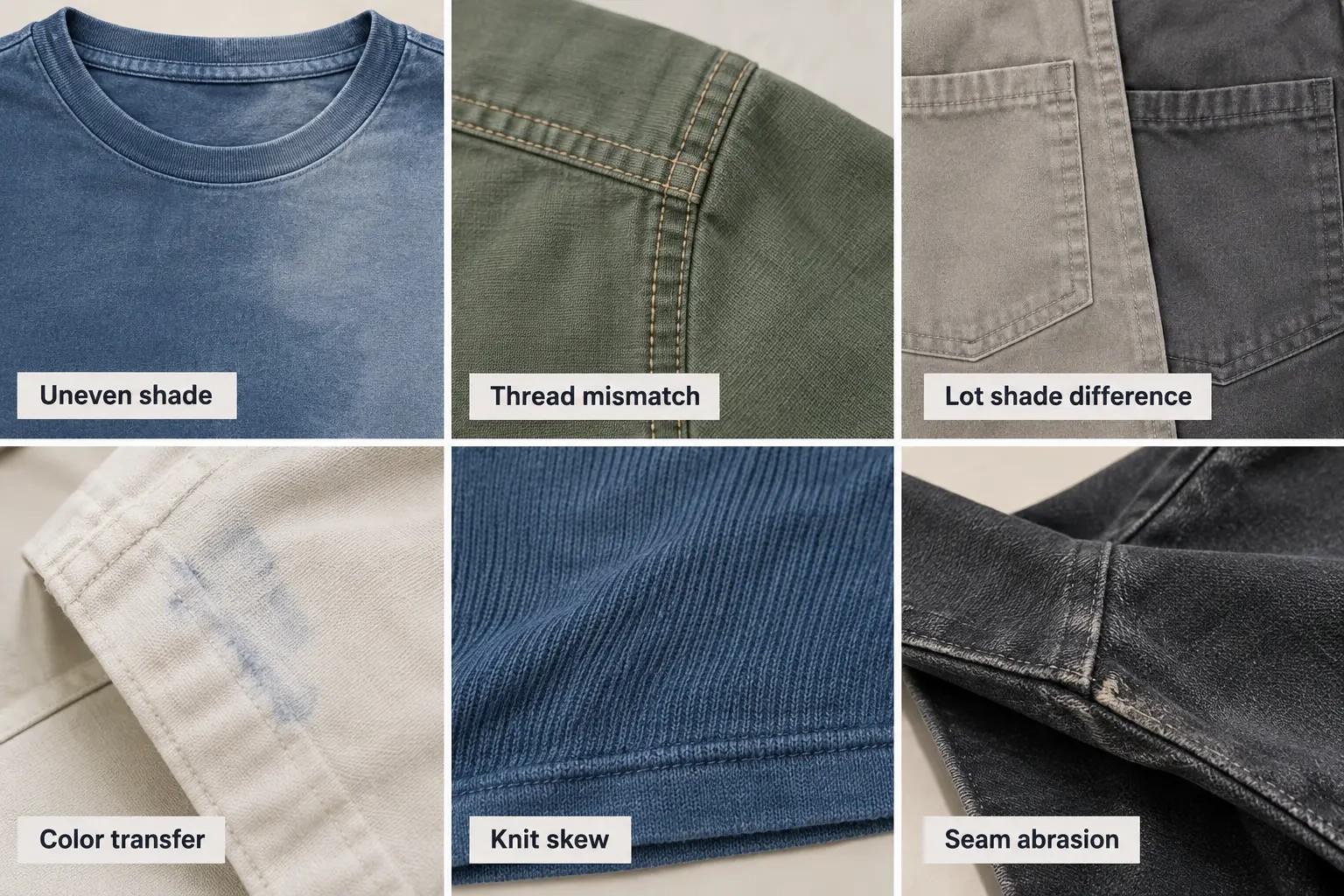
common-dyeing-defects-causes-control
Production takeaway: Do not treat every shade difference as a dye-recipe problem. A color issue may originate in the fabric or component selection, while a measurement issue may be caused by wet-processing tension and differential shrinkage.
Is Garment Dyeing or Fabric Dyeing More Sustainable?
Neither method is automatically the lower-impact choice. Water, energy, chemicals, reprocessing and waste depend on the dye system, equipment, liquor ratio, batch loading, wastewater treatment and how well the production quantity matches actual demand.
Garment dyeing may help some programs delay color decisions, but small or poorly loaded batches can be inefficient. Fabric dyeing may offer efficient processing at suitable scale, but excess pre-dyed fabric can become unwanted inventory. Both outcomes are highly dependent on the production setup.
When environmental performance matters, ask the dyehouse for evidence relevant to the actual process: water and energy data where available, wastewater management, chemical controls, testing records and the scope of any certification. A fiber label or a generic “eco dye” description does not establish the environmental performance of a specific order.
What Should You Ask Your Manufacturer Before Choosing?
Before asking a manufacturer to quote garment dyeing or fabric dyeing, prepare answers to the following questions. They will make the technical recommendation and cost comparison more reliable.
Confirm These Details Before Sampling
- Product: What garment type, fit and construction are being developed?
- Material: What are the exact fiber composition, GSM and fabric structure?
- Color: Is the target a uniform solid shade or a deliberately washed appearance?
- Components: Which threads, ribs, elastics, zippers, labels and decorations must remain on the garment during processing?
- Quantity: How many pieces are planned per style, size and color?
- Approval: Will the buyer approve a lab dip, a finished garment, or both?
- Performance: What are the required colorfastness, shrinkage, appearance and care standards?
- Reorders: Will the same shade need to be reproduced in future seasons?
A useful supplier response should identify the proposed dyeing route, the main technical risks, the approval samples required and the production stage at which each issue will be checked. That is more valuable than a quote based only on the target color.
Frequently Asked Questions
Is fabric dyeing the same as piece dyeing?
In this comparison, yes. Piece dyeing means dyeing knitted or woven fabric before it is cut and sewn. It should not be confused with fiber dyeing or yarn dyeing, which add color at earlier textile production stages.
Does garment dyeing always have a lower MOQ?
No. A dye-ready garment base may be divided into color batches later, but each dyehouse still has equipment and batch requirements. Minimum quantities depend on the garment, fabric, shade, dye machine and order structure.
Is garment dyeing less colorfast than fabric dyeing?
Not inherently. Colorfastness depends on fiber, colorant, fixation, wash-off and finishing. A properly controlled garment-reactive dye and a properly controlled fabric-reactive dye can both meet suitable performance standards. Specific pigment or vintage effects may have different expected behavior.
Can polyester clothing be garment dyed?
Specialized processes exist, but polyester generally requires different dye chemistry and processing conditions from cotton. Heat-sensitive trims, elastane and mixed-fiber components can limit suitability. A standard cotton garment-dye process should not be assumed to work on polyester-rich garments.
Why does polyester sewing thread stay white after cotton garment dyeing?
Cotton-reactive dyes are designed for cellulosic fibers and do not color polyester in the same way. If polyester sewing thread is used, it may remain visibly lighter than the cotton body. Thread selection and the desired stitch appearance must be confirmed before bulk dyeing.
Should a brand approve a lab dip or a finished garment?
For fabric dyeing, approve the lab dip and the relevant bulk fabric standard, then verify the finished product. For garment dyeing, a full processed garment is essential because seams, trims, handfeel and final measurements cannot be judged from a lab dip alone.
Which method is better for a matching set?
Fabric dyeing is often easier to manage when a matching set requires a clean, coordinated solid shade, especially across different fabric qualities. However, each material still needs shade matching and testing. Garment dyeing can work when the intended collection accepts a washed or tonal look and the complete set is approved together.
Confirm the Dyeing Route Before Sample Approval
Color approval should account for more than a swatch. The selected fabric, garment construction, dyeing method and finishing process need to lead to the same approved appearance and fit in bulk production.
If your collection includes garment-dyed cotton styles, fabric-dyed basics or mixed-material products, share your fabric and product requirements with Ambition Garment to review material options, sample trials and production-ready specifications.
Technical References
- CottonWorks: Dyeing Basics — dye chemistry, shade control and pigment behavior.
- CottonWorks: Dyeing Preparation — scouring, absorbency and preparation.
- CottonWorks: Shrinkage & Skewing — dimensional stability and wet processing.
- AATCC: Standard Test Methods and Procedures — relevant colorfastness and dimensional-change methods.