

What Makes a Garment Tech Pack Ready for Sampling?
A garment tech pack can look complete on paper and still leave important questions unanswered when sampling begins.
A design sketch may communicate the overall style, but the sample maker still needs to understand the intended measurements, materials, construction details, and fit expectations. When these details are unclear, decisions may be made during development that the brand has not yet reviewed.
At the same time, not every specification must be finalized before the first sample. Some brands begin with a reference garment, preliminary measurements, or fabric options that still need testing.
The important question is whether the available information is sufficient for the specific stage of development.
So, what makes a garment tech pack ready for sampling, and what should clothing brands confirm before sending their designs to a manufacturer?
Article Overview
What Does a Tech Pack Need to Communicate?
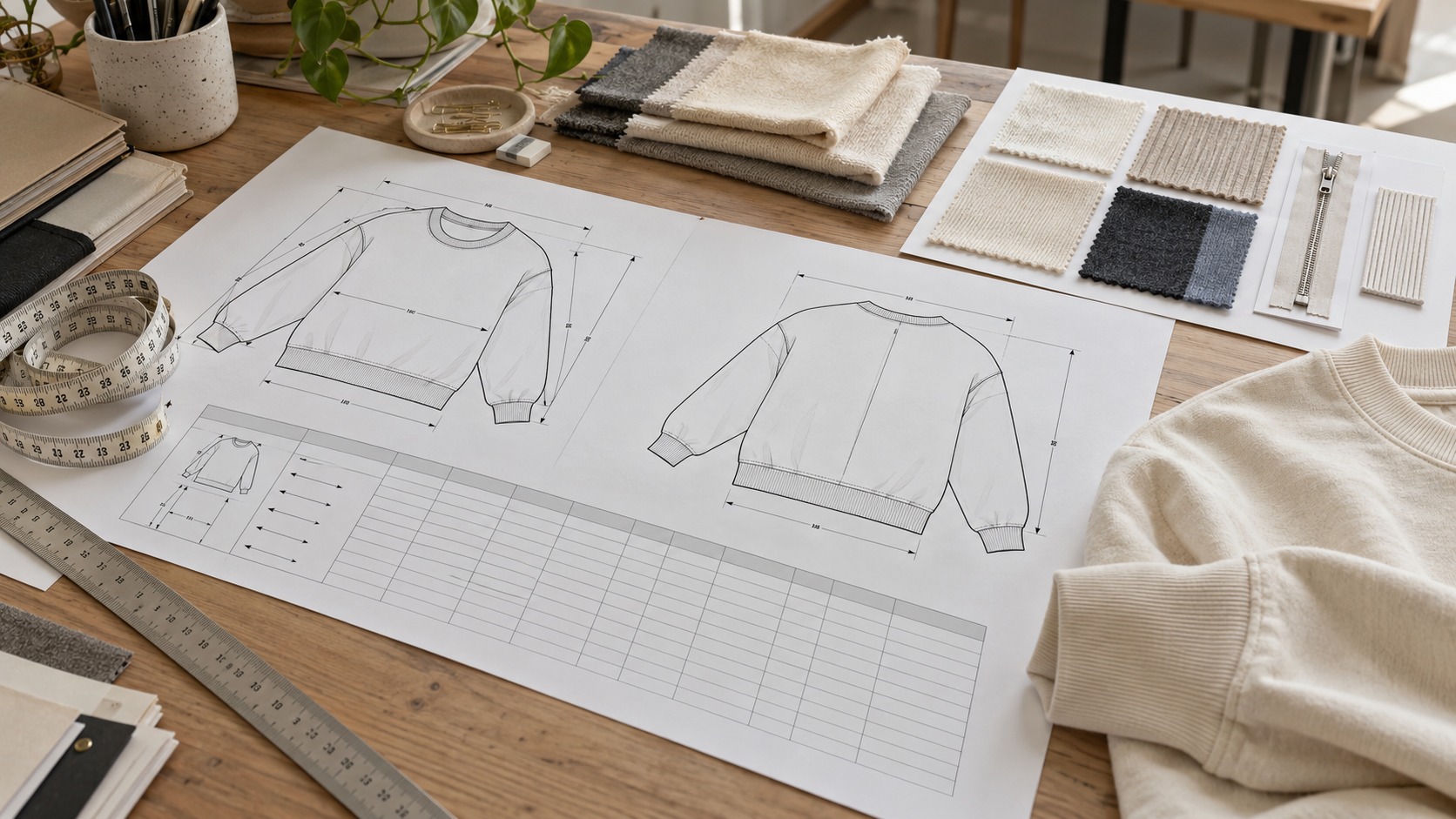
A garment tech pack is a working document that communicates how a clothing design should be developed and made.
It typically brings together technical sketches, measurements, material information, construction notes, and other requirements relevant to the garment.
However, a tech pack should not be judged only by the number of pages it contains.
A document with detailed sketches but no clear measurements may still require substantial clarification. Another may contain fewer pages but communicate enough information to begin developing an initial prototype.
Before garment sample development, the document should help answer three practical questions:
- What is the intended garment? Its silhouette, proportions, appearance, and key design features.
- What information is already confirmed? Measurements, materials, construction requirements, and approved references.
- What still needs to be decided? Details requiring discussion, material evaluation, or sample testing.
An unresolved detail is not necessarily a problem if both parties recognize it and agree on how it will be handled.
A useful distinction: A tech pack ready for initial sampling is not necessarily ready for bulk production. Specifications may continue to develop through fitting, material confirmation, and sample revisions.
Essential Information Before Garment Sampling
Although requirements vary by garment type and development stage, several categories of information are commonly needed before a manufacturer can interpret the design accurately.
1. Technical Sketches and Design References
Technical sketches communicate the garment's overall structure, including front and back views, major seams, openings, pockets, and other visible details.
They do not need to be elaborate illustrations, but they should make the intended construction understandable.
For example, a sweatshirt reference image may not clearly show whether the shoulder is dropped, how the hood is constructed, or whether the hem uses a separate rib panel.
Additional close-up photographs or written notes can help clarify these details.
2. Measurements and Fit Expectations
A measurement specification helps the sample maker understand the intended proportions and fit.
Depending on the garment, relevant measurements may include chest width, body length, shoulder width, sleeve length, waist, hip, and inseam.
Measurements should identify the sample size and explain how each point is measured when the method might be ambiguous.
Fit descriptions also matter. Terms such as oversized, relaxed, slim, or cropped can mean different things to different brands.
A reference sample, fit photograph, or measurement chart can make these expectations more specific.
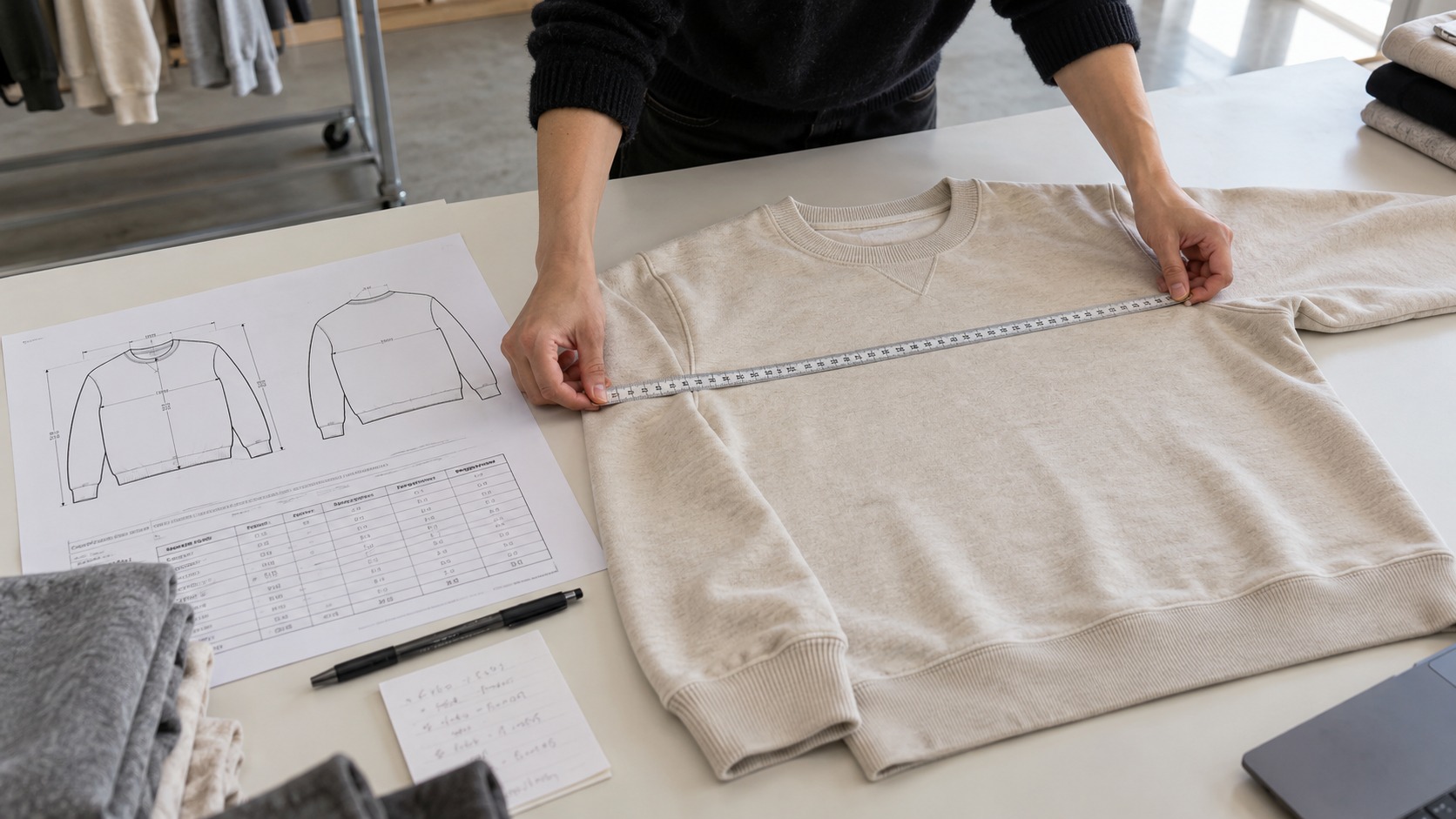
For an initial prototype, some measurements may be provisional. They can be adjusted after fitting rather than treated as final production specifications.
When developing a new style, the garment sampling process provides opportunities to evaluate the first physical interpretation of the design and identify required adjustments.
3. Fabric Requirements
Fabric information influences how a garment looks, fits, and behaves during movement.
A tech pack may specify fiber composition, fabric construction, weight, stretch requirements, color, and finishing preferences.
However, listing a fabric as "300 GSM cotton blend" does not fully describe its characteristics.
Two fabrics with similar weights may differ in stretch, surface texture, drape, or recovery because of their construction and finishing.
When the exact fabric has not been selected, the brand can communicate the intended hand feel, appearance, performance needs, and available reference swatches.
4. Construction and Design Details
Construction notes clarify details that may not be obvious from technical drawings.
These may include seam placement, stitch appearance, neckline finishing, pocket construction, closures, and decorative elements.
For instance, a fitted activewear top may require clarification about its built-in support layer, while a hoodie may need additional information about hood shape, drawcords, or rib trim.
Not every stitch specification must be predetermined for an early prototype. The appropriate level of detail depends on the garment and the purpose of the sample.
5. Trims, Branding, and Artwork
Zippers, buttons, drawcords, labels, embroidery, and printed artwork should be identified where they affect the sample.
For private label clothing development, logo dimensions and placement can be communicated through artwork files or annotated illustrations.
If final branded trims are unavailable, a substitute may sometimes be acceptable for an early fit sample, provided the substitution is agreed upon and recorded.
What If Fabric and Trim Details Are Not Final?
Many clothing brands begin development before every material decision has been completed.
This is particularly common when exploring a new silhouette, testing different fabric options, or adapting an existing style.
The appropriate approach depends on the purpose of the requested sample.
An early prototype may focus primarily on garment shape and construction. A later sample may need to use the intended fabric because stretch, thickness, and drape influence fit.
Rather than treating every unknown as an obstacle, it helps to classify the information.
| Information Status | Meaning | Recommended Action |
|---|---|---|
| Confirmed | The specification has been reviewed and accepted. | Include it clearly in the current tech pack. |
| Provisional | A temporary option is available for initial development. | Identify the proposed material or measurement and its limitations. |
| To Be Confirmed | A decision is still required. | Record the open question and agree on the next review point. |
This distinction reduces the chance of an assumed specification becoming part of the sample without the brand's knowledge.
It also provides a clearer record when decisions change during development.
Common Tech Pack Gaps That Cause Sample Revisions
Not every sample revision results from a manufacturing mistake. Some changes occur because the original design information was incomplete or the brand's expectations became clearer after seeing the first physical garment.
Several recurring communication gaps can nevertheless make the process less efficient.
Unclear Fit References
A brand may request an oversized sweatshirt without specifying the intended shoulder position, body length, or overall proportions.
The initial sample may be technically reasonable but still differ from the desired appearance.
Missing Material Information
A design may specify fabric composition without communicating the expected stretch, thickness, or hand feel.
If the sample uses a material with different characteristics, the resulting fit or drape may not match the original concept.
Unclear Detail Placement
Pocket positions, logo placement, zipper lengths, and decorative features can be difficult to judge from a general reference image.
Measurements or placement diagrams are helpful when these details are important to the design.
Conflicting File Versions
Another common problem is having several measurement charts, artwork files, or design revisions circulating at the same time.
If the manufacturer and brand are referring to different versions, even a correctly executed instruction may produce an unwanted result.
Using a consistent style number, revision date, and updated document helps establish which information is current.
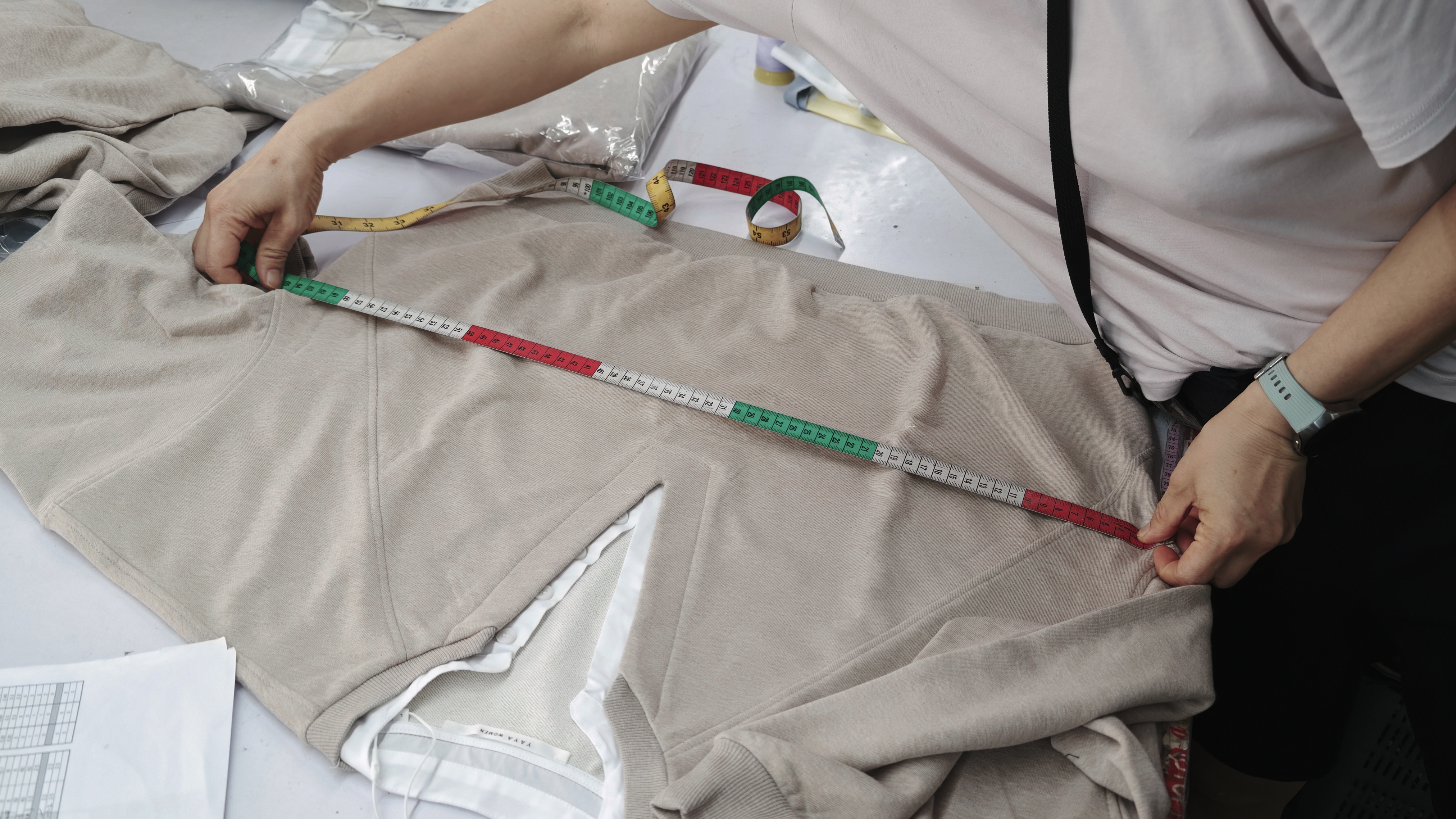
garment-sample-measurement-and-review
Before requesting another sample: Confirm whether the issue comes from workmanship, an unclear specification, a material difference, or a change in design direction. Each situation may require a different response.
How to Review a Tech Pack With Your Manufacturer
A useful tech pack review before sampling is a conversation about the design, not simply an exchange of documents.
The manufacturer should identify the information needed to proceed and clarify details that could significantly influence the sample.
Brands can make this discussion more productive by reviewing:
- Sample purpose: Is the priority construction, fit, appearance, or material evaluation?
- Reference standard: Which sketch, physical garment, or measurement chart should guide development?
- Material status: Which fabrics and trims are confirmed, and which remain provisional?
- Open decisions: Which questions should be resolved before sampling?
- Revision process: How will sample comments and updated specifications be documented?
This discussion is valuable when a brand is working with a custom clothing manufacturer for the first time.
Even an experienced supplier cannot reliably interpret preferences that have not been communicated.
Understanding the wider apparel manufacturing workflow also helps brands recognize which decisions belong to early sampling and which need confirmation before bulk production.
Keep Sample Feedback Specific
When the first sample arrives, comments such as "make it better fitting" or "the fabric feels wrong" may not provide enough direction for a precise revision.
More useful feedback identifies the specific issue:
- The body length should be reduced by 2 cm.
- The shoulder seam should sit closer to the natural shoulder.
- The waistband needs review because it rolls during movement.
- The fabric drape differs from the agreed reference.
Measurements and technical changes should be reviewed with the development team before implementation, particularly when one adjustment may affect other garment dimensions.
Once changes are agreed upon, the relevant tech pack sections should be updated so the next sample is evaluated against the correct information.
Garment Tech Pack Checklist Before Sampling
Before sending a style for development, clothing brands can use the following checklist to identify information that may need clarification.
| Review Area | Questions to Confirm |
|---|---|
| Design | Are front and back views, silhouette, and key details clear? |
| Measurements | Is the sample size identified, with relevant dimensions and measurement methods? |
| Fabric | Are material specifications or intended characteristics communicated? |
| Construction | Are important seams, openings, finishes, and structural details identified? |
| Trims | Are required accessories, labels, and artwork included or marked as pending? |
| References | Are reference samples and photographs clearly identified? |
| Document Control | Does the manufacturer have the latest revision? |
| Open Questions | Are unresolved decisions recorded with an agreed next step? |
This is a starting framework rather than a universal technical standard. Different garments and sample stages may require additional information.
For example, performance activewear may need detailed stretch and support requirements, while a structured jacket may require additional construction references.
Frequently Asked Questions
Can a clothing manufacturer make a sample without a complete tech pack?
In some cases, yes. An initial sample may be developed from reference garments, sketches, preliminary measurements, and agreed instructions. The manufacturer may still need clarification or make provisional decisions. More complete specifications are normally required as the style moves toward production approval.
Does a tech pack need final fabric specifications before the first sample?
Not always. A preliminary prototype may use a substitute material, while accurate fit or performance evaluation may require the intended fabric or one with closely comparable properties.
Who should update the tech pack after sample revisions?
The responsible party should be agreed upon between the brand and manufacturer. Regardless of who makes the changes, revised specifications should be reviewed and clearly identified so both teams work from the same version.
Is a sampling-ready tech pack also ready for bulk production?
Not necessarily. Initial sampling may involve provisional measurements, fabrics, and construction decisions. Before bulk production, relevant specifications and approval references should be confirmed according to the order's requirements.
Final Thoughts: A Clear Starting Point for Sampling
A garment tech pack does not need to answer every possible production question before the first sample is made.
It does need to communicate the design clearly enough for the intended development stage, distinguish confirmed requirements from provisional decisions, and provide a way to document changes.
For clothing brands, the goal is not simply to produce a longer technical document. It is to reduce unnecessary interpretation and create a shared understanding of what the sample is expected to achieve.
When drawings, measurements, materials, and sample feedback are organized around that purpose, the development process becomes easier to review and coordinate.
Preparing a Garment for Sample Development?
Whether your design begins with a detailed tech pack, a reference garment, or preliminary specifications, a clear review of the available information can help establish the next development steps.
Ambition Garment supports custom garment development and sampling, including material sourcing, sample coordination, and production preparation.
Have a style in development? Share your reference materials and requirements with our team to discuss the next steps.