

How Automated Sewing Machines Improve Garment Quality ?
Better consistency. Greater efficiency. More reliable apparel production.
In clothing manufacturing, quality is not just about producing one perfect sample. It is about maintaining consistent workmanship across hundreds or thousands of garments.
For fashion brands, even small differences in pocket placement, collar construction, seam alignment, or stitching can affect the appearance and perceived quality of a collection.
That is why modern apparel manufacturing increasingly combines skilled workers with automated sewing technology.
At Ambition, we recognize the value of template-guided sewing machines in helping production teams improve consistency, efficiency, and quality control.
Article Overview
What Is Template Sewing Technology?
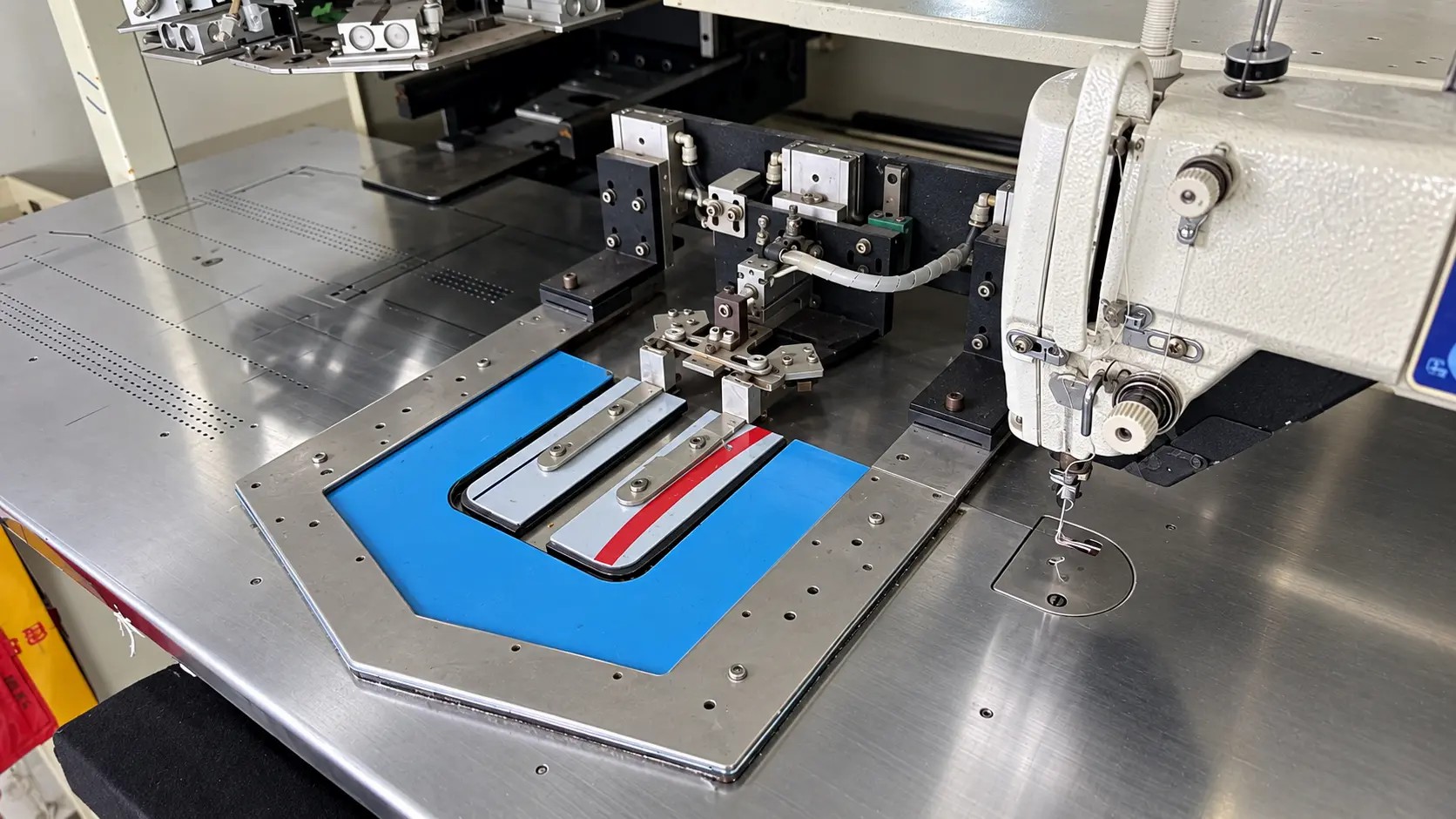
Template sewing, also known as pattern-guided or template-assisted automated sewing, uses specially designed fixtures to position and secure fabric during stitching.
Once the fabric is correctly placed in the template, a programmable sewing machine follows a predetermined stitching path.
Unlike conventional sewing, where operators manually guide the fabric throughout the operation, template-guided sewing reduces the need for continuous manual control.
This technology is particularly useful for repetitive operations requiring precise positioning, consistent shapes, and accurate stitch lines.
Depending on the garment design and equipment configuration, applications can include:
- Patch pocket attachment
- Welt pocket and pocket-opening operations
- Selected collar and neckline constructions
- Decorative stitching
- Reinforcement and other repeatable sewing operations
Each application requires an appropriate template, machine setup, and production procedure.
Pattern & Template Preparation
Fabric Positioning
Programmable Stitching
Finished Component Inspection
1. Improving Consistency Across Bulk Production
One of the biggest challenges in garment manufacturing is maintaining the same quality from the first garment to the last.
Even experienced sewing operators may produce small variations when repeating complex operations manually.
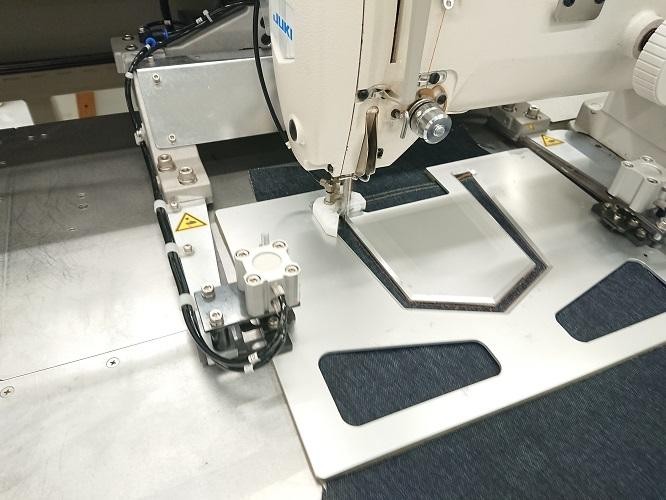
Template-guided automated sewing helps reduce these differences by controlling the stitching path and fabric positioning.
For example, when attaching patch pockets, a correctly designed template can help maintain consistent pocket shape, stitching distance, and placement.
For brands producing repeat orders, this consistency is especially important.
2. Reducing Human Variation in Repetitive Operations
Skilled workers remain essential to apparel manufacturing.
However, some sewing operations require repeated precision over long production runs.
Automated sewing machines can handle the programmed movement, allowing operators to concentrate on fabric positioning, correct loading, and checking the finished result.
This approach helps reduce variation caused by differences in manual sewing techniques.
It also allows experienced workers to focus more attention on operations that require judgment, adjustments, and specialized craftsmanship.
Automation does not replace manufacturing expertise. It makes that expertise more repeatable.
| Comparison | Manual Sewing | Template-Guided Sewing |
|---|---|---|
| Fabric guidance | Continuous operator control | Positioning supported by a template |
| Repeatability | May vary with manual technique | Programmed stitching path |
| Best application | Specialized or variable operations | Suitable repetitive operations |
3. Improving Production Efficiency Without Sacrificing Quality
In traditional garment production, operators may spend considerable time guiding fabric through detailed stitching operations.
With a suitable sewing template, some of these repetitive movements can be standardized.
Potential advantages include:
- More consistent sewing cycles
- Less manual repositioning during stitching
- Reduced rework caused by inaccurate stitch paths
- Easier repetition of approved sewing operations
- Improved workflow for suitable bulk-production processes
Actual efficiency gains depend on the garment design, production quantity, template preparation, and equipment configuration.
For fashion brands, the objective is not simply faster manufacturing.
It is achieving greater efficiency while maintaining the approved construction standards.
4. Supporting Better Quality Control
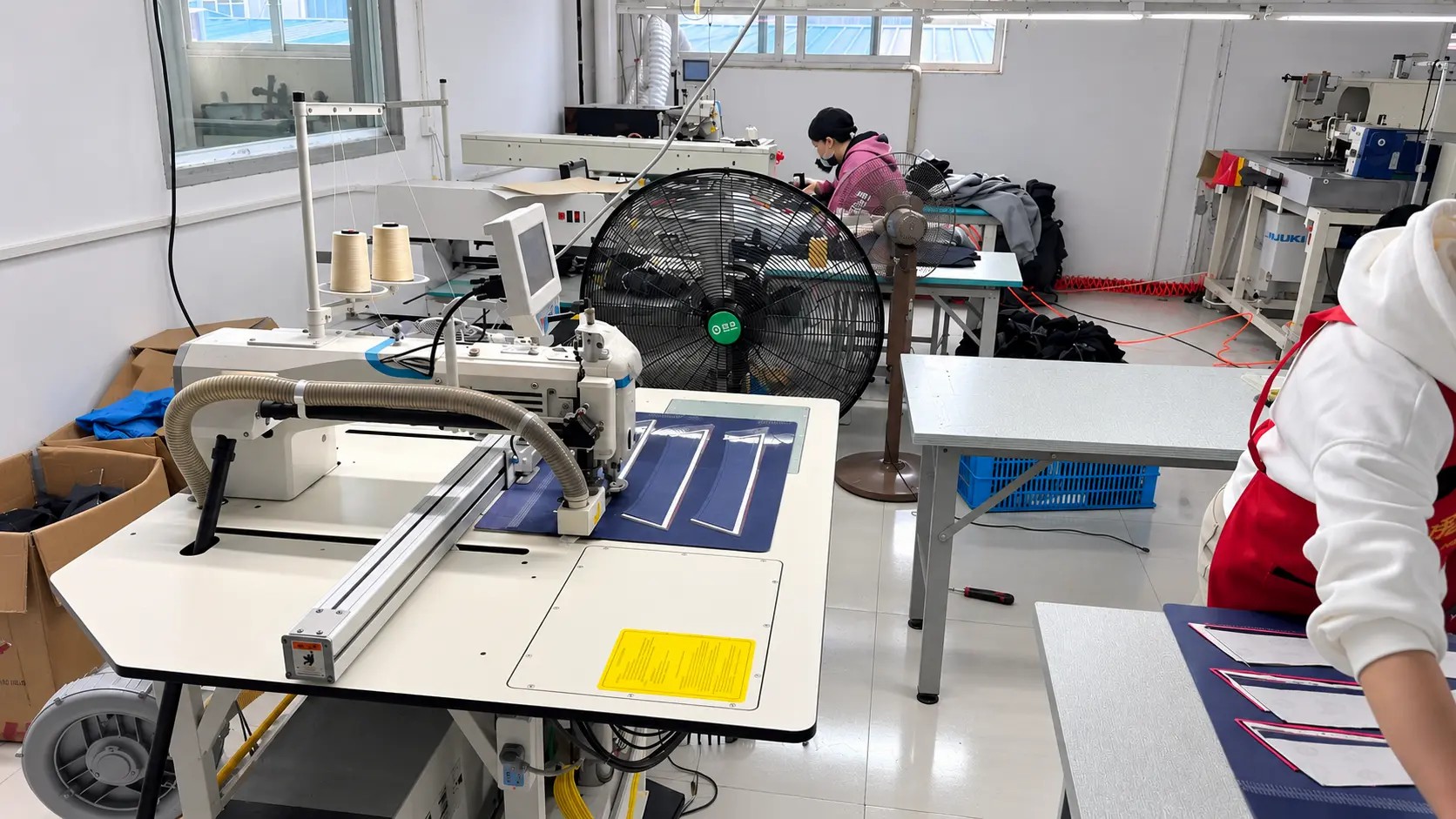
Automated sewing is most effective when combined with a structured quality management process.
Before bulk production, the manufacturing team should verify:
- Template dimensions against the approved pattern
- Fabric positioning and clamping accuracy
- Stitch density and thread tension
- Seam placement and finished appearance
- Compatibility with fabric stretch and thickness
- Results from trial sewing and sample approval
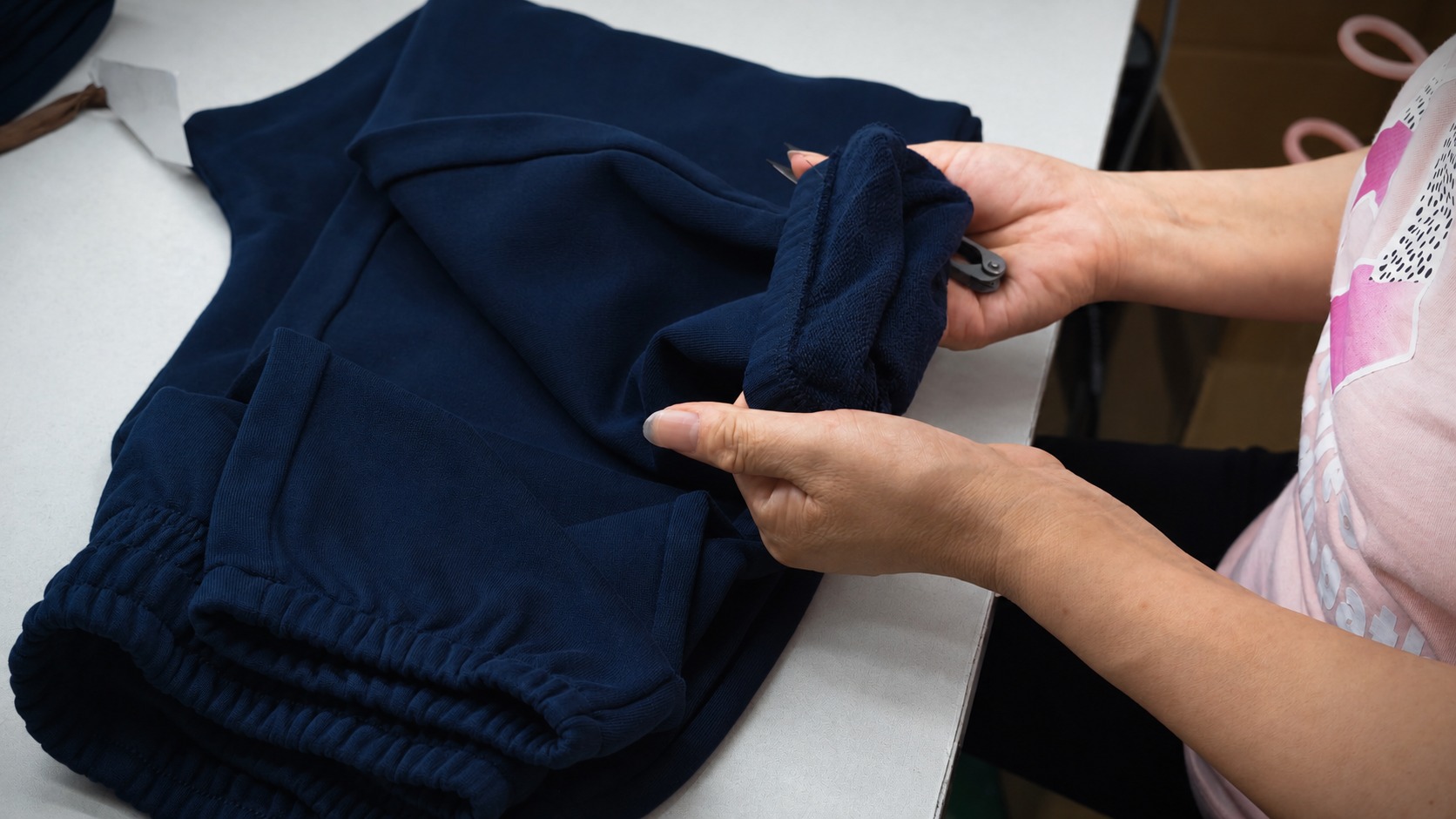
During production, operators and quality inspectors should continue checking finished components.
This is particularly important for knitted fabrics, where stretch, fabric movement, and shrinkage can influence the final garment dimensions.
5. Why Automation Matters for Fashion Brands
For clothing brands, manufacturing consistency affects more than the appearance of individual garments.
It also influences customer satisfaction, production planning, repeat-order reliability, and the cost of correcting defects.
A manufacturing partner that understands both automated sewing technology and traditional garment construction can select the most suitable production method for each style.
Not every operation needs automation. Some detailed or low-volume styles are better handled by experienced sewing specialists.
The important question is whether the manufacturer can combine the right equipment, skilled people, and quality control procedures to meet the brand's requirements.
Our Approach at Ambition
At Ambition, we support international fashion brands with OEM and ODM clothing manufacturing, fabric sourcing, sample development, and bulk-production coordination.
Our manufacturing approach emphasizes the combination of appropriate production technology, experienced workers, and structured quality control.
Template-guided automated sewing is one of the techniques that can help improve repeatability in suitable garment operations.
From custom T-shirts and sweatshirts to activewear, womenswear, casualwear, and specialized garment constructions, we believe that reliable production begins with understanding the details.
Because good manufacturing is not only about making garments efficiently.
It is about making them consistently, order after order.
Looking for a Reliable Clothing Manufacturing Partner?
Are you developing a new collection or looking to improve the quality consistency of your existing products?
Send us your tech packs, garment sketches, reference images, or construction requirements.
Our team can discuss fabric options, sample development, suitable manufacturing methods, MOQ requirements, and production planning.
Let's build better garments through better manufacturing processes.