

7 Red Flags When Choosing a Clothing Manufacturer
Two manufacturers. The same design. Similar sample quality.
One offers a lower price. The other asks more questions about fabric, construction, and production requirements.
Which one would you choose?
For apparel brands, selecting a manufacturing partner involves more than comparing quotations and approving samples. Many production risks can be identified long before the first bulk order is placed.
But the warning signs are not always what buyers expect.
A higher price is not necessarily a problem. Neither is a longer lead time or the use of specialist production partners.
What matters is whether a manufacturer can explain its decisions, understand the product, and manage what happens between development and delivery.
Here are seven signals worth examining.
Article Overview
- Everything Is Possible. Nothing Needs Clarification.
- The Lowest Quote Has the Least Explanation
- Their Experience Doesn't Match Your Product
- The Sample Changes, but the Records Don't
- The Delivery Date Is Clear. The Production Plan Isn't.
- Quality Control Is a Promise, Not a Defined Process
- When Something Goes Wrong, Nobody Owns the Next Step
- Before Choosing a Manufacturer, Look Beyond the First Impression
1. Everything Is Possible. Nothing Needs Clarification.
"We can do it."
"We can meet your target price."
"No problem with the delivery date."
Those answers sound reassuring. But what happens when the design requires a specific fabric, unusual construction, or a tight production schedule?
A manufacturer does not need to question every minor detail. However, requirements that affect feasibility should be reviewed before firm commitments are made.
A useful sign of experience is knowing when to ask questions — and when not to promise an answer too early.
Sometimes, a supplier saying "we need to check that first" is more valuable than an immediate yes.
2. The Lowest Quote Has the Least Explanation
Imagine receiving three quotations for the same hoodie.
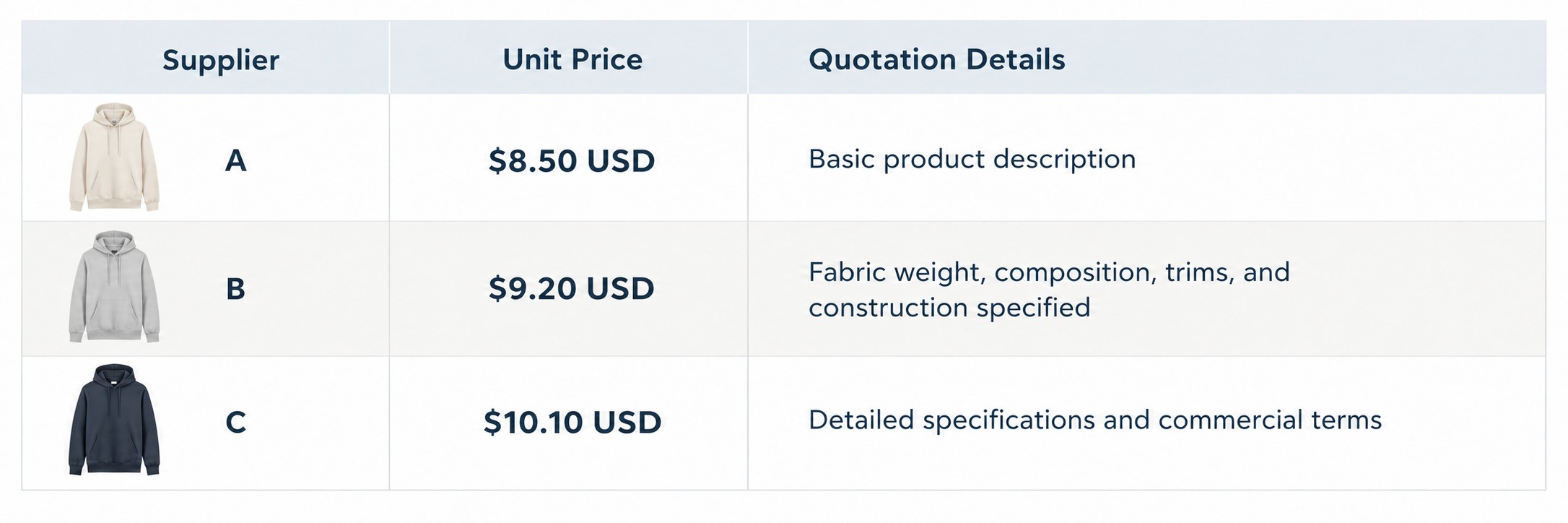
Supplier A appears cheapest.
But are all three suppliers quoting the same fabric, construction, order quantity, finishing, and packaging?
Without comparable specifications, the numbers alone cannot answer that question.
The red flag isn't a low price. It's a price that cannot be clearly explained.
Before comparing quotes, make sure the underlying requirements are aligned.
3. Their Experience Doesn't Match Your Product
A manufacturer may have years of experience producing basic cotton T-shirts.
Does that automatically qualify them to develop structured jackets, technical leggings, or complex knitwear?
Not necessarily.
Different product categories involve different materials, machinery, construction requirements, and quality considerations.
This does not mean a factory must perform every process internally. Working with specialist partners can be a legitimate production arrangement.
Questions Worth Asking
- Have you developed similar garments before?
- Which production processes are handled internally?
- Are specialist partners involved?
- How are external processes coordinated and checked?
A supplier should be able to explain how your product will move through development and production.
Experience matters most when it is relevant to the product you are actually making.
4. The Sample Changes, but the Records Don't
Picture this situation.
The first fit sample arrives. The brand requests a shorter body length and a wider sleeve opening.
The second sample looks better. The changes are approved.
Three weeks later, the bulk production team receives an outdated measurement chart.
The problem didn't begin on the sewing line. It began when the approved changes were not reflected in the production reference.
This is why sample development needs more than verbal agreement.
Updated measurements, material changes, construction notes, and approval versions should be documented clearly.
A sample can look correct while the information behind it remains incomplete.
And that gap becomes much more expensive when repeated across hundreds or thousands of garments.
Clear documentation starts during development. Our article on what makes a garment tech pack ready for sampling explains the information brands should clarify before the first sample is made.
5. The Delivery Date Is Clear. The Production Plan Isn't.
A supplier promises delivery in 30 days.
Before accepting that commitment, consider what is actually included.
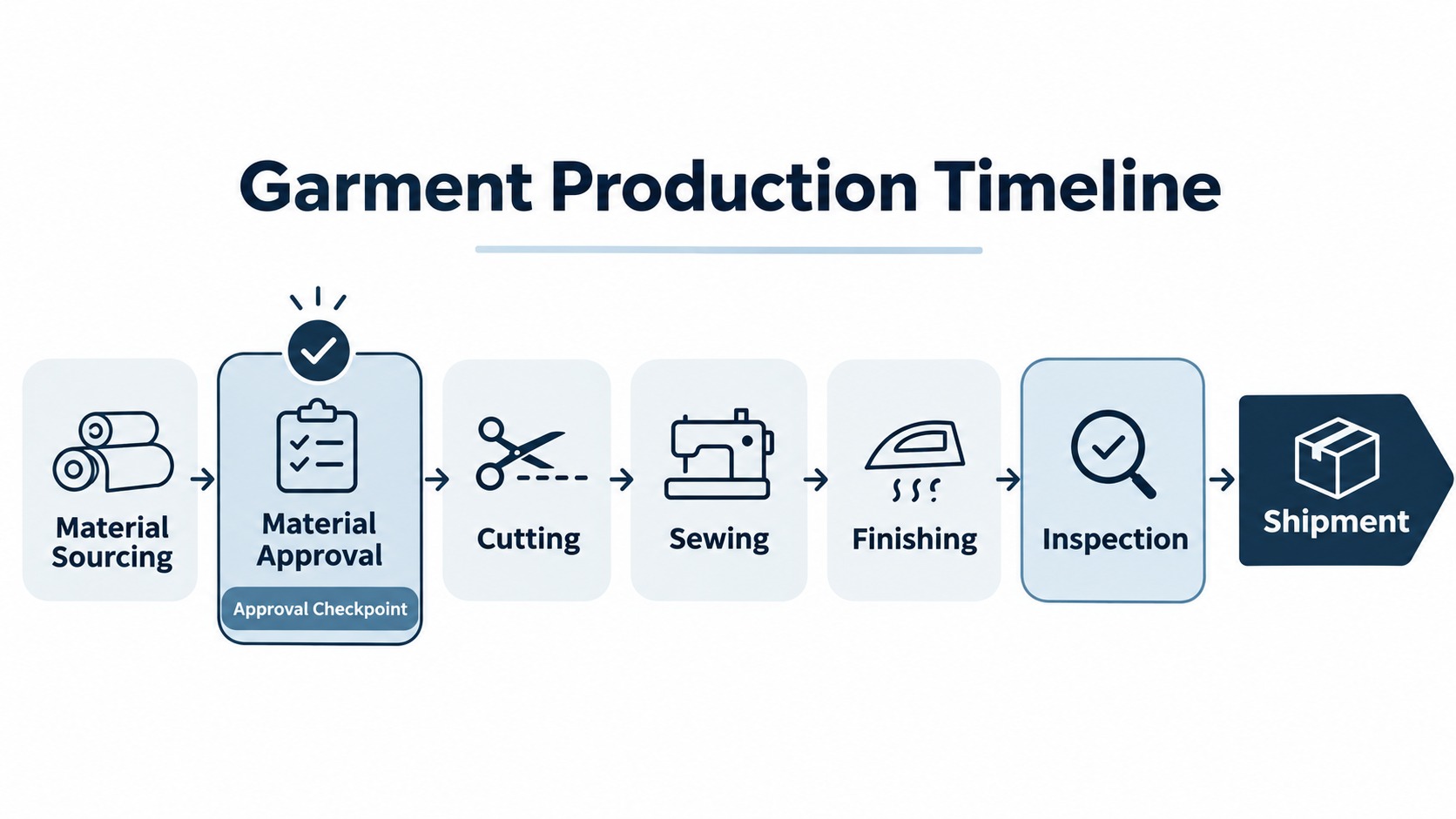
Fabric availability → Material approval → Cutting → Sewing → Finishing → Inspection → Shipment
Which steps are already completed? Which still depend on suppliers, approvals, or production capacity?
A short lead time is not automatically unrealistic. Materials may already be available, or production capacity may be reserved.
But a delivery promise should be supported by a workable schedule.
One useful question is:
"What needs to happen before production can begin, and what could affect the agreed delivery date?"
A detailed answer is more useful than simply hearing that everything is on schedule.
6. Quality Control Is a Promise, Not a Defined Process
"We have strict quality control."
Almost every manufacturer can say that.
But what does it mean in practice?
Quality Checks at Different Production Stages
Consider three different situations.
- Before cutting: A fabric issue discovered before cutting may allow the material to be reviewed before it enters production.
- During sewing: A sewing defect identified during production may require adjustments to the process.
- At final inspection: A problem discovered only during final inspection may be harder to resolve because the garments are already finished.
These situations do not require identical responses.
That is why buyers should understand when inspections take place, what is being checked, and how problems are handled.
A professional manufacturer should be able to explain its quality-control approach without relying solely on broad promises.
Final inspection matters. But it should not be the first time quality is considered.
7. When Something Goes Wrong, Nobody Owns the Next Step
A fabric shipment arrives later than expected.
The revised sample still needs an adjustment.
A color difference is identified before cutting.
None of these situations automatically proves that a supplier is unreliable. Apparel production involves multiple materials, teams, and decisions.
The more revealing question is what happens next.
- Does someone identify the issue clearly?
- Is the affected production stage understood?
- Are the available options communicated to the customer?
- Does the team confirm who is responsible for the next decision?
- Or does the problem simply move between departments?
Accountability becomes most visible when the original plan needs to change.
A manufacturer cannot guarantee that every order will be free of challenges. But it should be able to communicate problems, coordinate decisions, and maintain clear responsibilities.
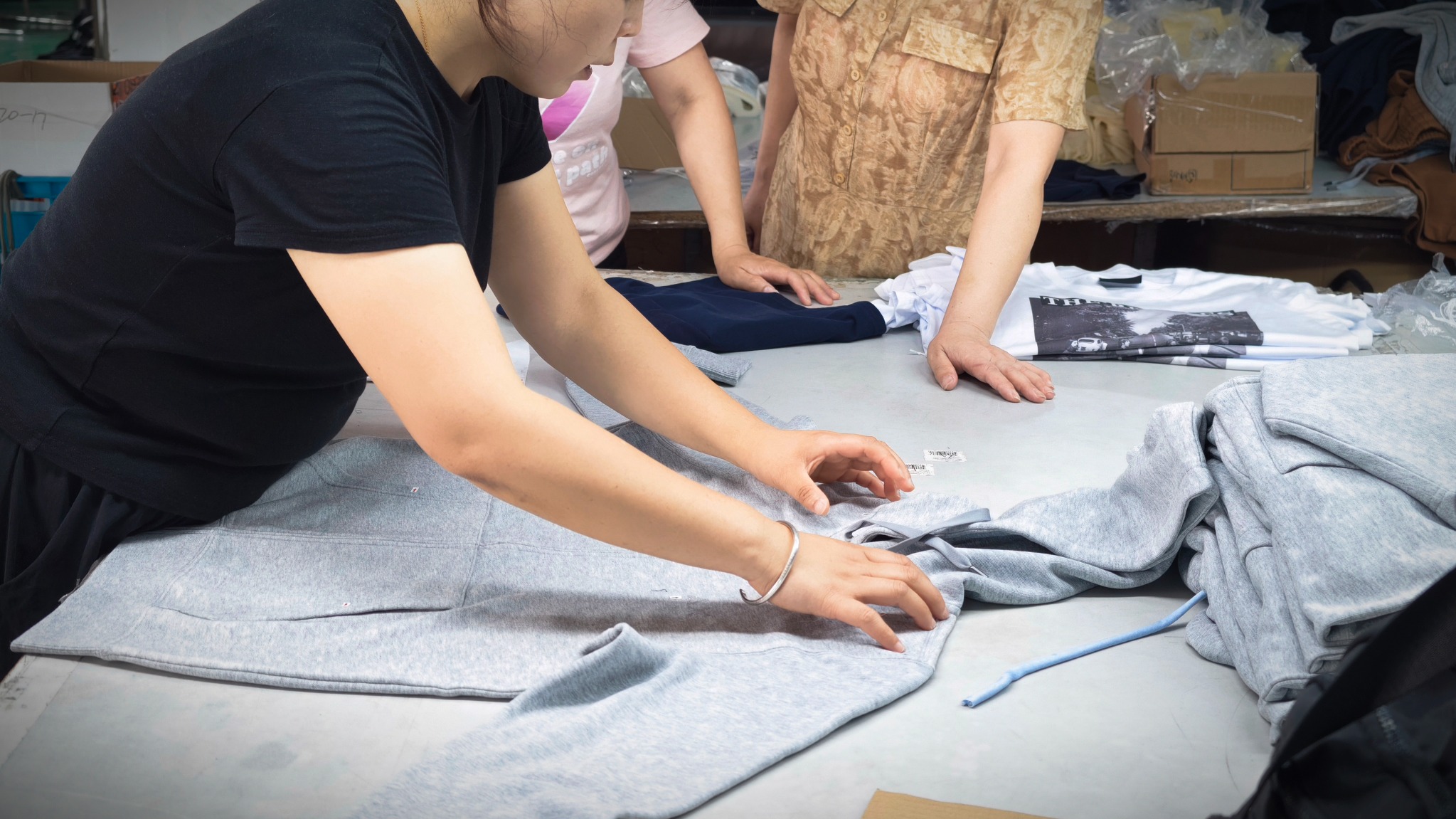
Before Choosing a Manufacturer, Look Beyond the First Impression
Not every warning sign should lead to immediate rejection.
A higher MOQ may reflect fabric purchasing requirements. A longer lead time may be necessary for custom material development. External production partners may be appropriate for specialist processes.
The key difference is whether the manufacturer provides clear information and reasonable explanations.
Before making a final decision, consider five questions:
- Capability: Can they demonstrate experience relevant to your product?
- Clarity: Are the quotation and production requirements understandable?
- Consistency: Are sample changes and approvals properly recorded?
- Control: Can they explain how quality is managed throughout production?
- Accountability: Who takes responsibility when a problem needs to be resolved?
A good supplier evaluation isn't about finding a factory that never encounters problems.
It's about understanding how the manufacturer makes decisions, manages expectations, and responds when reality differs from the original plan.
Because in apparel manufacturing, trust is built not only through what a supplier promises — but through what they can consistently explain, verify, and deliver.